

Home » Magick » M3 Episodes » Season 1 » Coby Michael, Baneful Herbs, and the Poison Path – Ep. 5
Coby Michael, author of The Poison Path Herbal, discusses baneful herbs, flying ointment, recovery, plant spirits, and more. Coby has a degree in religious studies, is a practitioner of the Poison Path of occult herbalism, and also runs The Poisoner’s Apothecary shop.
Music, Myth & Magick – Episode 5 Premiered on 11/30/2023
Coby says he always had an interest in plants, plant magick, and how they can be used medicinally. I, for one, am glad for that… because it led to him writing an awesome book on the topic.
The Poison Path Herbal
If you’re looking for a “go-to” guide to baneful herbs, look no further than Coby Michael’s The Poison Path Herbal.
The bulk of the book is broken up into three different planetary sections: The Book of Saturn, the Book of Venus, and the Book of Mercury. Coby makes a comparison to these three planets and to archetypal father, mother, and child energies.
The Book of Saturn deals with the more baneful side of plants and concepts like death and rebirth. Here you’ll find Belladonna, Black Nightshade, Poison Hemlock, Mugwort, Wormwood, and others.

The Book of Venus deals with love magick and aphrodisiacs. It contains information on Mandrake, Foxglove, Datura, Yarrow, and more.
The Book of Mercury deals with plants as they might be used entheogenically, in visions, or for astral travel. You’ll find Fly Agaric, Calamus, Wolfsbane, and more listed here.
There are planetary seals, magic squares (kameas), glyphs of Coby’s own design, and other occult symbols littered throughout each of the three main sections — a beautiful commingling of new and old ideas.
And, of course, there are other chapters, including an introduction, helpful instruction for cultivation, and many recipes (including flying ointment).
All in all, The Poison Path Herbal is a thoughtful and well-written guide to poisonous plants, unlike any other I have ever seen. It earns a much deserved spot on any witch’s bookshelf.
Entheogens
The word “entheogen” is based on the Greek word “entheos” which basically means to create or awaken the divine within. It’s a term that I have only recently been introduced to by way of reading Coby’s book. It is used to describe psychoactive plant material that is ingested to make a connection with the divine.
The word I would have used before was “psychedelic,” but unfortunately that choice carries with it some negative connotations.
A little shift in perspective can make a huge difference. If you’re approaching a plant spiritually, it would be befitting of being called an entheogen. If, however, you’re coming at it recreationally, then you’d still probably call it a psychedelic.
This category includes many plants and fungi (or substances that are derived from plant or fungi material) like cannabis, psilocybin, ayahuasca, peyote, and some of the baneful or poisonous herbs that are Coby’s specialty.
Want to hear about future posts? Subscribe to get notifications delivered straight to your inbox.
Plant Spirits
These plants have long been used religiously and ceremoniously by humans. I think with certain species, it’s almost insulting to the spirit to come at it recreationally. Seriously. Ask me about my Salvia story one day. As humans, we have this enormous potential to abuse basically anything.
Plants have a memory and a consciousness. We can tap into that in a variety of ways, one of which is to actually grab your gardening gloves and grow them, but that isn’t a practical option for everyone or for all environments. In order to make these “plant allies” more accessible, Coby created glyphs for many of the baneful plants he talks about in his book.
The glyphs are essentially sigils derived from the Latin name of the plant — the vowels and repeated letters are removed and the remaining consonants are redrawn multiple times until they start to form a symbol. This is a basic sigil-making technique that many witches use, yes, but Coby takes an interesting spin — he reforms the symbol until it begins to resemble the actual structure of the plant itself. You’ll have to grab a copy of his book to get access to each of the plant glyphs, but some of them seem to come alive. He says you can meditate with the glyphs to connect with the plant energy and I don’t doubt it for a second.
Local Plants
Some poisonous plants fare better in certain regions than others, but you might be walking by some every day without realizing it. If you live in Florida, keep an eye out for these:
Brugmansia (Angel’s Trumpet)
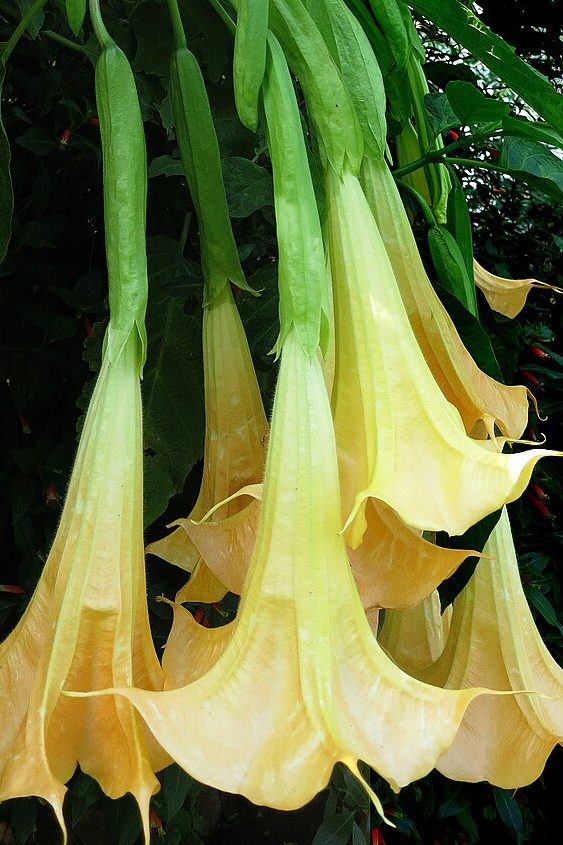
Image by Jim Evans, CC BY-SA 4.0, via Wikimedia Commons
Rosary Pea
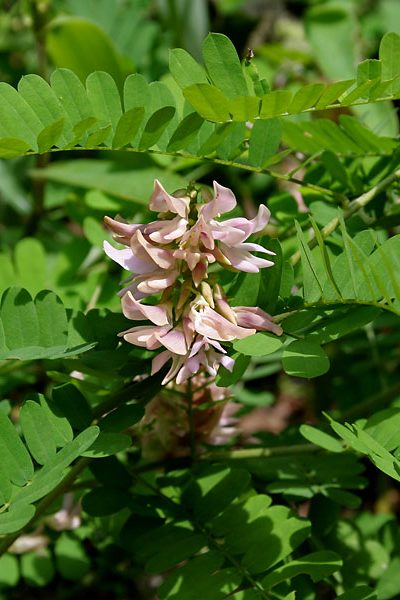
Image by J.M.Garg, CC BY 3.0 via Wikimedia Commons
Datura
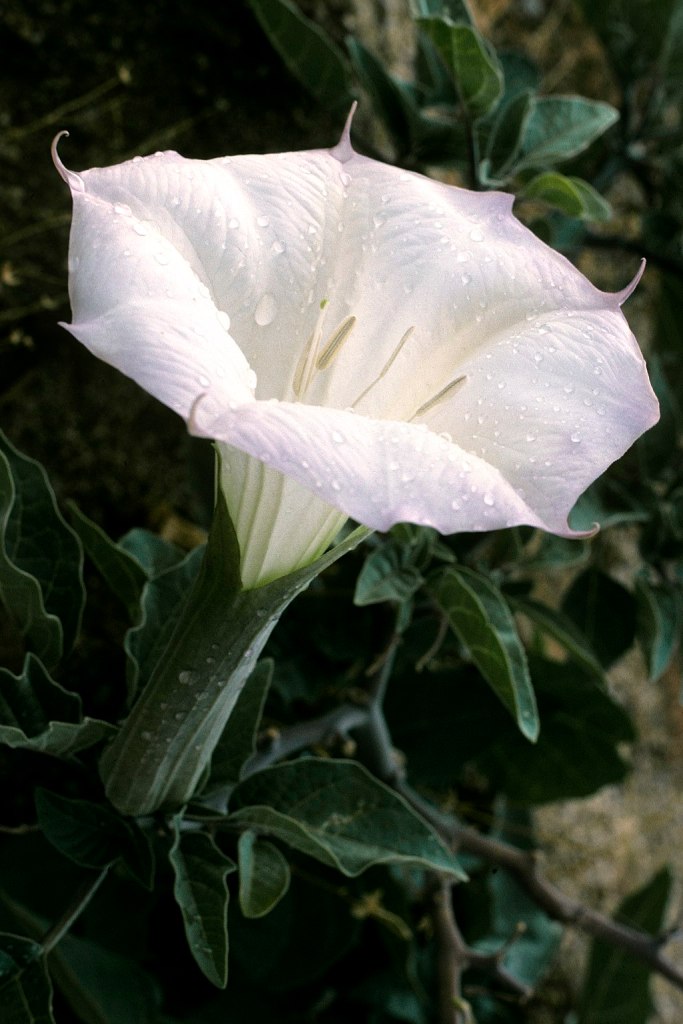
Public Domain image via Wikimedia Commons
Castor Plant

Image by Alvesgaspar, CC BY-SA 3.0, via Wikimedia Commons
Flying Ointment
I’ve made flying ointment in the past using a couple of recipes that I thought were going to be pretty effective. I’ve tried applying these creations several different times prior to meditating or going to sleep. Much to my dismay, and in spite of warnings from others about their suspected intensity, my consciousness didn’t seem to be elevated in any sort of way. In short, there was zero effect. Zip. Nada. Bupkis.
I asked Coby how to best prepare and use a flying ointment. His answer somewhat surprised me, but also made me realize that my question itself was a rather naive one.
Coby described a gamut of flying ointment experiences, ranging from dabbing small amounts on your wrist prior to a ceremony all the way to covering your entire body with oil and going into a coma-like sleep for 36 hours.
So the “best” way to do things, I suppose, would certainly have to depend on what you were seeking to accomplish. Now… I personally don’t want to go to sleep for 36 hours, so maybe my desired experience is somewhere in the middle. I’d like something that enhances ritual and gives, at the very least, the shadow of a psychoactive effect.
But I think the biggest thing I learned here, given the context of our entire conversation, was to consider the particular plant allies in question. Perhaps before using a Datura flying ointment, I should use Coby’s Datura glyphs to try to connect to the spirit. Once there’s an established relationship (or hey, at least an introduction), I think the ritual experience will be met with greater efficacy.
I’ll talk about this again in a moment, but Coby teaches an entire class on the topic of flying ointments and one of them is coming up soon.
The Craft in Recovery
I’m always incredibly grateful for people who are very open about difficult experiences in their lives… and Coby is definitely one of them. He’s been extremely candid about his journey out of opiates and addiction.
As someone who has gone through the recovery process myself, I can say that Coby’s transformation makes him a “shining beacon of hope in the darkness.” (That’s a phrase my sponsor used to say. You hear me Jeremy? All these years later and I’m still quoting you, damnit)
For me personally, the craft was a significant part of my own recovery. I don’t like to reword, simplify, or summarize other people’s personal experiences as I feel it doesn’t do them justice. If you’d like to hear what role the craft and plant allies played in Coby’s recovery, you should listen to the interview so you receive it in his own words.
How to Find Coby
Here’s a few upcoming events, both physical and virtual, that are either hosted by or featuring Coby:
- December 2023: Darkest Night Market (Salem, MA) – A collection of craftspeople, artists, and makers of magical wares, dark arts, and oddities
- January 2024: Flight School (Online) – A virtual flying ointment class
- March 2024: Phoenix Festivals’ Weaving the Web (Bell, FL) – A pagan metaphysical and spiritual retreat that is run by some awesome people
- March 2024: Botanica Obscura Conference (Online) – An virtual conference that features presenters from a variety of plant-related backgrounds
And if you’re looking to find more information about him online, you can check out the following links:
- Web: The Poisoner’s Apothecary
- Instagram: @poisonersapothecary
- Facebook: @poisonpath or @poisonersapothecary
- Patreon: @poisonersapothecary
Music For Magick
Coby talks about how music and vibration help to release trauma and tension in the body. Speaking, chanting, humming, and singing can help locate problematic areas in the body. Proper breathing techniques can help release tension.
You should probably listen to him talk about it though.
He also talks about using music to set the vibe for a plant medicine ceremony. Certain playlists can excite the emotions, while others can calm them, so the music choice becomes very important when you’re trying to direct your journey.
I’ve taken the liberty of linking to a few of the YouTube channels for musical artists that Coby mentioned.
I’m going to throw in a couple of my own picks here just for fun to get really far out and trippy.
- The Mars Volta (check out Asilos Magdalena)
- King Crimson
- Ramona Falls
And of course, never doubt the ability of Radiohead to create a vibe.
Conclusions
This interview (and Coby’s book) has really helped me to look at poisonous plants in a new light. I absolutely love some of the Saturn/Venus/Mercury triad and the distinctions between entheogens and psychedelics. I’m also very excited to give flying ointment another try — I think I might take Coby’s class in January.
Do you know someone that has interesting things to say about using music in ritual? Maybe they should be the next guest on M3. If so, feel free to contact me.
Also, have you subscribed to M3 on YouTube? If you go do that right now, it’ll make me seriously happy.
Hey, you’ve made it all the way to the end. If this was a scavenger hunt and you just found the last clue, you’d be pretty proud of yourself right now, right? But it isn’t. It’s just a disclaimer. I use Amazon links in this post. As part of Amazon’s referral program, they’ll pay me a small commission if you make a purchase. So go buy some books already!


 Aerik Arkadian


_(14212557338).jpg)

Leave a comment