

Jump to Lesson:
- Part 1 – Liquid Condensers
- Part 2 – Solid and Gaseous Condensers
- Part 3 – More Recipes (current lesson)
- Part 4 – Advanced Techniques (coming soon)
In Part 1 of this series, we discussed what fluid condensers are, how to prepare them, and how to use them. We walked through a simple preparation and created a fire condenser. In Part 2, we took a look at solid and gaseous condensers and discussed alternatives for gold chloride. In this installment, we’ll be taking a look at several more recipes for inspiration and a deeper understanding of the rich history behind fluid condensers.
Alright, first we review.
Quick Review
If you’re just joining this wild adventure, I’d recommend checking out the first two lessons for some important foundational info. Nonetheless, I think you’ll find the recipes listed here to be enlightening. First, though, let’s look at a brief reminder of what a fluid condenser actually is…
Fluid Condenser: Any substance or combination of substances, in any state of matter, that have a high capability to conduct energy between planes (ie – the astral and the mundane).
At this point you should be familiar with a few concepts. Here are some questions I believe you can now easily answer:
- What one substance is widely regarded as the strongest condenser?
- What are some examples of condensers in each state of matter (solid, liquid, gas)?
- Why would bodily fluids be included in a condenser?
- When should you not include bodily fluids in a condenser?
- What substance is not a condenser?
- How can one proceed in the preparation of condensers without gold?
Alright, still with me? Good.
To expand our knowledge even further, we’re going to dive into some recipes that inspired this undertaking.
The Classic Recipe
This is perhaps the most “standard” condenser recipe and it comes straight from Bardon’s Initiation Into Hermetics.
Simple Universal Fluid Condenser – From Bardon’s Initiation Into Hermetics
Ingredients:
- Chamomile Flowers (fresh or dried)
- Water
The complete instructions for preparation can be found in Part 1, but in short, you boil herbs, strain the liquid, and boil again. It’s not rocket science.
At the end, you’ll add a few drops of gold solution and, optionally, your own blood or sexual fluids.
Since this is a universal condenser, it can be used for any purpose. The attractive part of this recipe is its simplicity. Many authors reprint this as their own creation or as a starting point for talking about condensers.
Astral Sight
Building on the previous information, Bardon gives a condenser recipe which you would use to help develop astral sight. It is very similar to the classic recipe, but with the inclusion of a few additional steps and ingredients. These extra steps take it to the next level, however, as suddenly we find ourselves dealing with elemental energies, astral senses, and pore breathing. Careful attention to cleanliness should be given here, as this solution is meant to be applied to the face.
As far as condensers go, this feels like one of the safer recipes, but typically I would recommend avoiding the application of things directly to the skin (especially the face).
Eyebright Solution – From Bardon’s Initiation Into Hermetics
Ingredients:
- Chamomile Flowers (fresh or dried)
- Eyebright – Herba Euphrasia (fresh or dried)
- Distilled Water
- 7 to 9 thin willow or hazel twigs (dried) – these need to have the leaves removed, then trim to the same length and bundle together
- Filter paper, clean linen or cloth; and a funnel
Preparation:
- Bring 1 cup of water to boil
- Add 2 tsp of chamomile flowers
- Add 1 tsp of eyebright
- Let the mixture boil for a few seconds, then remove from heat and cover with lid
- Steep for 10 minutes
- Filter the solution into a clean container and allow to cool
- Light the bundle of twigs and extinguish it in the solution
- Re-filter the solution into a clean container
- Use “pore-breathing” to charge the solution with the fire element
The inclusion of the fire element, both physically and mentally, makes this a fire condenser. This isn’t surprising, as the element of fire is frequently associated with the sense of sight. Fire makes light, which allows us to see physically, but this extends into the astral as well in the form of clairvoyance (“clear seeing.”) We’ll discuss further techniques for adding elements to condensers in the next lesson, but for now this exercise will give a good amount of experience.
ASSIGNMENT #1
Prepare the Eyebright Solution
For those wishing to work on their astral sight, a small amount of the condenser is placed on a cotton ball or piece of cloth, which is then applied to the eyes as a compress. Bardon gives a list of astral exercises to practice in Initiation Into Hermetics, but that is well beyond the scope of our discussion.
What does it feel like to use a condenser applied to your body? How does it increase your astral sight? When would it be appropriate to use? You can ponder these questions and read recipes all day… or you can just complete the assignment.
Want to hear about future posts? Subscribe to get notifications delivered straight to your inbox.
Condensers Through Time
Now that we’ve got all the basics out of the way, we’re going to walk through the recent written history of condensers and take a look at how different recipes have evolved through time. The concept of condensers cannot be confined or credited to any one author or single set of teachings. This is also not meant to be an exhaustive list. I’m sure that, especially within the past 50 years, there’s been several additional mentions of condensers in works that I have not listed. Seeing as how I cannot possibly read every book on magick ever, I’m only listing the ones that I have encountered.
P.B. Randolph – Magia Sexualis (“Sexual Magic”) – 1870*

P. B. Randolph. Public Domain. Wikipedia.
Paschal Beverly Randolph was an American doctor, occultist, Rosicrucian, and author who lived from 1825 – 1875. While the practice of using condensers is far more ancient, Randolph gave us, perhaps, the first written record of them in Magia Sexualis during the late 19th century. The book was written at some point during his lifetime, but remained unpublished until after his death.
In his work, he lists three categories of condensers:
- Type 1 – paints
- Type 2 – medicines
- Type 3 – volts
I generally find his recipes to be a bit too restrictive to make. In addition to some hard-to-find or ingredients, each needs to be made under specific laboratory conditions. While I do enjoy a bit of complexity, we have better ways to accomplish these types of goals.
Liquid Condenser (Type 1) – From P. B. Randolph’s Sexual Magic
Ingredients
- White Wine – 120 grams
- Juice of Leaves of Lily – 4 grams
- Juice of Leaves of Mandrake – 18 grams
- Juice of Leaves of Camomile – 19 grams
- Juice of Leaves of Poplar – 48 grams
- Coal of Poplar – 15 grams
- Extract of Lily – 2 grams
- Extract of Mandrake – 3 grams
- Extract of Camomile – 1 gram
- Extract of Poplar – 4 grams
- Lactose (milk sugar) – 50 grams
- Lactucarium (coal of the leaves of Atropa and Belladonna) – 25 grams
- Gelatin – 80 grams
- Kopal Oil – 25 grams
For Type 1 condensers, you are supposed to add pigments to the final product to create a paint. This paint can be used to coat statues or other magickal items.
I think condenser paints are a really interesting idea, but this is an overly complicated recipe. Why not just buy a can of paint, add a few drops of a simple universal condenser, and mix it up? Intention is everything.
Liquid Condenser (Type 2) – From P. B. Randolph’s Sexual Magic
Ingredients
- Juice of Leaves of Lily – 2 grams
- Juice of Leaves of Mandrake – 8 grams
- Juice of Leaves of Camomile – 9 grams
- Juice of Leaves of Poplar – 20 grams
- Extract from Flower of Lily – 3 grams
- Extract of Mandrake – 13 grams
- Extract of Camomile – 5 grams
- Extract of Poplar – 32 grams
- Lactose (milk sugar) – 60 grams
- Lactucarium (see above) – 36 grams
It is my understanding that Randolph used this recipe to create what he called “drugs.” After bottling, a magickal intent was applied for treating a specific ailment. It was then sold as medicine.
According to Randolph, there are several “prohibitions” when making this, including keeping your laboratory at a constant 90 degrees Fahrenheit and never exposing the condenser to sunlight. I did mention that these need to be made in laboratory settings, right? What do you mean you don’t have a condenser lab?
Solid Condenser (Type 3) – From P. B. Randolph’s Sexual Magic
Ingredients
- Coal of Mandrake – 80 grams
- Iron – 20 grams
- Brass Powder – 15 grams
- Lactose (milk sugar) – 40 grams
- Gold – 18 grams
- Lactucarium – 80 grams
- Coal of Poplar – 16 grams
The purpose of this substance is for “the fabrication of volts.” What is a volt, you ask? Well, it’s basically a poppet. I mean, imagine combining poppet creation with an act of ritual sex magick and you’ll be in the right ballpark.
Of course, this is rather confusing terminology. If you asked Franz Bardon what a volt was, he’d tell you it was the act of accumulating an incredible amount of electro-magnetic fluid within yourself and then releasing it in an instant. Sort of like static electricity.
Since we’re already in the realm of confusing terminology (“solid fluid condensers”), let me just say that you could use a Bardon volt to charge a Randolph volt. That makes sense, right? Come on, it’s as clear as I can possibly be.
Franz Bardon – Initiation Into Hermetics – 1953
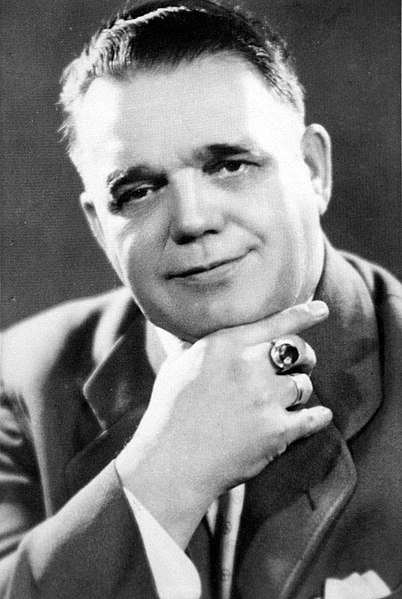
Franz Bardon, by unknown author. Public Domain. Wikipedia.
Franz Bardon was born in 1909 in Austrian Silesia. He lived as an occultist, a teacher of Hermetics, and a stage magician. He wrote 3 pivotal books, which were originally published in German: Initiation Into Hermetics, The Practice of Magical Evocation, and The Key to the True Kabbalah. Another book, Fabrato the Magician, is attributed to Bardon and thought to be a disguised autobiography. Unfortunately, Bardon was arrested in 1958 for publishing these occult materials. He died the same year while in police custody.
Reportedly, Bardon was working on another book, The Golden Book of Wisdom. A fragment of the manuscript was recovered, but the work was never completed.
Bardon was influenced by Randolph’s ideas, but their view on fluid condensers definitely seems to diverge. Despite Randolph’s influence I feel like most of our “condenser knowledge” today comes directly from Bardon, and not from Randolph via Bardon. This could be in part because some of Randolph’s work was not published until fairly recently (and not within Bardon’s lifetime). Nonetheless, as I have stated before, Bardon’s recipes are the most copied and repeated. He gave us lots of good material to expand upon.
The Compounded Universal Fluid Condenser
Ingredients:
- Angelica root, Sage leaves, or Linden flowers
- Cucumber peel or Pumpkin seeds
- Acacia blossoms or leaves
- Chamomile flowers
- Lily flowers, leaves or roots
- Cinnamon flower or Cinnamon bark
- Stinging Nettle leaves
- Peppermint leaves
- Poplar leaves
- Violet flowers or leaves, or wild Pansy
- Willow leaves or Willow bark
- Tobacco, fresh green or dried
This is a lot of herbal ingredients, but in terms of overall cost, it shouldn’t be too pricey. To actually make this condenser, there are three different methods. Each varies widely in terms of complexity. I’ve opted to quote Bardon here directly, rather than paraphrase, so you can get a better feel for his style.
Preparation Method 1 (Easy)
"Take equal amounts by volume, not by weight, of all the aforementioned herbs and place them into a large pot, add cold water until they are completely covered, then cover the pot with a lid; let this concoction boil for 30 minutes. Then let it cool off completely, filter it properly, pour the filtered liquid back into a clean pot and boil it slowly until it becomes as thick as possible without burning or becoming too dry. Then add as much alcohol by volume as you have extracted from the concoction, and for every 100 grams of this mixture of extract and alcohol add 10 drops of the gold tincture, and possibly your own blood or sperm or both. Shake all of this well, filter it properly and then pour this condenser into dark purple bottles, seal them well and store the bottles in a cool and dark place, ready for use."
The first and “easy” method of preparation is essentially our standard set of boil/filter instructions that you should already be familiar with.
Preparation Method 2 (Moderate)
"The second method of preparing a compound fluid condenser is as follows: Place all of the aforementioned herbs in equal amounts by volume, not weight, into a glass jar large enough to accommodate them all and cover the herbs with alcohol. Keep the jar well sealed and let it macerate for 28 days in a warm place. Then press the whole concoction through a linen cloth or another form of press, then filter it properly. Add the gold tincture, 1 drop of gold tincture for every 10 grams of the herb and alcohol mixture, and you can even add your own blood and sperm. Then pour everything into bottles and keep it for personal use only. No additional alcohol is required for preservation."
The second and “moderate” method definitely changes the pace. I wouldn’t say it is particularly difficult or more complicated when compared to the previous method, but it does significantly increase the necessary time required by a month. I generally do not have the patience for such things, but I will say that certain incubation periods can aid in planetary energies, which we will discuss at a later time.
Preparation Method 3 (Difficult)
"The third method requires a little more time and effort; it is, however, the best method. Prepare all of the aforementioned herbs individually. You can prepare each one by using the method of the simple fluid condenser, when we used chamomile flowers, or you can employ the second method where you prepare these plant extracts by pouring alcohol over the herbs. Once you have all the extracts prepared, mix them all in equal proportions, add the proper amount of gold tincture, and store it in a cool and dark place."
Why make just one fluid condenser when you can make a dozen individual preparations and then combine them? If complexity is your thing, then this might be the method for you, although I generally find it to be unnecessary.
But wait… there’s more!
Additional Instructions
"Prepare and proceed by employing either of the aforementioned methods with the four following special fluid condensers which are for the purpose of influencing the elements. The plants which are necessary for this purpose are:

For the Fire element:
Onion, garlic, whole pepper, mustard seeds.

For the Air element:
Hazelnuts (you may also use the leaves or the bark), juniper berries, rose petals or rose leaves, coriander seeds.

For the Water element:
Oats (or you may also use finely cut oat straw), seeds from the different kinds of beets, such as white beets, sugar beets etc., peony petals or leaves, cherry tree leaves or bark.

For the Earth element:
Parsley roots, leaves or seeds, caraway seeds, plantain leaves, broad-leaved (Plantago major) or slender-leaved (Plantago lanceolata), carnation petals or melissa (lemon balm)."
It has long been unclear to me whether these instructions were intended as an addendum to Method 3 alone or to all of the methods. But with that, he abruptly ends the section and moves on to other ideas.
It is an certainly an interesting thought to make one multi-part condenser and then add drops of fire, water, air, and earth condensers to create the ultimate “compounded universal” condenser, but I feel as if the same effect could be achieved with less steps.
Why not just make separate solutions for the elements (one herb of each correspondence should suffice) and then combine? This would still be a compounded, universal condenser. Maybe one day I’ll try Bardon’s overcomplicated methods. Want an extra assignment? Try making it an let me now how it goes! For now, however, we’re going to take a look at his solid condenser recipes.
Solid Fluid Condenser (For Magick Mirrors)
Ingredients
- Lead – 1 Part
- Tin – 1 Part
- Iron – 1 Part
- Gold – 1 Part
- Copper – 1 Part
- Brass – 1 Part
- Silver – 1 Part
- Aloe Resin (gum resina aloe) – 1 Part
- Animal Charcoal (carbo animalia) – 3 Parts
- Mineral Coal – 7 Parts
The above recipe would be used to coat a magick mirror. The instructions are essentially to pulverize and mix all of the ingredients, which is achieved by filing the solid pieces of metal and collecting the shavings.
Look, I can’t stress this enough – this recipe is toxic. Some of the earlier recipes will irritate your skin or make you ill if ingested, but this one could be downright deadly. Lead is a poison. Lead dust, which would be produced by filing, can make you sick if you breathe it in accidentally. Under no circumstances should you attempt to make this. We’re only using this as an example of what a solid condenser recipe might look like.
Electro-Magicum
Ingredients
- Gold (30 grams)
- Silver (30 grams)
- Coppers (15 grams)
- Tin (6 grams)
- Lead (5 grams)
- Iron (3 grams)
- Mercury (15 grams)
Bardon says this compound can be used to make metal alloy mirrors, bells, and other objects.
I was going to make a joke here and say “I’ve always wanted to make this. Could I just borrow the gold?” But… do you remember how I said the last recipe was toxic? This one is very deadly too. Mercury is not something to mess with. Under no circumstances should you attempt to make this recipe either.
Theoretically, you could combine these metals in a forge and then shape the resulting compound into magickal tools. More realistically, though, you might instantly vaporize the mercury, causing an explosion, releasing toxic fumes, and potentially killing yourself in the process. As a fun note, the boiling point of mercury is well below the melting point of most of the other metals in this recipe.
Sybil Leek – Cast Your Own Spell – 1970
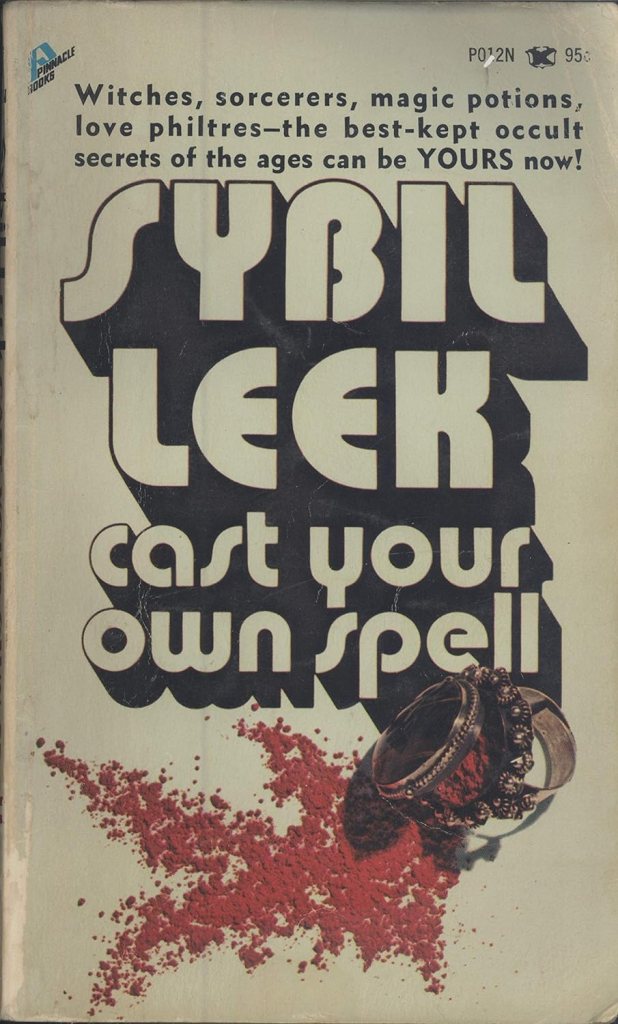
Sybil Leek was an English witch, author and astrologer who lived between 1917 – 1982. The BBC once described her as “Britain’s most famous witch.”
She wrote numerous titles on topics like astrology, herbalism, numerology, and more.
In my research on the topic of condensers, I’ve noticed that many people’s first introduction to the concept was through Sybil Leek’s book Cast Your Own Spell from 1970. Her books were once fairly widespread, but have now been replaced by [respectfully] much better material. I was able to find a free copy on archive.org, which I read for my own edification.
On the topic of condensers, she writes:
Cast Your Own Spell
"They are designed to expand or to release, at a certain time, some of the forces behind the spell. By using properly prepared fluid condensers, the powers concentrated in them are stored up, and can be held back at will or released."
She also discusses flavor in cooking and says that condensers are the “flavor in spell-making,” which is an interesting comparison.
Her recipes are basically reprints of Bardon’s with the change of a few herbs. For that reason, I won’t take up unnecessary space with them here.
Stewart Farrar – What Witches Do – 1971

Stewart Farrar was initiated into Alexandrian Witchcraft by Maxine Sanders in 1970. His early book, What Witches Do, is basically a summation of information he learned from both Alex and Maxine Sanders. As such, Stewart wrote the book, but most of the teachings are attributed to Alex.
This book stands out to me personally as one of my first good reads on witchcraft in general, although mine had a significantly different cover.
What Witches Do reprints Bardon’s eyebright solution for astral sight (which is found at the top of this article) with no mention of Bardon. The filtration method has some slightly different lore associated with it, however, as you are to strain the solution through four pieces of cloth to represent the four elements. You can tell some of the details like this were changed as they were passed down, either accidentally or intentionally. I’ve found that several of Alex Sanders’ “original” practices were merely adaptations of information found in Bardon’s work.
On the subject on condensers, Stewart Farrar writes:
What Witches Do
"It produces what witches call the Universal Condenser, a fluid that can be used medically as a lotion, or magically for rituals of evocation, or to improve clairvoyance or clairaudience. It is also sometimes called the Elixir of Life, though this is a name that has had many other meanings."
He further elucidates that the eyebright solution can be used to help develop clairaudience (“clear hearing”) by putting it on your ears. I personally beg to differ here, as the eyebright solution was given as a fire condenser. The sense of hearing is associated with the element of air, so an air condenser would be more appropriate. We’ll look at some of this in more detail with the next lesson.
Donald Tyson – How to Make and Use a Magic Mirror – 1995
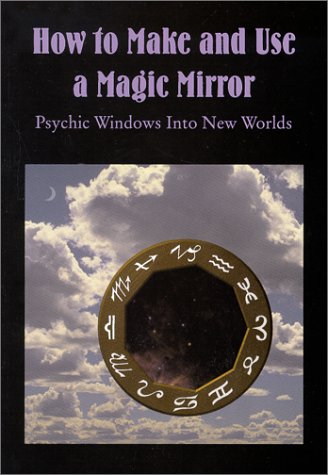
Donald Tyson is an occult scholar and author from Nova Scotia, Canada. He has written several books on Western magickal traditions. I am particularly fond of his annotated and edited version of Agrippa’s Three Books of Occult Philosophy.
His 1995 title How to Make and Use a Magic Mirror discusses condenser recipes and their applications with magick mirrors.
At last, we have come to what appears to be an original recipe. What is particularly interesting about his recipe is that it is heterogeneous. In other words, the ingredients come from more than one classification of materials, like powdered stones mixed with metal shavings.
Natural Fluid Condenser
Ingredients:
- 1 part fine silver filings
- 1 part powdered rock crystal (or amethyst or beryl)
- 1 part powdered salt
- 1 part powdered dried willow leaves (or agnus castus)
- 1 part powdered dried peony leaves (or white rose)
- 1 part powdered dried toadstool
- 1 part powdered dried moss
- 1 part powdered oyster shell (or clam shell)
- 1 part finely cut cat hair
As you can see, the ingredients here from the animal, mineral, and vegetable kingdoms, which means you might, in fact, be the very model of a modern major general. But seriously, the concept of a heterogeneous condenser unlocks so much more creative potential on the behalf of the practitioner. Up until this point, most recipes stay within one kingdom, like only using a mixture of different herbs or different metals. Bardon’s recipes, aside from some occasional binding agents, are mostly homogeneous. This is also true for Randolph’s recipes. We’ll talk about this more in a later lesson.
Daniel Alvin Schulke – Ars Philtron – 2001
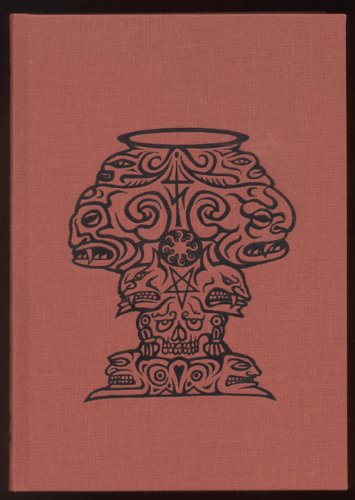
Daniel Alvin Schulke is an occult author, artist, and the proprietor of Three Hands Press, which is a publishing house that produces his work (and others).
Ars Philtron looks and reads like a medieval grimoire, but you might be surprised to see the publishing date is 2001 and not not 1501. You can flip through, as I did, if you borrow the copy that is freely available online at archive.org. The book is essentially about potions.
Fluid Condensers are referred to here as “Philtron Animatio,” which I believe would roughly translate to Potion of Life. The process described within the book involves prayers, specific timings, and lots of bodily fluids.
It is a very interesting text, but for me it’s more of an item for entertainment as opposed to reference or education. Daniel Schulke did a very good job at over-complicating the information and I believe this was intentional. Most grimoires are not easy reads and Ars Philtron definitely fits that requirement.
Christopher Penczak – The Temple of High Witchcraft – 2007

Christopher Penczak is the founder of the Temple of Witchcraft and the Temple Mystery School. He has written numerous occult books, many of which function almost as self-study courses.
His book The Temple of High Witchcraft discusses a good deal of information on condensers. Of particular interest are his notes on elemental and planetary planning. We’ll talk about those concepts in the next installment.
On the topic of condensers, Penczak writes:
The Temple of High Witchcraft, page 281
"The term fluid condenser refers not to the physical state of matter but to the idea that etheric energy is a subtle fluid flowing between the planes. The substance that contains, or condenses, this vital energy becomes the fluid condenser storing the energy."
He describes condensers mostly as batteries and mentions a chamomile solution as a starting point for crafting your own. Further in the chapter, he discusses more complicated recipes.
Natural Fluid Condenser
Ingredients:
- Angelica root
- Sage leaf
- Cucumber skin
- Chamomile flowers
- Violet leaves or flowers
- Melon seeds
- Tobacco leaves
- Oak leaves or bark
- Peppermint leaves
This recipe definitely seems inspired by Bardon’s, but that’s okay because Penczak fully credits him with the ideas. It’s fairly easy to spot the similarities since there’s very few places you’ll ever find angelica, cucumber peel, and peppermint listed next to each other. Aside from that, the ingredients have been reduced from 12 to 9, but I think it makes for a well-rounded and interesting mix.
Silver RavenWolf – The Witching Hour – 2017
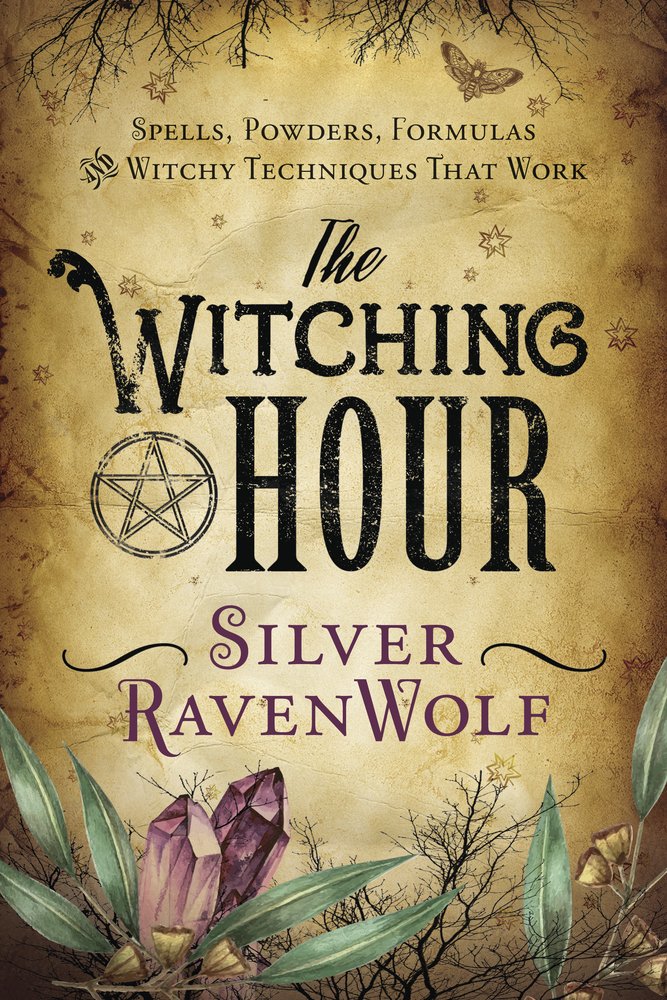
Silver RavenWolf has written more than a dozen books on Wicca and witchcraft. You can find something of hers in just about any bookstore — metaphysical or not. I would honestly be surprised if you haven’t heard of her.
I don’t always agree with what she writes; however, as I reached the end of my fluid condenser research (obviously starting with older sources and then moving forward), I was pleasantly surprised to find a fairly accurate and detailed history of condensers and recipes in her 2017 work, titled The Witching Hour.
She gives a number of her own recipes and discusses some of the originals. She also touches on the topic of the magick mirror.
I’m not going to reprint her recipe’s here because… they’re hers, but I will tell you her definition for what a fluid condenser is.
–The Witching Hour, Chapter 4
"A fluid condenser is a blend of natural ingredients prepared in a symbolic way using magickal correspondences, timing, and ritual."
I don’t disagree, but unfortunately this definition doesn’t quite tell us what they’re capable of doing. I haven’t skimmed through the rest of the book, but I did enjoy reading the chapter on condensers.
You can use the above list as my bibliography of sources researched while writing this series of article. It’s not every source I read, but it is a pretty good start. I’ve done my best to refine the information presented in all of these books. It is not merely enough to read about condensers. You have to make them and use them to truly understand them. And if you’re following along with these lessons, hopefully you’re doing just that.
Condensers in Mythology
You might not think of condensers being mentioned by name in any ancient myths — and you would be correct. But consider for a moment how many myths there are on the topic of gold. With the knowledge of gold being a condenser, you might start to ask questions such as these:
- How much energy could King Midas conduct?
- Why did Rumpelstiltskin really want all that straw turned into gold?
- What kind of magickal operations were the Annunaki conducting?
- Where can I find a goose to lay golden eggs?
- Is there a pot of gold at the end of that rainbow?
- How much wood could a wood chuck chuck if a wood chuck could chuck wood?
Thoughout history, gold has played a prominent role in legend and mythology. We’ve decorated with it, traded with it, and backed our currencies with it. Why have we assigned so much value to this substance? Is it because it’s shiny and pretty? Is it due to its rarity? Is it because we recognized its energetic potential? Or perhaps some combination of all these?
Alchemy
Gold was the ultimate quest of ancient alchemists. Stories painted pictures of elaborate machinery and complex series of instructions that were surefire ways to transmute less valuable metals into riches. These methods, however, were fraught with danger of insanity or death.
While I’m sure there are still people seeking a practical way of turning lead into physical gold, what we usually talk about with alchemy today is on an intangible, spiritual nature — refinement of the self, spiritual gold.
Nonetheless, all operations with fluid condensers should be regarded as bonafide alchemical processes.
A basic tenant of alchemy has always been “solve et coagula” which is Latin for “dissolve and coagulate.” I personally detest the word “coagulate” so I prefer to say “dissolve and reform” or even “separate and reform” — it sounds much prettier, doesn’t it? You’ll see this phrase tattooed on Baphomet statues, but it reportedly goes all the way back to some ancient greek manuscripts.
At it’s fundamental core, we’re talking about the process of separating something into its constituent components and then building them back up into something new. This is a concept that I focus on, for instance, when I am boiling herbs for a liquid condenser. I view it as extracting a core “essence,” which I will then combine with something else to produce an entirely new substance. This mindset is key, in my opinion, to making the most effective condensers… and it transforms rudimentary kitchen witchery into alchemy.
But if that’s all too boring for you, alchemists were also obsessed with another product: the legendary Elixir of Life, which would grant immortality to whoever drank it.
Want to learn more about that? You’ll have to wait until next time. Sorry to be a tease, but this has already grown too long!
Conclusions
So far in this series, we’ve talked about what fluid condensers are, their various forms and applications, and we’ve even taken a journey through the last 200 years and looked at how various authors have represented them.
With all of this knowledge, you’re well on your way to becoming some sort of epic, fluid condenser master, but there’s still one more section to go through… and it’s perhaps the most interesting section of all: Advanced Techniques.
Look, I know I’ve mentioned certain things and said some form of “we’ll talk about that later” at least 5 times in this lesson. There’s just too much. This installment is already more than 5000 words. That’s a lot of words, man.
Tune in next time for information about coldwater condensers, planetary correspondences and timing, heterogeneous mixtures, and everything else I’ve promised you along the way. There’s won’t be any more “we’ll discuss it later.” And yeah, we’ll talk about the Elixir of Life.
Well, after 5000 words, surely a few dozen more can’t hurt, right? There’s lots of links within this post. Some of those links are Amazon affiliate links. If you use one of those links to make a purchase, Amazon pays me a small commission. I usually write more entertaining things down here, but what can I say? I’m tired.




 Aerik Arkadian


Leave a comment