

Home » Myth » Stories » Orpheus Outplays the Sirens – My Favorite Musical Myth
Throughout history, there are have been several mythological tales of musical battles. These frequently take the form of contests, especially in Greek mythology, where overzealous mortals are a little too confident in their abilities, challenge a god, and are punished for their hubris.
The Sirens challenge the Muses. Marsyas challenges Apollo. Those are great stories, but they’re for another day. They all end in basically the same way — never challenge a god.
To talk about my personal favorite musical myth, let’s first introduce the main players.
Noteworthy Characters
Sirens
- Half woman/half bird
- Live on a rocky island
- Lure sailors to their deaths by singing
- Not mermaids
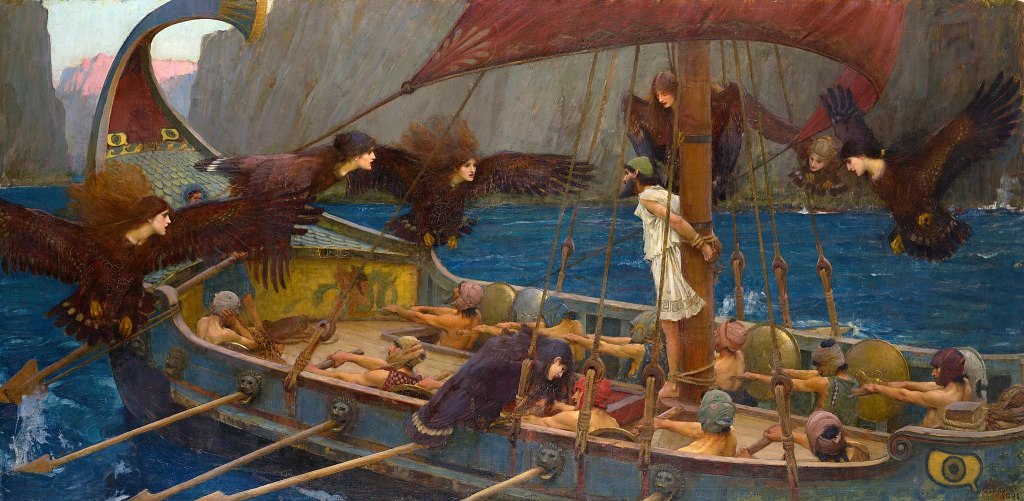
Ulysses and the Sirens by John William Waterhouse. US Public Domain. Courtesy of Wikimedia.
The Argonauts
- Sailors on the ship “Argo”
- Lead by Jason
- Dudes that do lots of quests
- Always interested in golden fleeces

The Golden Fleece by Herbert James Draper. US Public Domain. Courtesy of Wikimedia.
Orpheus
- Son of a Muse
- King of Thrace
- Epic musical abilities
- Sings and plays the lyre
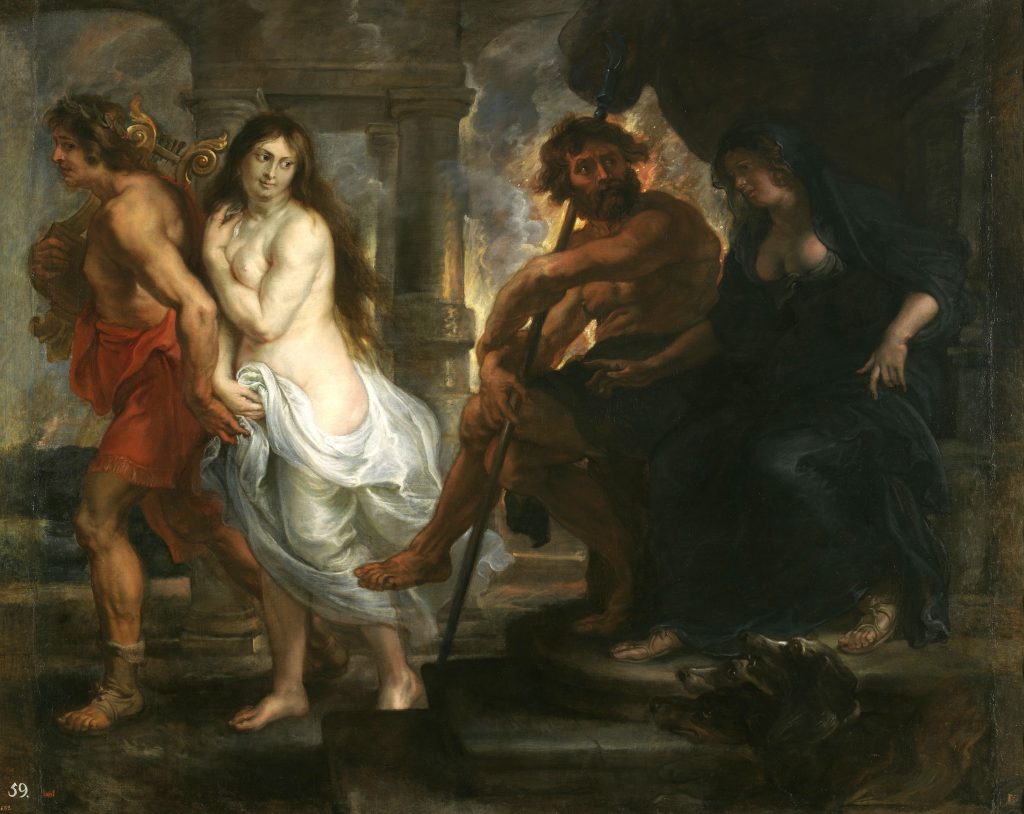
Orpheus and Eurydice by Peter Paul Rubens. US Public Domain. Courtesy of Wikimedia
You’ve probably heard of most of these folks before, right?
Orpheus is a noteworthy character in quite a few stories — the tragic tale of his wife, Eurydice, perhaps being the most famous. You might also know him from the Orphic Hymns, which are a collection of poems written in honor of various deities.
All of that is really interesting and everything, but again, it will have to wait for another day. Right now we’re only focused on one thing: his encounter with the sirens.
Want to hear about future posts? Subscribe to get notifications delivered straight to your inbox.
The Short Version
Orpheus was asked to join the Argonauts on their quest for the Golden Fleece. Along the way, he showed off his musical talent in some very memorable ways. First, he put a dragon to sleep. Second, and more notably to what I’m talking about, he combated the Sirens.
When the Argo was out at sea, the sailors suddenly found themselves within range of the Siren’s deadly song. This is usually a death sentence — the alluring melody is impossible to resist until you meet your fate in the water or on the rocks.
Lucky for the Argonauts, Orpheus whipped out his lyre and started playing his own song. His music was so beautiful that it broke the enchantment and the Argo was able to sail safely past the island.
By some accounts, the sirens were so distraught by their failure that they threw themselves into the ocean and perished.
Where Does the Story Come From?
The Argonauts have been mentioned in multiple places throughout history, including Ovid’s Metamorphoses, but it was The Argonautica by Apollonius of Rhodes that details the confrontation between Orpheus and the Sirens.
Actually, Apollonius’s version of the story, which was written sometime around the 3rd century BCE, presents several interesting facts, including some background on the Sirens. He writes that they once “tended Demeter’s noble daughter still unwed,” hinting that they had been handmaidens to Persephone. Furthermore, he describes them as “fashioned in part like birds and in part like maidens.”
Sirens and mermaids are easy to confuse. They both hang out around water and they’ve both been known to have alluring vocal capabilities. A key difference between the two is that sirens have feathers while mermaids have scales — I mean, I guess they would have probably have scales. The point is that mermaids are not sirens.
As for the epic musical battle that ensued, it’s described in just a few lines.
The Argonautica by Appollonius of Rhodes
"And they were already about to cast from the ship the hawsers to the shore, had not Thracian Orpheus, son of Oeagrus, stringing in his hands his Bistonian lyre, rung forth the hasty snatch of a rippling melody so that their ears might be filled with the sound of his twanging; and the lyre overcame the maidens’ voice. And the west wind and the sounding wave rushing astern bore the ship on; and the Sirens kept uttering their ceaseless song."

I’m sure it was awesome in the original Ancient Greek, but this version was translated by R.C. Seaton in 1912. Thanks to Project Gutenberg, you can read the entire thing online for free, should you wish — just visit this link.
What Happened to Orpheus?
It doesn’t end well for Orpheus. He eventually winds up as a severed head that can continue to sing enchanting melodies for all of eternity.
But you know what? Yeah, you guessed it. That’s a story for another day.
I’ll be right back. I have to go ring forth the hasty snatch of a rippling melody.
Hello. Thank you for reading this entire post. Listen, most people don’t get all the way down here. They probably stopped somewhere around the “noteworthy characters” section. But you? You scrolled all the way. Since you’re down here, let me just point out that there are probably Amazon affiliate links on this page. If you use one of those links to make a purchase, Amazon will pay me a tiny commission. Thanks for listening.




 Aerik Arkadian
.jpg)

Leave a comment