
Home » Magick » Ritual » UnSpirituality: Reculement
Wicca and witchcraft can paint a beautiful worldview, but there are some possible pitfalls. Just like any other religion, those issues are usually the fault of people and not the religion itself. Power-hungry, controlling, judgmental, and close-minded folks might be lurking behind the curtain of what seems to be an otherwise “totally spiritual” group.
Today we’re going to take a look at the somewhat antiquated practice known as reculement. We’ll analyze what it seeks to accomplish and try to determine whether it’s effective or if it does more harm than good.
What is reculement?
Reculement is an archaic word. So much so, in fact, that my spellcheck is flagging it as an inaccuracy.
The verb recule comes from French and literally means “to recoil or retreat; to draw back.” Unless you’re part of a closed or oathbound witchcraft tradition, I wouldn’t be surprised if you’ve never heard it before.
Let me put it in no uncertain terms: This is meant to be the witch’s equivalent of shunning or excommunication. You’ve done bad, so now you’re banished. You’re reculed.
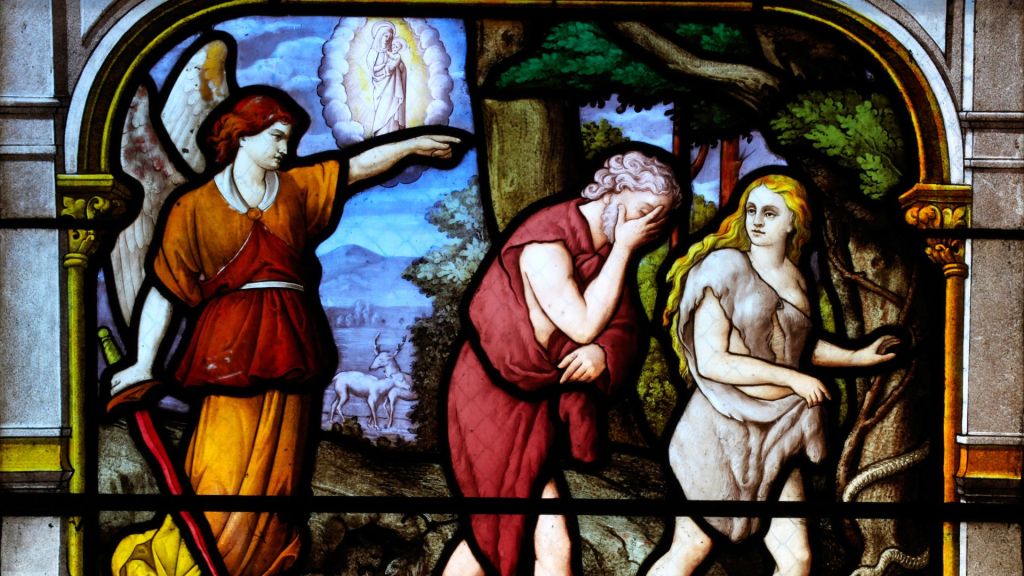
The idea of banishing people because they piss you off is pretty old.
There is a long history to all of these types of practices, but for a witch, there are two points of view on what being reculed effectively means:
- Your initiations and/or elevations are revoked
- Your vouch has been rescinded
I’ll only briefly mention the first point because… honestly, who in their right mind truly believes they have that much authority over another human being? Initiations are permanent things — they’re not switches you can turn off and on. How exactly would you revoke a milestone of someone’s spiritual growth… as if you could reach into their soul and rip away the mysteries as they have experienced them… Yeah, I don’t think so.
But if for some reason, that sounds like something you support, I’d kindly ask you to stop reading now. Instead, use this time to find the phone number of a good therapist who can help you sort out your control issues.
Still with me? Good. In practice, what actually happens with reculement is that a person’s vouch gets rescinded.
The vouch
In oathbound traditions, we’ve sworn to not reveal certain things to the uninitiated. There are words we only say in circle. Our Book of Shadows isn’t (read: shouldn’t be) public. Our rituals and the exact verbiage contained therein are private. These are some of our “secrets” and if you want to be handed them, you are supposed to go through the work of initiation.
Those oaths are important. Anyone who breaks their oath is, rather aptly, called an “oathbreaker,” a term that is sometimes thrown around too lightly these days, but that’s a story for another time.
The point is that we’re only allowed to say certain things to certain people. Seems like a simple rule to follow, but how do we always know who those people are?

Our oaths are… a bit more complicated than this
What if I relocate to another area and need to find a new coven to practice with? Most likely, I’d ask around or do some research on Mandragora Magika before meeting up with a group of Gardnerians and asking if I can attend their inner-court (oathbound) ritual. They’ll probably ask me a bunch of questions. Let’s say I give all the right answers and maybe even show them the secret handshake or something. Can they really be certain at that point that I am who I say I am? Can they know beyond a shadow of a doubt that I’m a High Priest? What if I’m a good liar and someone just told me the secret handshake?
Pro Tip: Gardnerians do not have a secret handshake. Or do we?
In such circumstances, the new coven will usually reach out to the community for a vouch. Someone will hopefully say, “Yeah, I know Aerik. He’s a good dude and definitely who he says he is. Real nice guy. He’d be an asset to any coven.” Or… you know, something along those lines. Once that vouch has been received, the potential new coven will be much more receptive.
This is actually a common scenario. We get emails sometimes that say “Hello, my name is ________ and I am an initiate who has just moved to Florida. I’m looking for a new coven to practice with.” Our first reply usually asks who they were initiated by… and then we *gasp* actually try to check with that person to get a vouch.
In the most simplistic terms, if I vouch for you, I’m telling someone that they can trust you based on the trust they have for me.
When your vouch is rescinded, however, it means that nobody speaks up for you anymore. No one will verify that you are who you say you are. This can make finding a new group very difficult. And what’s worse? Your old group has probably turned their backs on you. They don’t want to practice with you. You’re on your own.
Want to hear about future posts? Subscribe to get notifications delivered straight to your inbox.
Why was it necessary?
I know it sounds kind of extreme, but there are supposed to be consequences for breaking oaths. Much of that is frequently “left up to the gods,” but sometimes we have to protect ourselves on a mundane level as well. And yes, there are also circumstances where there have been violent or abusive people in covens that need to be dealt with appropriately.
If you hang around the community for long enough, you’ll hear stories of people who were reculed for violating oaths, leaking secrets, or otherwise damaging the Craft in untold ways. One very common transgression has been “outing” other witches — that is, publicly making a connection between mundane names and craft names. Not everyone is out of the broom closet. Your oath of secrecy includes people and places, too, and we take that very seriously.
In a perfect world, perhaps this system of “justice” would work, but… add humans into the equation and things get messed up. By that token, you also hear talk of reculement when there’s just disagreement and petty differences between people. Instead of a last resort measure for true offenses, it’s used as enforcement of opinions and beliefs. Someone rubbed me the wrong way once, so let’s go ahead and banish them already!
Who gets to do it?
Exactly who has this “power” will vary by tradition and lineage, but it’s frequently a witch queen, magus, or perhaps the head of a coven. Yeah, I know, we love our titles.
Historically speaking, vesting power in one person was problematic. That’s why many modern governments have multiple branches or systems of checks and balances.
And beyond…
Alright, so the thing about reculement is that it doesn’t just stop at you. It extends to everyone in your downline — inclusive of all the folks you’ve initiated, any folks they’ve initiated, and so on and so forth.
In a way, it’s like cutting off an entire branch of a family tree because one of your grandparents got into an argument with your great-grandparents.
I’ve never seen much logic to that. Witchcraft is pretty widespread. You might not even personally know someone 2 or 3 “generations” back in your lineage, which means that you have the potential to be guilty by association for the behavior of someone you’ve never even met.
Does it work?
So now here’s the big question. Does reculement work?
No. In my opinion, it does not.
It might have carried more weight in an era without the internet, but it is no longer a fitting practice for the modern witch. We’re more interconnected than we’ve ever been (which has been equal parts good and bad). Everybody knows just about everybody else and there are simply too many of us for one person’s differences to sufficiently sway the entire community. There will almost always be supporters on both sides — and that means someone will still be around to give vouches… and multiple parties will be around to argue about it ad nauseum.
But honestly, some people really just need to unclutch their pearls.

There’s one key point that kind of defeats the entire idea of reculement. Every coven is to be autonomous and self-governing. That means that your coven can “recule” someone, but mine can still vouch for them… because what you do in your coven has absolutely zero power over what we do in ours.
So just for fun, here’s a theoretical example that isn’t out of the realm of possibility: Witch Queen gets into a heated disagreement with someone — we’ll call them Bob. Lines are crossed and verbal battles rage until ultimately a statement is released to the community wherein she instructs all of her downline to no longer allow Bob to attend their circles. She then expects everyone else to follow suit.
The trouble is, Bob is very close friends with many people in the community… and it looks like there’s a lot of people on his side. Everyone buckles up for the next threat: “if you circle with Bob, I’ll recule you, too!”
Can you see where this eventually leads?
I’m sorry to break this to witch queens and maguses who have been in the craft for 40+ years and have massive downlines that are proportionately sized to their egos, but you don’t govern anyone. Reminder: your authority ends once your ritual has concluded.
And as ridiculous as my example story is, there are real ones that are almost just as bad. Did you initiate someone I didn’t like? Great, you’re reculed. Do you have views that are different to my own? Consider yourself reculed for that, too.
What’s the solution?
I believe that as leaders in the Craft, we need to do a better job all around. There’s always three sides to a story (yours, theirs, and what actually happened) and that should be considered at every juncture.
One of the biggest issues I see is that many folks have forgotten where they come from. We could all sometimes use a healthy reminder that we lead by serving others, not controlling them.
Our advancement in the Craft requires humility rather than hubris. And unfortunately for some of our most recent history, the people who speak the loudest often have the stupidest things to say.
By the way, I’m not saying that there shouldn’t be consequences for doing bad things. If someone seriously damages your coven by being violent or abusive, I do believe the community should know about it to prevent the possibility of it happening again. With accessible information, people can make informed decisions and govern themselves accordingly. But you can’t just force them to do what you want by means of royal decree. You are not actually a Queen. Sheesh.
Oh, and if you disagree with any of this, you’re reculed.





 Aerik Arkadian
Leave a comment