
Pan is, perhaps, the most quintessential image of a horned god. With his horns, hooves, and rampant sexuality, he embodies some of the top characteristics that many people fear about the occult. But what lies beneath his furry exterior?
Before we get too far into that, I’d like to share a brief story of why I’m writing this article now. Last night, I was brainstorming some topics with my wife — she has great ideas, so I was jotting down some topics. Among other things, she said “focus on a deity.” In my head, I replied, “yeah, I’ll write an article about Thoth!” But when I looked back at what I had written, it said “focus on deity – Pan.”
Alright, Pan, I hear you. Let’s get started.
Classic Images and Stories
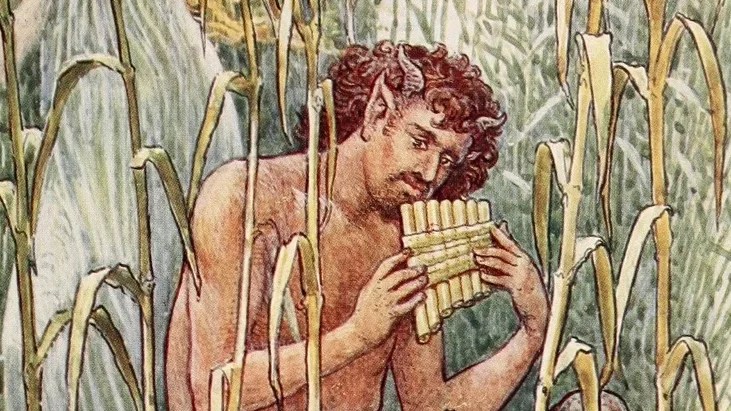
Painting By Walter Crane, found in The Story of Greece by Mary Macgregor, Public Domain, Wikipedia
Worship of Pan started in Arcadia sometime around 500 BCE. He has goat legs, hooves, and goat horns, and is frequently depicted carrying his signature instrument, the Pan Flute (also called the pan pipe or the syrinx). In the Roman pantheon, his counterpart is Faunus.
He was a nature deity and very popular with shepherds and goat herders.
Some of his epithets and titles include:
agreús (ἀγρεύς) – “he of the hunt”
nómios (νόμιος) – “he of the pastures”
agrétēs (ἀγρέτης) – “he of the fields”
Aegocerus (Αἰγόκερως) – “Goat-horned”
Lyterius (Λυτήριος) – “Deliverer”
If I was giving titles of honor to Pan, I would call him Master of the Wild Hunt, King of Arcadia, or Lord of the Green Wood.
Pan is frequently associated with “panic.” The Greek word “panikos” is derived from his name and the fearful state he inflicted on unwanted guests.
Speaking of words that start with “pan-“, he is also considered by many to be pansexual. Yep! Pan’s lusty vibes don’t discriminate between genders. He’s an incredibly potent symbol of fertility.
If you are picturing the classic image of Pan, he’s probably napping, playing his pipes, chasing nymphs, or otherwise scaring the hell out of people. Honestly, I feel like all the stories in Greek mythology give him a bad rep. Yes, he did some terrible things to nymphs, but he isn’t the only god with a dark side. Let’s not forget how Zeus sentenced Prometheus to have his liver pecked out every day for eternity, or how Poseidon raped Medusa in Athena’s temple, or how Apollo flayed Marsyas alive for hubris. It’s not all love and light up there in Mount Olympus! And that’s what makes it interesting.
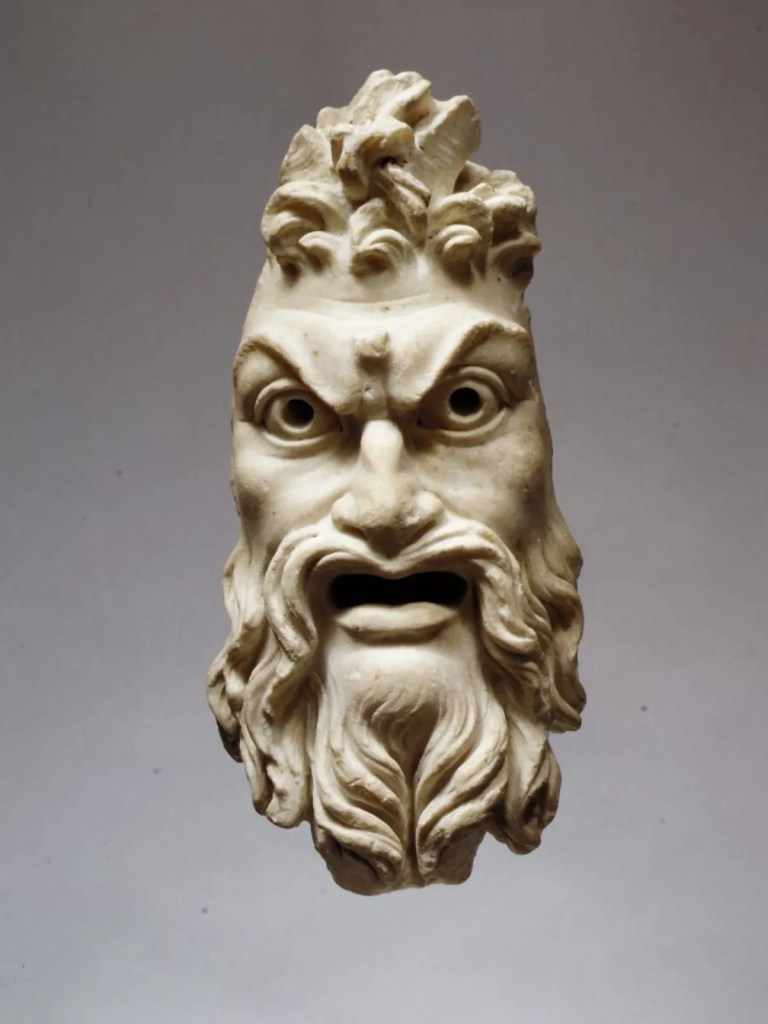
Marble Mask of Pan, circa 1st century CE, Public Domain. Met Museum
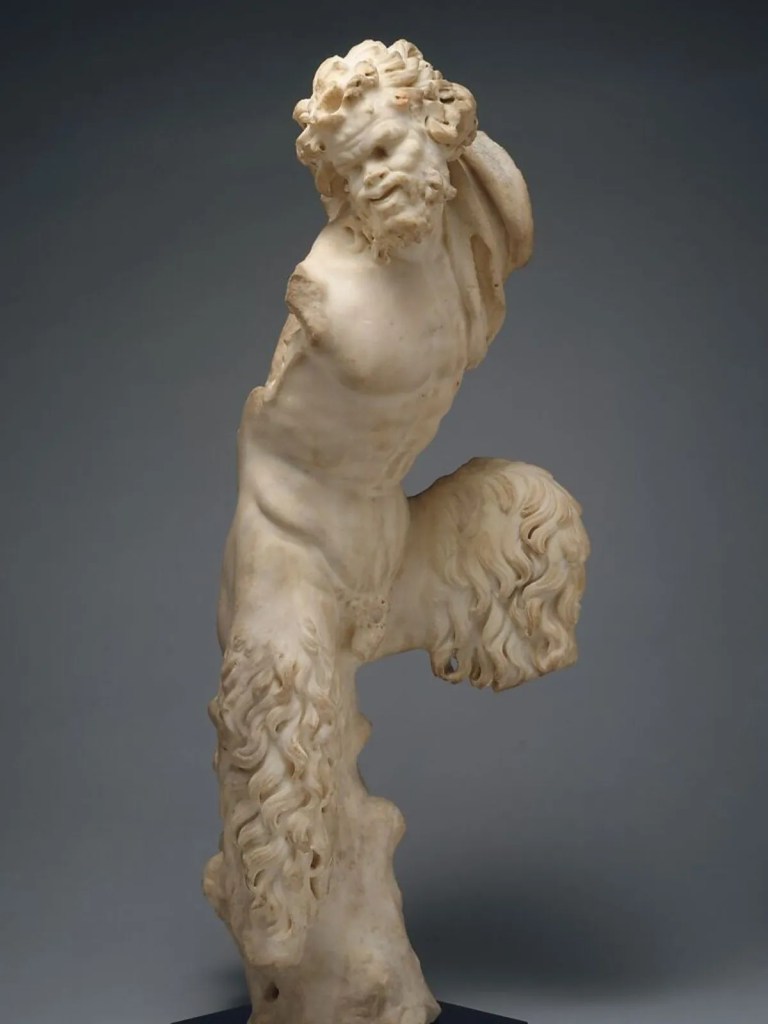
Marble Statue of Pan, circa 1st century CE, Public Domain. Met Museum
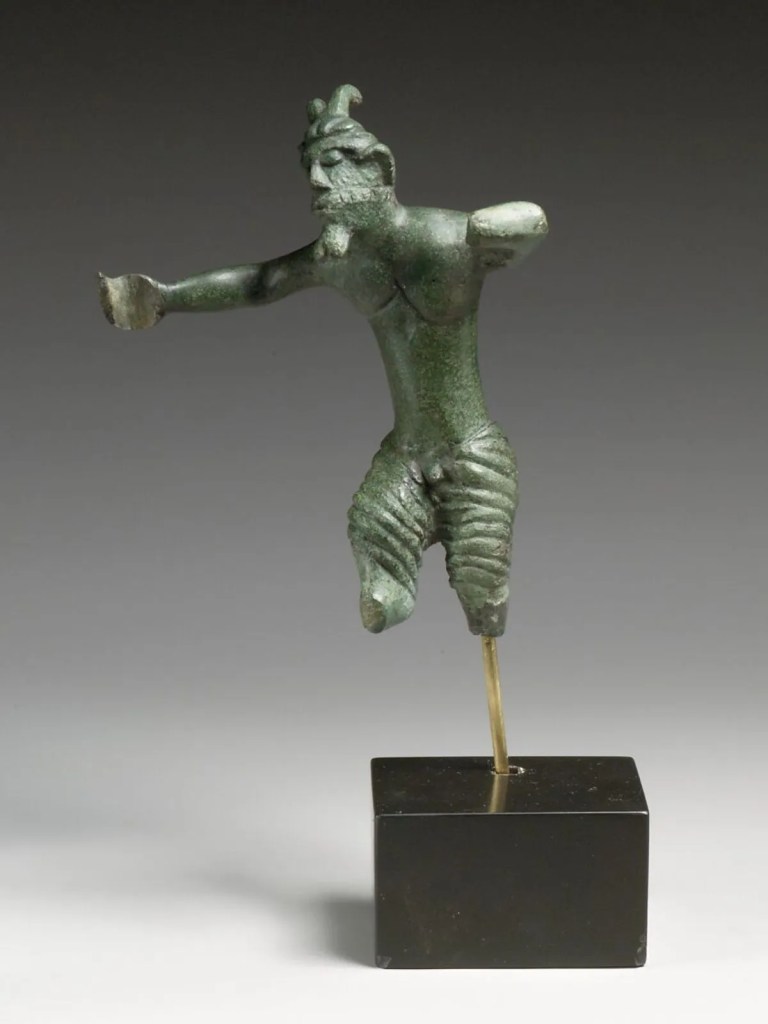
Bronze Statuette of Pan, circa late 5th–4th century BCE, Public Domain. Met Museum
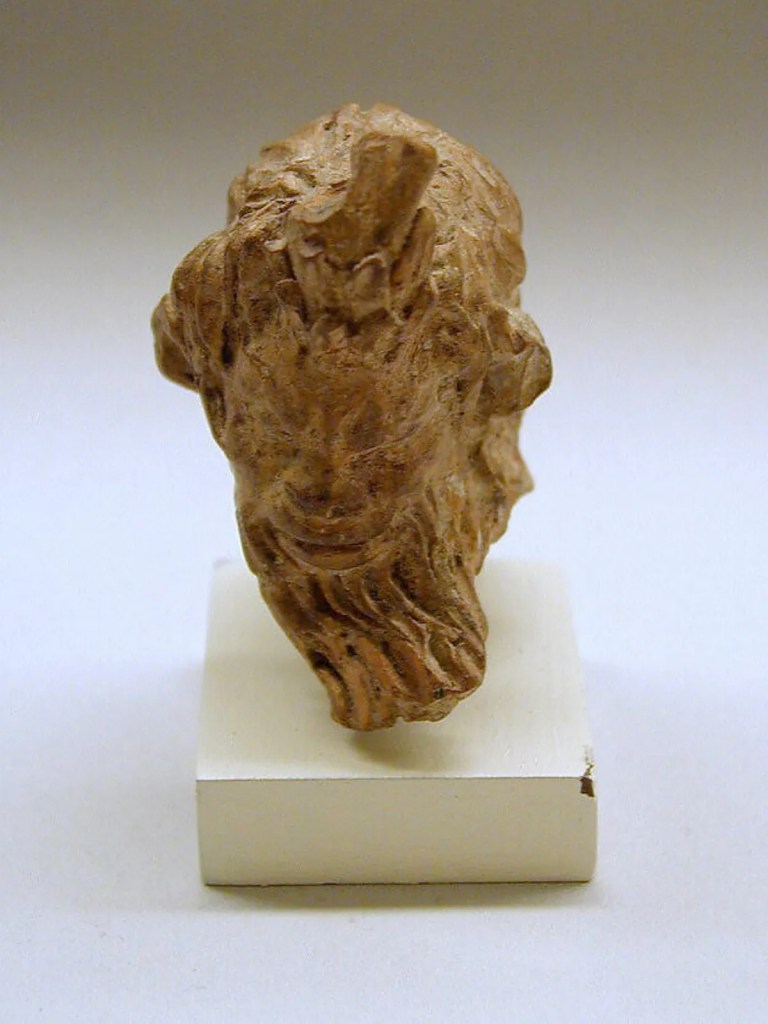
Terracotta Head of Pan, circa 3rd–1st century BCE, Public Domain. Met Museum
Pan and Syrinx
Pan was infatuated by Syrinx, a beautiful wood nymph, but she did not return the affection. He chased her all over the forest until, finally, she hit a dead end at a river. With nowhere left to run, Syrinx prayed to the water nymphs for aid. Just as Pan reached out to grab her, she was transformed into reeds.
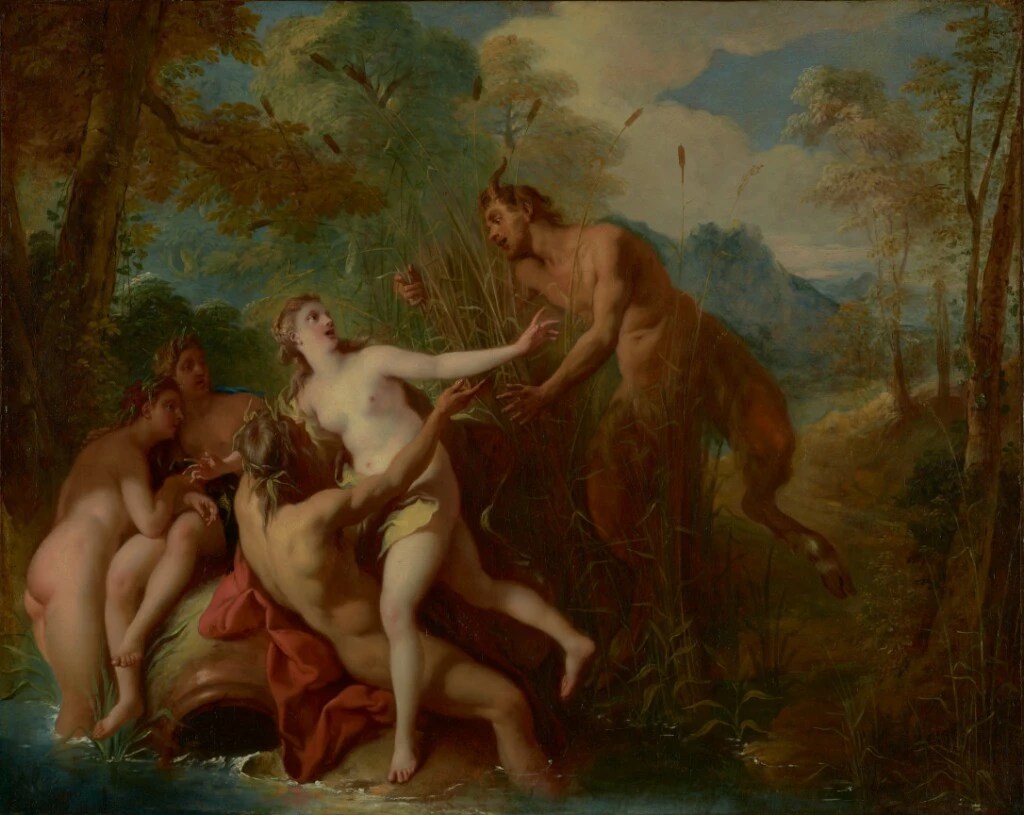
Pan and Syrinx by Jean-François de Troy, 1722–1724. No Copyright. Getty Museum
The wind blew through the reeds and made a pleasing sound. Pan took the reeds and fashioned them into the first Pan Pipe, which is also sometimes called a Syrinx.
Pan and Apollo
Apollo and Pan had a musical duel. Pan set his syrinx against Apollo’s lyre. Unfortunately, nobody beats Apollo. Seriously. Never challenge Apollo to anything.
At the end of the contest, just about everyone agreed that Apollo had won. The only person who favored Pan’s playing was Midas.
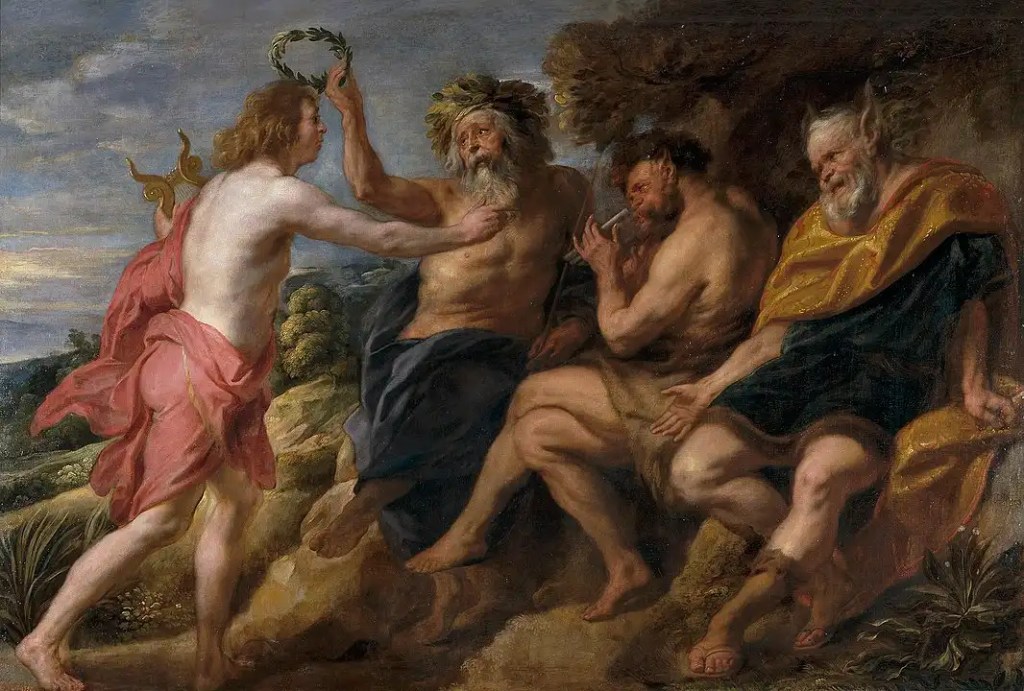
Apollo as Victor over Pan by Jacob Jordaens, 1636 – 1638, Public Domain. Wikipedia.
As punishment, Apollo cursed Midas to have the ears of an ass, which is actually kind of hilarious. At least he wasn’t flayed alive.
Pan and Echo
In one version of Echo’s story, the Muses teach her how to sing, dance, and play instruments. Pan grows jealous, either because of her musical prowess or because she spurns his advances. In a fit of rage, Pan drives a group of shepherds to madness. In turn, the shepherds tear Echo apart.
Echo’s stories always end the same way — all that remains of her is a disembodied voice.
Pan Is Dead; Pan is… Jesus?
Plutarch, an ancient historian, recorded an interesting account of Pan being the only Greek god who died. According to the story, a sailor named Thamus was headed to Italy. As he sailed past the Greek island of Paxi, he heard a mysterious voice over the water, telling him “the great god Pan is dead.” When he arrived he spread the message.
Now enter 101 strange interpretations of this story. It happened sometime during the reign of Tiberius, which took place during the years 14 – 37 CE. Naturally, there are allusions to the life and death of Jesus Christ here. One theory claims that JC had conquered all the demons, so Pan (a demon) was dead. Another claims that the mysterious voice was delivering a pun — “Pan” being a word for “all” was a reference to Jesus being the “all” of Christianity.
While I’m not endorsing any of those theories, they still seem odd enough to mention. Nonetheless, the phrase “the great god Pan is dead” has stuck out as an inspiration to poets — you’ll see it again later in this post.
Worshipping Pan
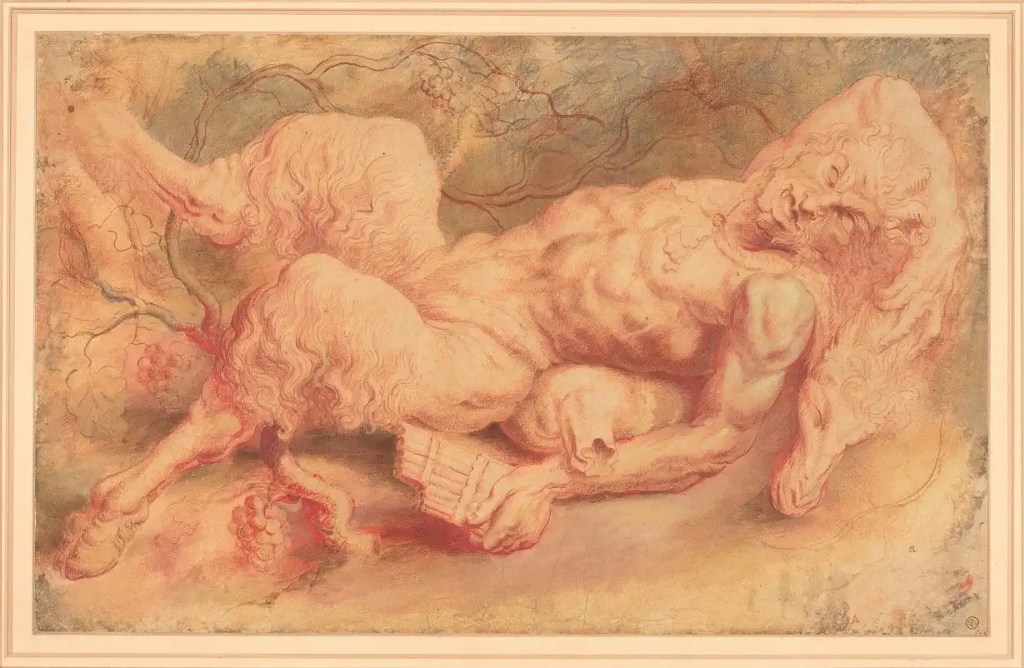
Pan Reclining by Sir Peter Paul Rubens, circa 1610, Public Domain. National Gallery of Art
Pan doesn’t need much to be worshipped. Sing a song, play some music, or do a dance while keeping him in mind and you will have given him his due. He loves music.
If you’d like to further your relationship and get to know him better, you can build him an altar. Start inviting him to your rituals. Once you’re familiar with the energy, perhaps even try invoking him.
An Altar to Pan
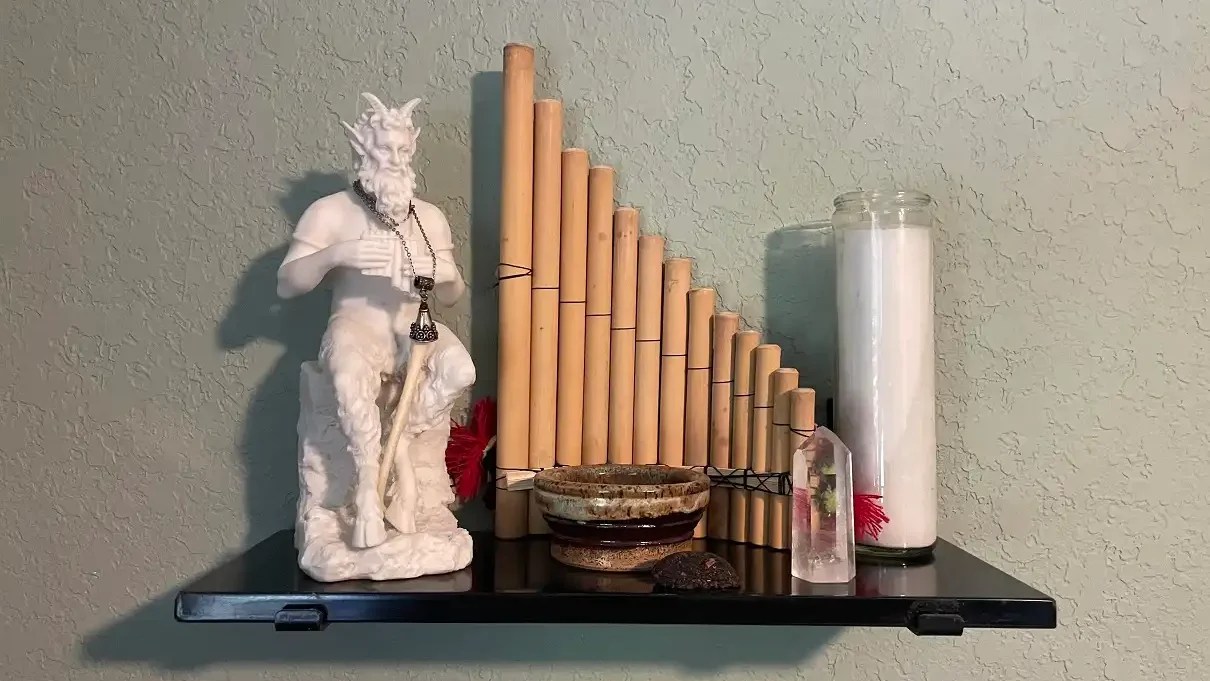
My altar to Pan. Original image.
Building a dedicated altar to any deity can be as simple or complicated as you choose. All that is required is a depiction of your chosen god or goddess and a candle, but if your goal is to establish a true working relationship, you should probably make it more personal.
On my altar to Pan, I have the following items:
- Statue of Pan
- Syrinx
- Bowl filled with acorns (I made the bowl myself in a pottery class. I did not make the acorns)
- Incense Pill
- Quartz Crystal
- Candle
Even though I am terrible at playing the syrinx, it still calls to me. The acorns represent the woods, Pan’s domain. The incense is a blend that I made specifically for Pan, but it’s in pill form and just kind of smells nice without being burned. A baculum necklace is draped around the statue of Pan. If you don’t know what a baculum is, feel free to have fun looking it up.
One very important mention here is that Pan’s essence fills the statue. That is to say Pan has been invoked into the statue. Another way to say this would be that it isn’t just a statue of Pan, it is Pan. However you want to look at it, the altar transcends the mundane and has roots in the astral. This can be accomplished through a deep trance or meditation.
Pan Incense
If you’d like to make an incense blend for working with Pan, this recipe can serve as a guide.
- Frankincense
- Pine Needles
- White Oak Bark
- Acorn
- Patchouli Oil
Frankincense, Oak, and Acorns have associations with the sun. Pine Needles have an elemental correspondence to fire. Patchouli has an elemental correspondence to earth and just so happens to smell like the woods.
To me, all of these ingredients just scream “Pan!” Feel free to substitute anything! Use your intuition and pick out things that have woodland associations for you personally.
I make this incense in pill form. It ends up being an aromatic tablet.
- Crush the acorn, pine needles, and white oak bark. Grind them as best you can.
- Add an equal part of Frankincense, ground to the consistency of course sea salt
- Add enough patchouli oil to make everything stick together
- Press into a pill and let dry
If you’d like a more detailed account, don’t worry, I’ve written out the full instructions for making pill incense.
IO PAN!
You may occasionally come across the phrase “Io Pan!” This is pronounced “eee – oh” rather than “eye – oh.” Do not confuse with Io, the character in Greek mythology who was the first of Hera’s priestesses.
If you speak the word quickly, it almost sounds like “yo.” This was used in Ancient Greece and Rome as a triumphant shout of joy, almost synonymous with “Huzzah!” When Roman armies returned to the city after victorious conquests, they would be met by crowds shouting “Io Triumphe!” which essentially meant “Hail the triumph!” or “Hail the victory!”
In this context, “Io Pan” simply means “Hail Pan!” The phrasing was probably popularized by Aleister Crowley, who uses it extensively in his Hymn to Pan, which we’ll take a look at in a moment.
Give it a shout! It’s a great way to honor Pan.
Meeting Pan Through Meditation
If you have a good meditation practice, meeting Pan is as simple as walking through a door.
I won’t elaborate too much on this, but the basic formula is as follows:
- Meditate into your safe place (this is personal to you)
- Find a door. This is a special door that leads you to Pan’s domain.
- Walk through the door and into the green wood. You can leave at any time by going back through this door.
- Acclimate to your new surroundings by paying close attention to your senses — to the sounds of woodland creatures, the smell of plants, etc
- Wander through the woods until you can cautiously and respectfully approach Pan.
- If Pan doesn’t show up, try again another day.
Invoking or Evoking Pan
You can use hymns, odes, or poems as an aid to call Pan into yourself or to your ritual space. Many notable figures, including Dion Fortune and Aleister Crowley, have written their own versions. There is also an Orphic Hymn to Pan. They are all beautiful works of lyric poetry.
The best way, however, is to write your own. Writing makes it more personal, which Pan appreciates. Remember: It’s always a good idea to flatter a deity before asking them to do something for you.
If you don’t have the time or inspiration, the following examples will work just as well.
The Rite of Pan By Dion Fortune
Came the voice of Destiny,
Calling o’er the Ionian Sea,
“The Great God Pan is dead, is dead.
Humbled is the hornèd head;
Shut the door that hath no key—
Waste the vales of Arcady.”Shackled by the Iron Age,
Lost the woodland heritage,
Heavy goes the heart of man,
Parted from the light-foot Pan;
Wearily he wears the chain
Till the Goat-god comes again.Half a man and half a beast,
Pan is greatest, Pan is least.
Pan is all, and all is Pan;
Look for him in every-man;
Goat-hoof swift and shaggy thigh—
Follow him to Arcady.He shall wake the living dead—
Cloven hoof and hornèd head,
Human heart and human brain,
Pan the goat-god comes again!
Half a beast and half a man—Pan is all, and all is Pan.
Come, O Goat-god, come again!
Orphic Hymn to Pan
I Call strong Pan, the substance of the whole,
Etherial, marine, earthly, general soul,
Immortal fire; for all the world is thine,
And all are parts of thee, O pow’r divine.Come, blessed Pan, whom rural haunts delight,
Come, leaping, agile, wand’ring, starry light;
The Hours and Seasons [Horai], wait thy high command,
And round thy throne in graceful order stand.Goat-footed, horned, Bacchanalian Pan,
Fanatic pow’r, from whom the world began,
Whose various parts by thee inspir’d,
Combine in endless dance and melody divine.In thee a refuge from our fears we find,
Those fears peculiar to the human kind.
Thee shepherds, streams of water, goats rejoice,
Thou lov’st the chace, and Echo’s secret voice.The sportive nymphs, thy ev’ry step attend,
And all thy works fulfill their destin’d end.
O all-producing pow’r, much-fam’d, divine,
The world’s great ruler, rich increase is thine.All-fertile Pæan, heav’nly splendor pure,
In fruits rejoicing, and in caves obscure.
True serpent-horned Jove [Zeus], whose dreadful rage
When rous’d, ’tis hard for mortals to asswage.By thee the earth wide-bosom’d deep and long,
Stands on a basis permanent and strong.
Th’ unwearied waters of the rolling sea,
Profoundly spreading, yield to thy decree.Old Ocean [Okeanos] too reveres thy high command,
Whose liquid arms begirt the solid land.
The spacious air, whose nutrimental fire,
And vivid blasts, the heat of life inspireThe lighter frame of fire, whose sparkling eye
Shines on the summit of the azure sky,
Submit alike to thee, whole general sway
All parts of matter, various form’d obey.All nature’s change thro’ thy protecting care,
And all mankind thy lib’ral bounties share:
For these where’er dispers’d thro’ boundless space,
Still find thy providence support their race.Come, Bacchanalian, blessed power draw near,
Fanatic Pan, thy humble suppliant hear,
Propitious to these holy rites attend,
And grant my life may meet a prosp’rous end;Drive panic Fury too, wherever found,
From human kind, to earth’s remotest bound.
Hymn to Pan By Aleister Crowley
Thrill with lissome lust of the light,
O man! My man!
Come careering out of the night
Of Pan! Io Pan!
Io Pan! Io Pan! Come over the sea
From Sicily and from Arcady!
Roaming as Bacchus, with fauns and pards
And nymphs and satyrs for thy guards,
On a milk-white ass, come over the sea
To me, to me!
Come with Apollo in bridal dress
(Shepherdess and pythoness)
Come with Artemis, silken shod,
And wash thy white thigh, beautiful god,
In the moon of the woods, on the marble mount,
The dimpled dawn of the amber fount!
Dip the purple of passionate prayer
In the crimson shrine, the scarlet snare,
The soul that startles in eyes of blue
To watch thy wantonness weeping through
The tangled grove, the gnarled bole
Of the living tree that is spirit and soul
And body and brain — come over the sea,
(Io Pan! Io Pan!)
Devil or god, to me, to me,
My man! my man!
Come with trumpets sounding shrill
Over the hill!
Come with drums low muttering
From the spring!
Come with flute and come with pipe!
Am I not ripe?
I, who wait and writhe and wrestle
With air that hath no boughs to nestle
My body, weary of empty clasp,
Strong as a lion and sharp as an asp —
Come, O come!
I am numb
With the lonely lust of devildom.
Thrust the sword through the galling fetter,
All-devourer, all-begetter;
Give me the sign of the Open Eye,
And the token erect of thorny thigh,
And the word of madness and mystery,
O Pan! Io Pan!
Io Pan! Io Pan Pan! Pan Pan! Pan,
I am a man:
Do as thou wilt, as a great god can,
O Pan! Io Pan!
Io Pan! Io Pan Pan! I am awake
In the grip of the snake.
The eagle slashes with beak and claw;
The gods withdraw:
The great beasts come. Io Pan! I am borne
To death on the horn
Of the Unicorn.
I am Pan! Io Pan! Io Pan Pan! Pan!
I am thy mate, I am thy man,
Goat of thy flock, I am gold, I am god,
Flesh to thy bone, flower to thy rod.
With hoofs of steel I race on the rocks
Through solstice stubborn to equinox.
And I rave; and I rape and I rip and I rend
Everlasting, world without end,
Mannikin, maiden, Maenad, man,
In the might of Pan.
Io Pan! Io Pan Pan! Pan! Io Pan!
What is Pan, Really?
So far, we’ve talked a lot about who Pan is. Like all gods and goddesses, we tend to anthropomorphize and ascribe them human emotions so we can relate. But the thing is… Pan doesn’t actually have a face. He doesn’t have goat legs, goat horns, or any other body parts for that matter either. In fact, he isn’t really a he — that’s just a convenient descriptor we use to oversimplify our discussions. Instead of talking about who Pan is, let’s consider what Pan is.
Pan is unbridled, divine masculine energy.
Pan is pure creative force.
Ultimately, what we’re talking about here is tapping into a specific channel of archetypal energy. If that sounds like your cup of tea, working with Pan should be extremely rewarding.
Further Reading
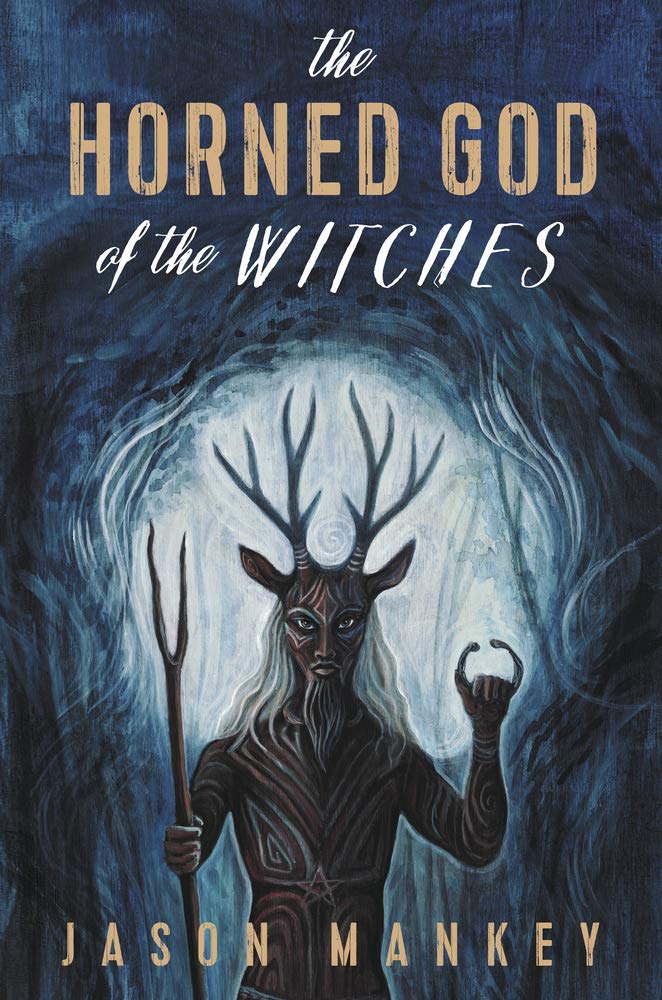
The Horned God of the Witches by Jason Mankey
This book isn’t exclusively about Pan, but it does have a significant amount of good information about him. Mankey provides more detailed rituals for meeting and working with a variety of horned gods.
I did have the pleasure of meeting Jason Mankey recently. Like any good reader, I urged him to sign my copy of this book, which he did because he’s a good guy. My point is simply this: I liked the book enough to get it signed.
Conclusions
Pan is a nature deity and musically-inclined horned god. You may find it beneficial to work with him for anything related to creativity or passion.
Io Pan! Enjoy the greenwood, my friends.



 Aerik Arkadian

Leave a reply to Philosopher Muse Cancel reply