Home » Magick » Basics » The Four Cornerstones of Magick: A Deep Dive Into The Witches’ Pyramid
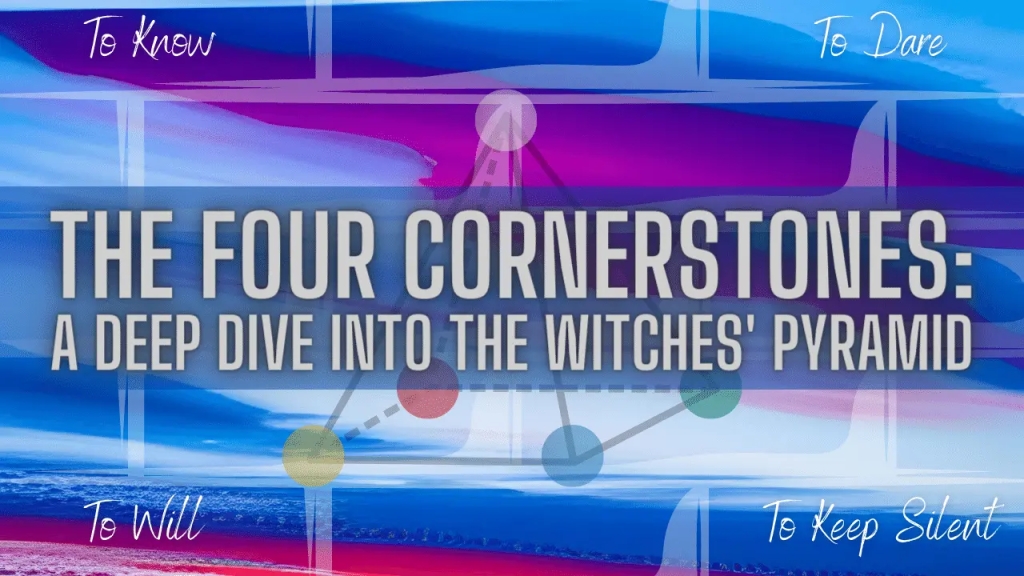
Sometimes advanced study requires us to return to basics with new eyes and deeper understandings. Today we are going to return to The Four Cornerstones of Magick, sometimes called The Witches’ Pyramid. Together, these four concepts give you a list of ingredients. As opposed to the Hermetic Principles, which explain how magick works, the cornerstones state what is fundamentally required of the practitioner. In short, this is: knowledge, daring, willpower, and silence.
Starting Points
These concepts are so foundational to magick, it’s one of the first things we teach our students. We even make them write a paper on the subject and turn it in. Hopefully by the end of this article, you can fully answer the following question: “What does each cornerstone mean to you?”
Where did they come from?
Eliphas Levi, an influential French occultist from the 19th century, was the first to describe these four terms. He didn’t call them “cornerstones” though. He referred to them as “the four words of the magus.”
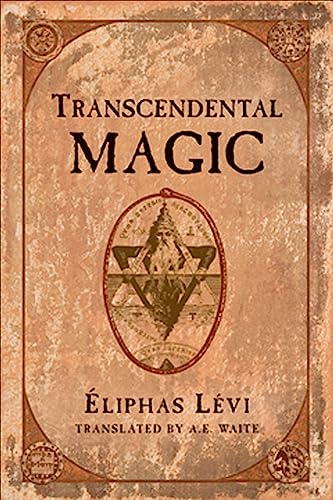
Eliphas Levi, Transcendental Magic: Its Doctrine and Ritual (Translation by Arthur Edward Waite)
"To attain the sanctum regnum, in other words, the knowledge and power of the magi, there are four indispensable conditions—an intelligence illuminated by study, an intrepidity which nothing can check, a will which nothing can break, and a discretion which nothing can corrupt and nothing intoxicate. To know, to dare, to will, to keep silence—such are the four words of the magus, inscribed upon the four symbolical forms of the sphinx. These four words can be combined after four manners, and explained four times by one another."
Actually, perhaps it is more apt to say that A. E. Waite referred to them as “the four words of the magus.” Since Levi was French, he wrote his book in French. Waite was the first to translate this work into English in 1910.
More recently, Mark Anthony Mikituk took on a new translation. I’ve read both, but I’ll admit it was rather accidentally — I thought they were completely separate books. For fun, let’s look at the small differences in Mikituk’s version.

Eliphas Levi, The Doctrine and Ritual of High Magic (Translation by Mark Anthony Mikituk)
"To reach the sanctum regnum, that is to say the science and the power of the mages, there are four things which are required: an intelligence enlightened by study, an audacity which nothing can stop, a will which nothing can break and a discretion that nothing can corrupt or intoxicate. TO KNOW, TO DARE, TO WILL, TO BE SILENT, those are the four verbs of the mage which are written in the four symbolic forms of the sphinx. These four verbs can be combined together in four ways and can be explained four times through the others."
I do find Mikituk’s change from “words” to “verbs” particularly interesting since verbs always require action. In this way it hints at an undertaking that must be performed rather than a set of syllables one simply possesses. Whichever translation you prefer (“the four words of the magus” or “the four verbs of the mage”), we seem to be left, ultimately, with some lovely riddles.
"...inscribed upon the four symbolical forms of the sphinx."
The first riddle revolves around the four symbolic forms of the sphinx, which are also called the kerubim. Individually, this is a man, a lion, an eagle, and a bull, which also represent the four fixed signs of the zodiac (Aquarius, Leo, Scorpio, Taurus) and the four elements (Air, Fire, Water, and Earth). When you merge all of these creatures together, you get the sphinx, which has the head of a man, the torso and front paws of a lion, the wings of an eagle, and the rear end of a bull. Synergy at its finest.
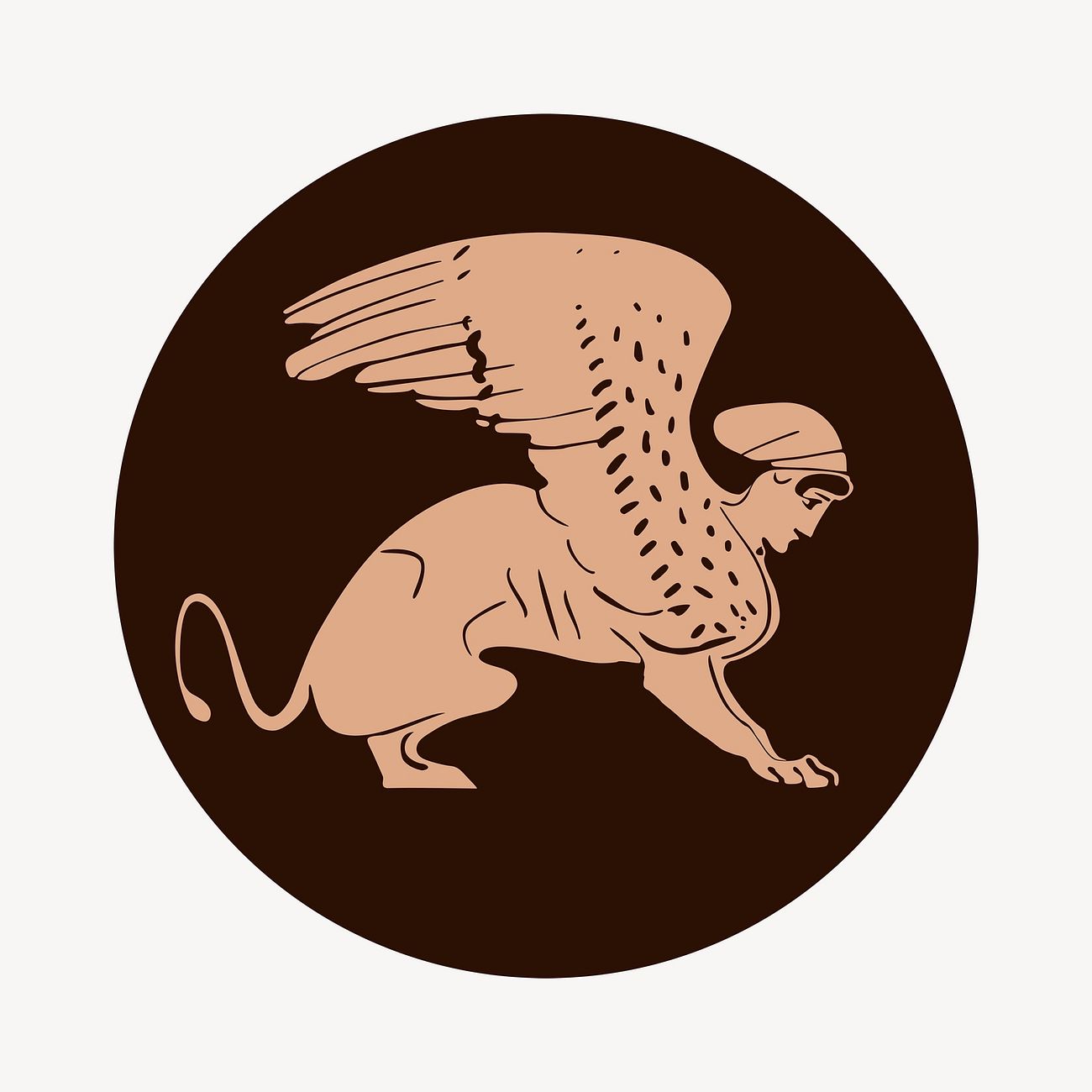
The form of the sphinx is a riddle in and of itself.
Furthermore, the last line of each translation provides another riddle to solve, but we’ll deal with that one later.
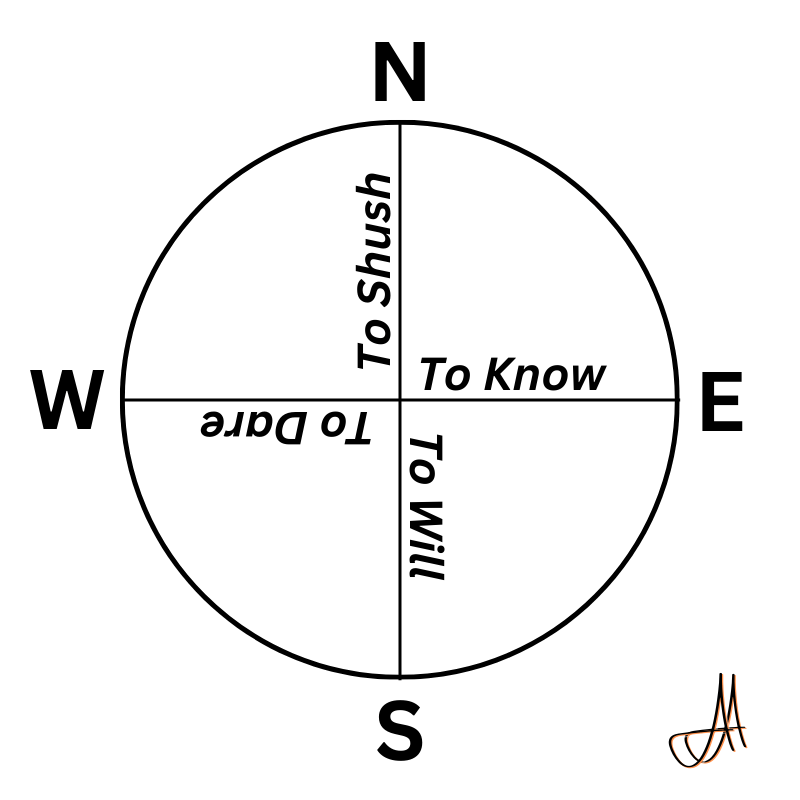
This is my official petition to witches around the world. Let’s revise “keep silent” to “shush.”
Also, this handy chart shows you the associations with each cardinal direction.
While we’re waiting for my petition to get enough signatures, let’s take a look at each cornerstone individually.
Want to hear about future posts? Subscribe to get notifications delivered straight to your inbox.
To Know
Knowledge is power. This is where you start to build up knowledge of correspondences in your head — herbs, metals, crystals, colors, zodiac signs, elements — see how the elaborate web fits neatly together. This is also where you know the ritual in terms of the actions you must perform and the words that need to be said. This is where you know yourself, your abilities, and your limits. Know your goal and your intention. Know your magick.
This cornerstone corresponds to the element of air. As such, it is all things intellectual. Reading, memorization, logic. It is where you say “I know to use cinnamon because the book said it’s a fire herb.”
To Dare
Courage is required for all acts. This is where you do things because you simply must do them. This is where you add a step in the ritual, not because a book told you to, but because suddenly it felt right. This is where you intuitively understand that enough energy has been raised for a working. Feel your magick. For me, “to dare” and “to know” are like two sides of the same coin.
This cornerstone corresponds to the element of water. As such, it is intuitive. Feeling, emotions, intuition. It is where you say “I dare to use cinnamon because I feel its energy is needed here.”
To Will
A witch without will is really no witch at all. Our will drives our magic. It is the ability to manifest reality. Willpower is built upon knowledge and courage. It’s like the ignition switch for the two previous cornerstones. Will your magick.
This cornerstone corresponds to the element of fire. As such, it is passionate. Creativity, passion, desire. It is where you ignite the energy.
To Keep Silent
We don’t talk about our magic. We don’t talk about our magic. And we don’t talk about our magic. Perform the spell, accept that it is done, and move on. Silence is often equated to the secrecy that was necessary for witches to avoid persecution, but even in an open and safe community, there’s still reason to be silent. That applies face to face as much as it does anonymously over the internet. Telling someone about your magick can invite doubt, if only unintentionally. This is where you hold your tongue rather than explaining the cool new ritual you did. At least wait until your results have manifested. Guard your magick.
This cornerstone corresponds to the element of earth. As such, it is grounded. Stability, acceptance, secrecy. It is where you say nothing.
Summarized Correspondences
Now that we’ve looked at each cornerstone individually, we can zoom out and take a higher look at some keywords and associations for each. Your tradition may have differences in elements, directions, or more. And that’s okay! We don’t have to agree. You are more than welcomed to simply use this as a starting point, adding or replacing things from the chart below as you see fit.
To Know
East
Air
Aquarius
Human
Hod
Reason
Mercury
To Will
South
Fire
Leo
Lion
Geburah
Will
Mars
To Dare
West
Water
Scorpio
Eagle
Netzach
Desire
Venus
To Shush
North
Earth
Taurus
Bull
Chesed
Memory
Jupiter
Once you’ve developed your own personal list, try reflecting deeply on each one of the terms, ensuring that it is in the proper column. You may start to see a structure developing, as if these cornerstones really are foundational building blocks for magick.
More Riddles
Later in his book, Eliphas Levi clues us in as to how each power is linked together. I personally prefer the “newer” translation, but I will show both just in case one makes more sense over the other.
One must KNOW in order to DARE.
The Doctrine and Ritual of High Magic
One must DARE in order to WILL.
One must WILL to have the Empire.
And to reign, one must BE SILENT.
In order to dare we must know;
Transcendental Magic
in order to will, we must dare;
we must will to possess empire,
and to reign we must be silent.
In short, each cornerstone requires the power of the other three. But what does it mean, exactly, to have empire? Well, “empire” goes back to the Latin word imperium which also meant “to command.” It was supreme and executive power. We require knowledge, willpower, and daring to have this power, but we have to be silent to keep it.
Another riddle?
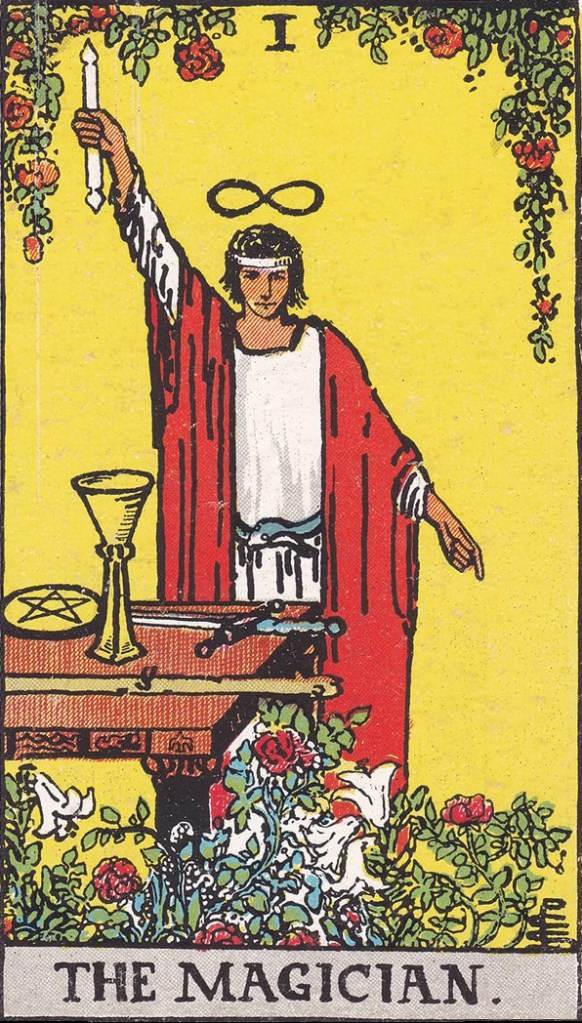
Since the cornerstones have such weighty correspondences (astrological, elemental, and beyond), you’ll start to find them all over the place. In fact, The Magician Tarot card contains a representation of each cornerstone. Can you find them?
Four magickal tools sit on the table in front of the magician. We usually call these the four “main” tools. They are associated with fire, water, air, and earth. Of course, your tradition will dictate which is which.
But tools don’t make a witch. The real power, obviously, comes from inside. The four words of the magus reside within you. They are always at your disposal, should you wish to use them.
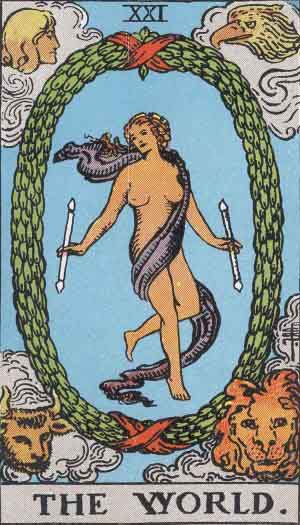
The Cornerstones are also represented here, in XXI – The World.
In each corner of the card, there is an image of a particular creature. If you recall from earlier, the Sphinx is a blend of four kerubim, which are the man, eagle, bull, and lion.
And another?
The Final Riddle
When Levi first introduces the cornerstones, he ends his paragraph by saying “These four verbs can be combined together in four ways and can be explained four times through the others.” This is an incredibly cryptic statement. Oftentimes I see his work quoted and that line is explicitly left out. Why? Perhaps because it overcomplicates a “general introduction” to the cornerstones.
What I believe he is referring to, although he might not have used this word, are the “sub-elements” — that is, elements within elements. You might say, for instance, that TO KEEP SILENT requires a portion of silence, a portion of willpower, a portion of knowledge, and a portion of daring. In elemental terms, this would be EARTH of EARTH, FIRE of EARTH, AIR of EARTH, and WATER of EARTH.
This mystery is also expressed in the Tarot.
| Wands (Fire) | Swords (Air) | Cups (Water) | Pentacles (Earth) | |
| King (Fire) | Fire of Fire | Fire of Air | Fire of Water | Fire of Earth |
| Queen (Water) | Water of Fire | Water of Air | Water of Water | Water of Earth |
| Knight (Air) | Air of Fire | Air of Air | Air of Water | Air of Earth |
| Page (Earth) | Earth of Fire | Earth of Air | Earth of Water | Earth of Earth |
By the above chart, you can see that the Knight of Pentacles represents the Air of Earth, which is the aspect of Air found within the element of Earth. For me, it’s really easy to mix up whether you say “Air or Earth” or “Earth of Air” in this case, so I’ll clarify this way: The Knight of Pentacles is an Airy character who plays a part in the world of Earth. Hopefully that helps keep things straight!
Let’s assign cornerstones to each tarot suit.
- TO KNOW (Swords)
- TO DARE (Cups)
- TO WILL (Wands)
- TO KEEP SILENT (Pentacles)
Extending this a bit further, we could use the Knight of Pentacles to represent the aspect of knowledge that is required to keep silent. After all, you do have to know when to shut up, right? Because of that, I’ll save you a chart listing things like “the WILL of SILENCE” or “the DARING of KNOWLEDGE.” Forming those extrapolated meanings is a pretty subjective process; nonetheless, considering each cornerstone in terms of the others is a worthy exercise.
I would love to hear anyone else’s interpretation of this riddle.
But wait, that isn’t a pyramid!
With that said, we’ve pretty much covered the cornerstones. You may be thinking “that’s not a pyramid!” If so, you are absolutely right. The Four Cornerstones by themselves are just a two-dimensional square. Aleister Crowley built upon Levi’s work by adding a 5th power, TO GO, that sits on top of the other four. This is commonly associated with Spirit. Collectively these five “words of the magus” give us the 3-dimensional shape of the pyramid.

Finally you have your pyramid.
The power TO GO is associated with Spirit, The Fifth Element, Imagination, and Tiphereth.
Do all witches agree where to place each cornerstone in the pyramid and which color to assign them? Of course not! We love to think differently.
The Greater Witch’s Pyramid
Would you like to take it one step further? I know I would. Ivo Dominguez Jr. drew an additional connection and called it “The Greater Witches’ Pyramid.”
It’s based on the Hermetic Qabalah. You don’t have to practice or study the Tree of Life in order to at least find this last part interesting, but it certainly would’t hurt.
To begin, we have to take a look at one of the middle sections of the Tree of Life. Specifically, we’re looking at the interconnection of Tiphereth to Hod, Netzach, Geburah, and Chesed. If you turn this section of the tree on its side, as if it were a floor to stand upon, then extend Tiphereth up above the others, you’ll have a pyramid.
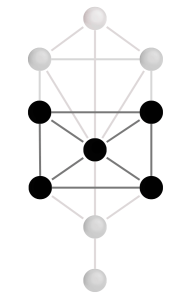
Reflect this image, taking a duplicate of Tiphereth through the “floor” and you will have added the sphere of Yesod, forming an octahedron.
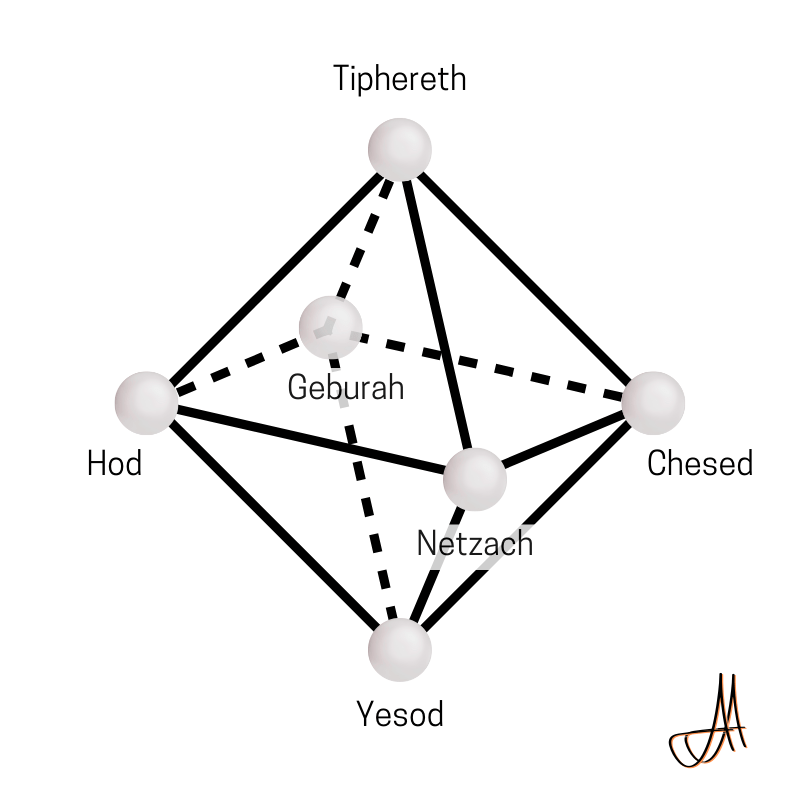
The Greater Witches’ Pyramid as described by Ivo Dominguez Jr.
The sun above, the moon below, and the elements in each cardinal direction. The operator, while truly performing magick, may aspire to raise their consciousness to dwell in the middle of this shape. This makes for an excellent visualization, but Ivo Dominguez Jr. describes it better in The Four Elements of the Wise.
Conclusions
The Four Cornerstones are an excellent starting point for teaching magick, but they’re also great pitstops on the road to advanced learning. Once you get intrinsically comfortable with the basic correspondences, there are layers and layers that can be added, including visualizations using the Qabalistic Tree of Life.
I think we’ve finally hit bottom. Thanks for joining me on this deep dive.
What other topics do you feel deserve a reexamination? Let me know!
Hey, what are you doing all the way down here? Well, you may have noticed that some items on this page use Amazon Associate referral links. If you click one of those links and make a purchase, that’s awesome because Amazon gives me a small commission. Thus concludeth the fine print.




 Aerik Arkadian
Leave a comment