

Home » Magick » Basics » Incense Making 101
A while back, I wrote an article on how to make pill incense. Actually, it was the first one I ever posted on this site. Ah, memories.
Since then, I’ve been sporadically making videos. I decided to film the entire process so you could watch it through from start to finish.
Incense Making 101 Video
Just as a quick review, the only mention of pill incense that I’ve ever been able to find is from Agrippa’s Three Books of Occult Philosophy. It’s basically when you take all of your dry ingredients, add a binding agent (like oil), and then squish everything together.
For you folks that prefer reading to watching, here’s a written list of the tips and tricks.
Incense Making Tips
1. Coarsely Grind Resin
Your resin is like the backbone of your incense. The pieces need to be small enough to blend into your mix, but large enough so that they still have time to melt. If you grind the resin down to a powder, it starts to destroy the natural aroma and will burn instantly. I’ve found that the optimal size is that of coarse sea salt.
2. Hold a Hand Over the Mortar
If you’re doing any tasks in the mortar that require pounding or rough grinding with the pestle, hold your non-dominant hand flat over the opening to help stop pieces from flying out. This might seem like common sense for some people, but I definitely made several messes until I learned to do it.
3. Freeze Resin
If you have particularly gummy resin, you can try putting in the freezer. After being left overnight, it should be more brittle and easy to break up into smaller pieces.
4. Use High Quality Ingredients
It’s really tempting to buy that $10 bag of bulk Myrrh on Amazon, isn’t it? Well, I tried that. I received a big bag of dirt. I’d post the link here, but the product has been taken down, which I guess is a good thing. Regardless, you get what you pay for, especially with resins and essential oils.
5. Aim for Odd Numbers
Odd numbers of ingredients have a distinctly magickal feel to them already. Three, five, seven, and nine are great numbers to aim for. It’s not totally necessary, though!
6. Keep Separate Mortar and Pestles
I’ll admit that I usually use the same mortar and pestle for the entire process, but it can be nice to have separate ones. You might find that it’s advantageous to keep one for resins and one for dry plant materials like herbs and flowers. If you ever grind weird stuff, like poisonous herbs or bone, you might want to keep a separate set for that as well.
7. A Nutmeg Grater Comes in Handy
Having trouble grinding that bark or hardwood? Grab a nutmeg grater. You’ll thank yourself later.
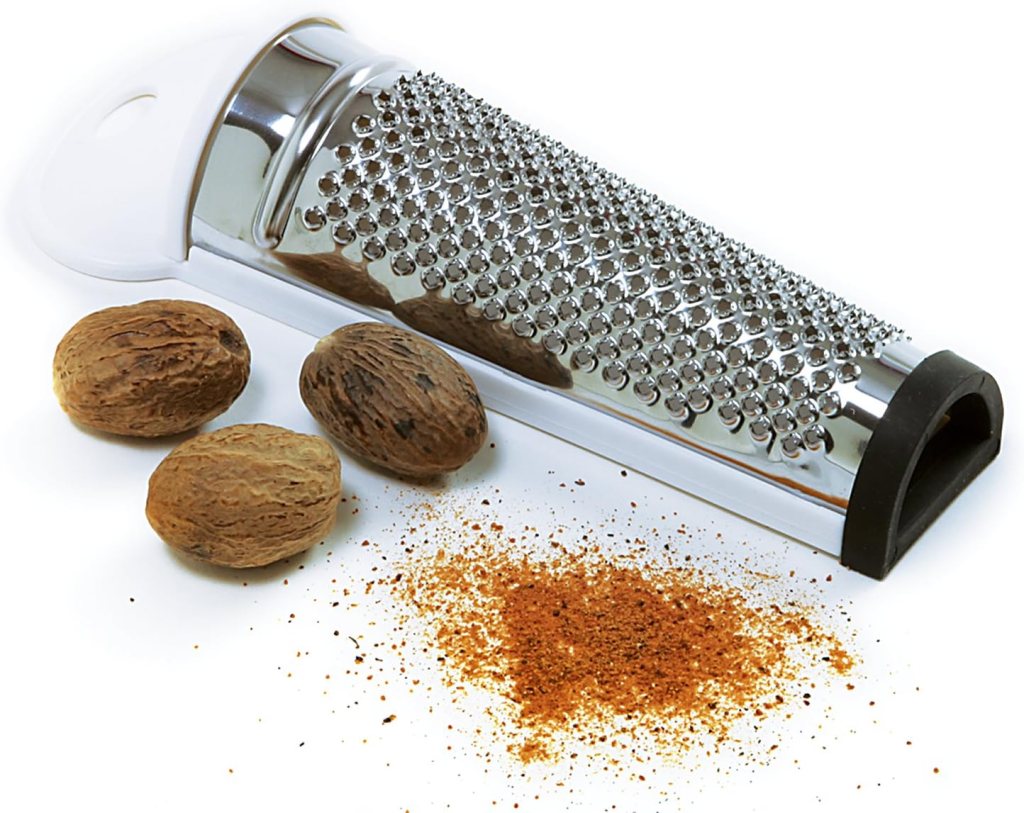
How much nutmeg can a nutmeg grater grate?
8. Craft Your Scent
It’s important to pay attention to your top, middle, and base notes for a balanced incense.
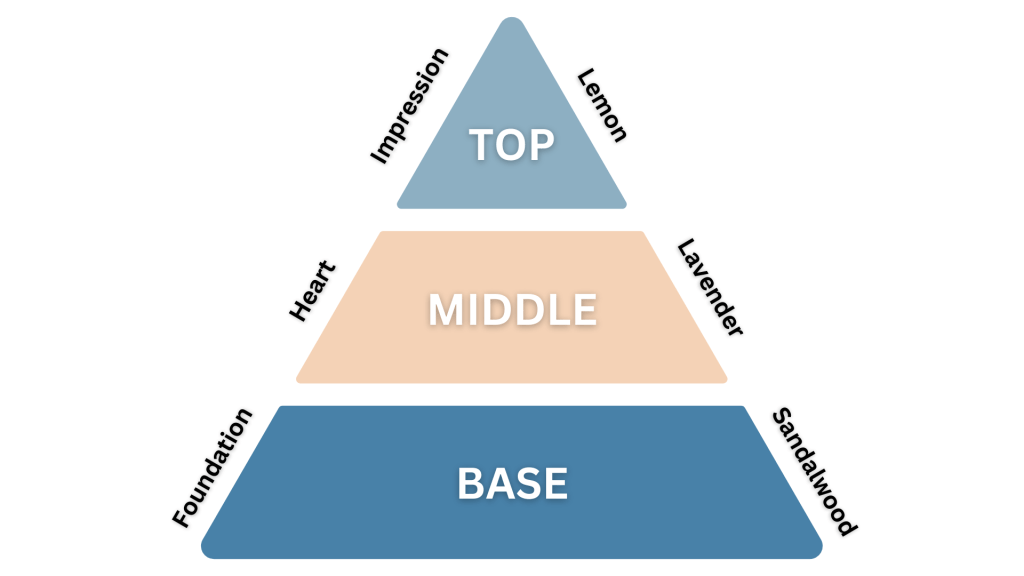
No. It’s not the food pyramid. It’s the fragrance pyramid.
9. Things Smell Differently When They Burn
A fresh rose does not smell the same as burning a dried rose petal.
10. Avoid Electric Herb Grinders
You can use electric grinders if you want, but here’s why I avoid them. To me, making incense is an act of magick. As I grind the herbs by hand, I’m also infusing my intentions. If I use an electric herb grinder, I’m really just robbing the mix of the energy that is distinctly me. That might work well for a commercial product, but not for incense that I’m going to burn in ritual.
Want to hear about future posts? Subscribe to get notifications delivered straight to your inbox.
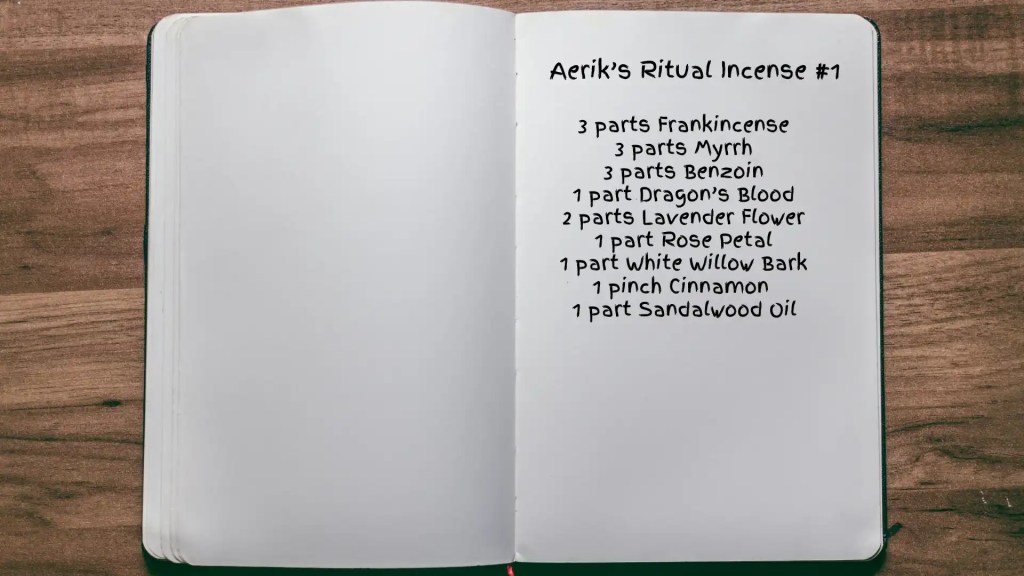
My Ritual Incense Recipe
Look, I even made a pretty graphic for you.
The Process
I’ve outlined the entire incense-making process in this article and this video, but there is one thing I’d like to add a little bit more information on.
When I press my incense pills, I use what is called a “rosin pre-press” or “cylinder pre-press.”

Dulytek Cylinder Pre-Press
It’s basically a hollow steel cylinder with another steel cylinder inside it. People use it, apparently, to compress herbs or flowers. When I was first searching for equipment, I was looking for actual pill presses, but a blackhole of Amazon searching led me to rosin presses. I found that 7/8” diameter is perfect for incense, but the one issue with my press is that the inner cylinder does not go all the way through, so you have to use a wooden dowel to finish freeing the incense at the end. It still works fine, but that last step is just a little annoying.
Also, I use a metal sledge hammer to compress everything. You should really use a rubber mallet.
It’s possible to make pills without a press. I’ve also used a measuring spoon — just compact everything into the bowl of the spoon with your fingers.
Sonic Cleansing
It’s hard to say exactly where each of your ingredients has been unless you happen to be using things you’ve grown yourself. Along their journey from manufacturers to retailers and finally to you, they might have picked up some unwanted energy. For this reason, I like to purify my incense mix when it’s almost completed.
Interestingly, incense smoke is something we frequently use to purify other things. Magickal tools are also frequently passed over a censer during acts of consecration. So how do we purify something that purifies something else? Well I suppose you could light a previous batch of incense and give your new mix a good smoke cleanse. You could also try setting everything on a selenite plate for a while. If you’ll allow me to interject a musical idea, however, I think that sound is the best way to accomplish this.
I’ll play a singing bowl over my incense mix for about a minute, while everything is still in the mortar. I visualize the sound pushing out any residual negativity from my ingredients. Alternatively, you could ring bells or bang drums. If you don’t feel particularly musical, try putting your mix near a speaker and playing a recorded track or song that you think is a good representation of purification.
Infusing Intentions
Once I’ve purified my mix, I immediately sit and meditate, taking the opportunity to infuse my intentions fully into the blank slate. Banishing always creates a void, so it’s important to fill that with something positive.
I typically hold my hands over the mix while it’s still in the mortar and charge it, but I’ve also been known to chant spells or intone divine names at this point. You should do whatever comes naturally to you!
How to Ruin Incense
This is my favorite part. I’ve ruined so many incense mixes that I’ve actually been able to come up with a list of things to avoid.
1. Overgrinding
This is probably the #1 offender that I’ve seen. It’s really easy to get carried away and grind every ingredient in your incense to a fine powder. If you do that with your resins, you start to destroy their natural aroma. A fine powder usually hits charcoal, flares up into a lot of smoke, and is over with too quickly.
2. Bad Ratios
For an incense that burns nicely, your final result should be half resin, but I’ve found that a 60:40 mix is optimal. Grind your resin and set it aside, then grind your dry ingredients. Compare the size of your resin pile to your dry ingredients pile. If it looks like you don’t have enough resin, add some more!
3. Too Much of Something
There are some ingredients that act as irritants to the eyes, nose, and throat when burned. If you flip through Scott Cunningham’s The Complete Book of Incense, Oils, and Brews, you’ll see some of the recipes are marked with cautions. Powdered spices like cinnamon, clove, and anise, although not baneful or poisonous, can still overpower your mix — and the smoke might even make you cough. It’s best to use them sparingly.
4. Being TOo Dry
Some incenses are designed to be a dry powder, but with loose or pill incense, you’ll typically want to retain some moisture. There are lots of ways to accomplish this, including adding honey or dried fruit. I’ve actually read some recipes that call for dried fruit soaked in wine — I might just have to try that. But my personal favorite method is adding essential oils. If your mix is too dry, it’ll burn too quickly and produce too much smoke. In a pinch, even a few drops of olive oil will make a big difference.
Conclusions
Whether you prefer written instructions or visual guidance, I’ve tried to make some resources available to help you.
Remember, making incense is not merely a mechanical process, but a form of magickal expression. Infuse your intentions and energy into the creation of each blend, choosing ingredients that resonate with your purpose. Explore different methods, experiment with different tools, and find what works best for you in your incense-making journey.
Personally, I’ve got an itch to try making an incense with honey. Also, I’ve been toying with the idea of making a musical incense recipe. You can expect to see that sometime in the future.
If you’ve got a favorite ritual incense recipe, please share it!
Hello. This is Aerik from the future. You know what? I can’t even remember if I put any affiliate links on this page or not. I’m really tired because I just went through 50 other posts to double-check everything. Just in case I did, it’s important that I disclose to you that using an Amazon affiliate link to make a purchase may result in Amazon paying me a tiny commission. That’s all. Now I can finally rest.






 Aerik Arkadian
Leave a reply to Aerik Arkadian Cancel reply