
Death: it’s something that effects us all. It’s one of the defining characteristics of being human. To some degree, it’s what separates us from the gods.
And yet, I can flip through several books on Wicca that will barely even broach the subject. Reincarnation? Sure. Cycle of rebirth? Totally. Karma? Of course! The dead? Nope. That’s too scary for some people’s mainstream literature. Recently we’ve been making an extra effort to open up discussions on the topic within our own coven.
The “dead” fall into multiple categories. Here’s a few:
- Bloodline – literally people within your family. Parents, grandparents, etc. This could also include others who, during a different reincarnation, were within your family.
- Lineage – your craft history. If you’re Gardnerian, for example, this could include Gerald Gardner, Monique Wilson, Doreen Valiente, or any of his other high priestesses.
- Land – you might live in your house now, but before you there was someone else. And before there were houses built, there were probably groups of people living directly on the land.
Depending on your goals and traditions, you may choose to work solely with one of the above types… but you may also work with a combination of all of them in order to become an ultimate level 99 necromancer.
Friendly Reminder: This is a serious post on witchcraft and not a guide to your favorite roleplaying game
Necromancy
I know, I know. Unless you’re working on a character for someone’s latest D&D, you probably didn’t set out to become a necromancer. Just for enlightenment, let’s take a look at what the word actually means.
The suffix “-mancy” means divination by a specified means. Divination itself is simply receiving knowledge of the unknown.
The prefix “necro-” means death or dead.
The word is literally defined as “communication with the dead.” I do that just about every single day. I guess that makes me a necromancer.
Let’s try to distinguish some necromancy fact vs necromancy fiction.
Examples of What Necromancy Is Not:
- Dr. Frankenstein reanimating a corpse to create his monster
- Voldemort being restored to physical form with the bones of his father, the flesh of his servant, and the blood of his enemy
- Aragorn convincing the Army of the Dead to fight for him against Sauron’s forces
(Extra nerd points will be awarded for understanding the above references)
Examples of What Necromancy Is:
- Asking for guidance at your ancestor altar, then receiving a “response” in the form of a feeling or a series of mental images
- Bringing a picture of a deceased loved one to a Dumb Supper, setting them a place at the table, and sharing a meal with them
- Using a pendulum, spirit board, or black mirror to elicit messages from the beyond
Want to hear about future posts? Subscribe to get notifications delivered straight to your inbox.
Hero Worship
The ancient Greeks had hero cults that honored powerful dead. These heroes, who were once mere mortals, had their status elevated through the act of posthumous veneration. They were typically seen as having abilities somewhere between humans and gods.
Does that sound familiar? Where else have we seen a very widespread belief system in which people are called upon after death and believed to have superhuman capabilities? To me it sounds very similar to achieving sainthood in Catholicism.
Several cultures, both ancient and modern, from the Viking Einheriar to the Buddhist Bodhisattva, have developed practices for elevating their dead. In some traditions, this is one of the goals, or at least a hope, of the practitioner.
Do we “modern” witches employ a bit of hero worship? I think we do, even if it’s unintentional. I’ve been in the houses of so many people who have hung up pictures of Aleister Crowley, Alex Sanders, or Gerald Gardner. Selene and I have a wall calendar that frequently features portraits of high priestesses or other notable craft figures. Doesn’t this have a similar effect as placing a picture on an ofrenda or keeping a statue of a saint on a bookshelf?
Deities
If you’re starting to work with the dead, you may want to develop a relationship with a god or goddess associated with death, the dead, the underworld, or guiding souls. If you’re human, you experience death. It’s part of the sacred mysteries we’re all here to figure out. Since it’s such a universal topic, just about every culture has some sort of deity that fills these roles. Jumping around pantheons, here’s a short list to get you started.
- Hekate
- The Morrigan
- Osiris
- Hades
- Pluto
- Hermes
- Mercury
- Thanatos
- Kali
- Anubis
- Hel
- Arawn
- King Yan

Osiris, the first to achieve life after death. Public domain. Courtesy of metmuseum.org
Each of these gods and goddesses will have specific ways to get to know them and particular offerings they like. It’s a good idea to develop a relationship with at least one deity within this realm, so now is as good of a time as any to start that journey!
Ancester Altars
One of the first things you’ll want to do when working with the dead is setting up an ancestor altar. This can be as simple as using a glass and a candle. You can even put it anywhere you like, just not in the bedroom (there’s thing we do in there that the ancestors probably shouldn’t be watching).
We like to use a cognac glass because they look pretty cool. Many people will choose to use multiple glasses where a larger, central glass is flanked by smaller glasses on each side. When multiple glasses are used, it’s best to keep them in odd numbers (three, five, seven, nine… but that all depends on the size of your altar).
Glasses should always be filled with water. Water is the life force. If the water ever becomes cloudy or murky, change it immediately. These things need to be kept clean.
After a day or two, the water level will decrease in the glasses. I like to keep the water topped off at all times, so I keep a little water bottle nearby for quick refills. Now, first let me say that I am a firm believer in science, so I know that the water level decreases due to evaporation; however, I’m also a firm believer that the water level goes down because the spirits are “drinking.”
Many people drape a thin white cloth over their ancestor altars in order to keep them covered when not in use. Veiling the altar is kind of like closing a door.
You can use a moveable altars if you like, but the benefit of a fixed altar is that the spirits get accustomed to coming to the same place over and over again.
You’ll find altars and shrines to the dead all over the world. Some are in houses, some are outdoors, and some are in temples.
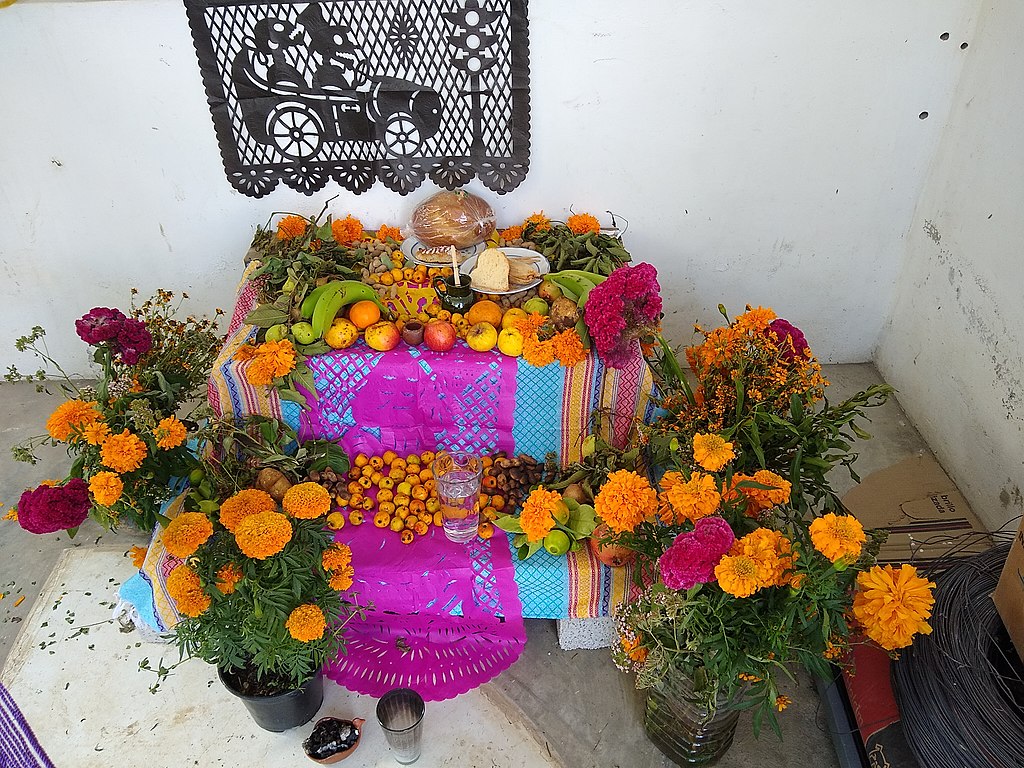
A personal family shrine for the Day of the Dead in Oaxaca Mexico, by Thayne Tuason, CC BY 4.0, courtesy of wikipedia.
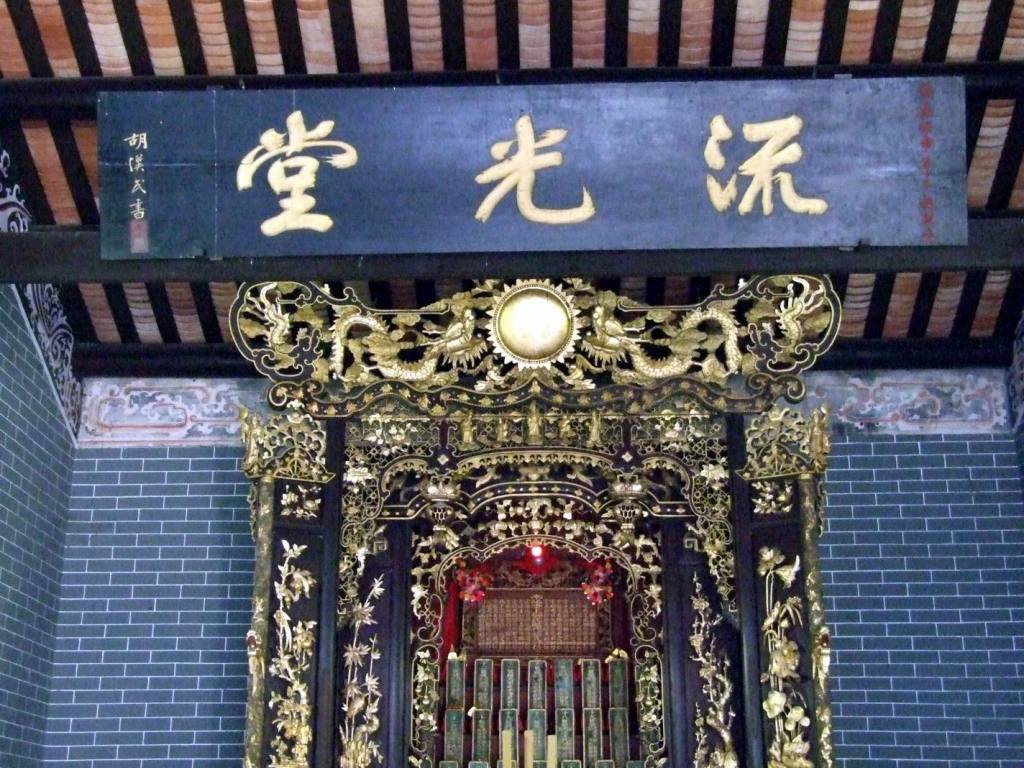
An altar with ancestral tablets in King Law Ka Shuk, Hong Kong. Public domain. Photo courtesy of wikipedia.
Once your altar is set up, start talking to your spirits! Get to know them. Tell them that they are remembered. Just keep in mind that nobody likes to be asked favors from someone they haven’t seen in a while, so maybe hold off on any requests until you get a little bit more familiar.
Familiar Territory
Small tokens and pictures of the deceased (never include the living in these pictures) could also be added to your altar. This gives the spirits some familiar territory to help tie them physically into the area. You might also include something to represent their religious practices. If your ancestors were Christian, for example, this could be a small cross.
I’ve always found it particularly interesting that some of the “darker” rituals described by Eliphas Levi in The Doctrine and Ritual of High Magic include raising the dead by offering prayers and utilizing divine names that best reflect their religious views, not your own.
Experience has taught me that my ancestors enjoy a good gospel tune. It might not be my personal taste, but it’s something they might have sung in life, so it resonates with them into the beyond. I’d even go so far as to say that singing a song, in my case at least, makes a pretty good offering.
Offerings
If songs aren’t to your ancestors liking, there are plenty of other choices for offerings. Liquor and tobacco products rate pretty highly on most lists, but if your folks weren’t smokers or drinkers, perhaps you can make them their favorite non-alcoholic beverage. Coffee is also a fan favorite when it comes to ancestor offerings — wake those spirits up!
The general idea is to present them with something they would have liked while they were alive. You can leave these drinks out on your ancestor altar until intuition tells you to remove them (overnight, three days, or maybe a week — just don’t let them spoil).
The simple act of lighting a candle can be an offering. Some people will also fix plates of food for their dead before meals.
The Dumb Supper
Plates of food for the spirits of the dead (or “eggun”) are frequently seen throughout the ATR, but one place in particular that you’ll find them within Wicca is at a dumb supper.
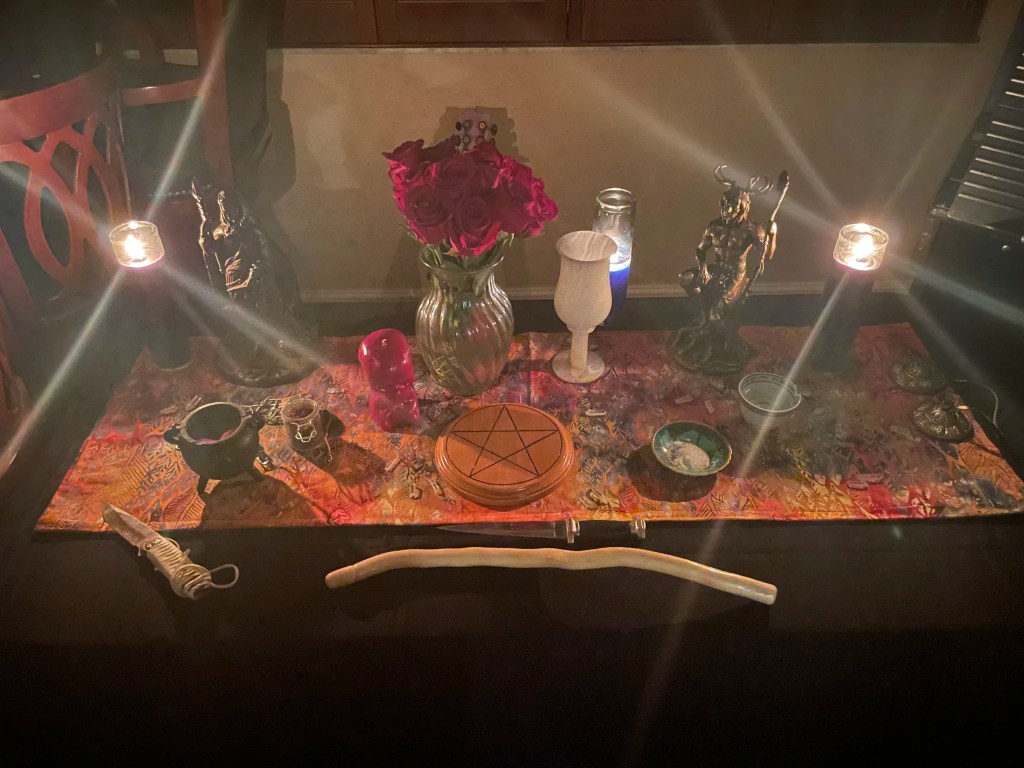
The altar from one of our previous dumb supper rituals. Original image.
The exact procedure for a dumb supper will have to wait for a later post, but here’s the highlights: You create sacred space, then set a place at the table for you and your dead. You treat them like an honored guest, ensuring they have their own chair, utensils, beverage, and plate of food. Aside from the opening and closing of the ritual, no words are spoken (hence the name).
As you eat, you are also free to use your own favorite form of divination to communicate.
Divination
Divination with the dead can be complicated… but it can also be rather simple. While some would say that divinatory information is obtained through contact with the higher self, source, or god-consciousness, others might argue that it comes from surrounding spirits, including the dead. Personally, I believe it’s a combination of everything. As such, any form of divination that you’re already familiar with is appropriate to use for receiving messages from the dead. Even random card pulls from a Tarot deck can do the trick.
My personal favorite for this type of thing is automatic writing. You sit with a notebook and pen. Without looking at what you’re writing, make small swirls on the page (almost like repeating a lowercase cursive ‘e’ over and over) and let that form into words and sentences. Don’t lift the pen up from the paper and don’t pause or stop for any reason — just let it flow, even if it feels weird or uncomfortable. I find it works best when writing in cursive, but your mileage may vary.
If you want to keep things simple, a pendulum will suffice for yes/no questions. You might also choose to use a spirit (ouija) board or a black mirror.
Personal hesitation
Since all of my recent ancestors are inarguably Christian and heavily conservative, it took me years to build up the courage to attempt working with them. Early in my training as an outer court student, my high priestess asked me to bring a token or picture of an ancestor so they could participate in a ritual. I respectfully refused, citing my belief that all of my deceased relatives would be pretty upset at being involved in anything witchy.
A couple years later, equipped with a more open mind, I decided to try contacting my Grandpa at a dumb supper. He showed up and was more than happy to be there. Before he left, he told me, “call me up anytime!” I’ll say that experience shifted my viewpoint pretty drastically.
I now realize the flaw in my previous logic. If I believe strongly in the cycle of rebirth, then there’s no real reason for me to feel like I might be offending a deceased Christian relative by involving them in my personal practice because their Christianity will not be retained once they cross over. On one hand, yes, you’re interacting with the energetic imprint that their physical form left in reality, but on the other you’re connecting to their eternal soul that transcends lifetimes. I guess I had been kind of picturing my ancestors hanging out in the summerlands, confusedly wondering where heaven and Jehovah were… but since then I’ve gotten a sense that the individual’s perspective shifts significantly once the veil is crossed.
It’s worth mentioning that the above statements reflect my personal beliefs, which means it might not align with yours. You’re more than welcome to disagree — you can even tell me I’m wrong! I’ll also take this moment to point out that my personal perception of time is: “all of time is happening all the time” … which means that you can simultaneously exist in multiple lifetimes and as an ancestral spirit. If you extrapolate on that thought for a moment, you’ll wind up at the conclusion that you can be your own ancestor.
The moral of the story? I’ve found out that the ancestors aren’t just happy to talk, they’re also on my side. They will help out when asked, but you have to keep up with the relationship!
Incense
This particular incense recipe comes from Strix Craft by Oracle Hekataios. In the book, he has an entire chapter called “Communing with the Dead” which is definitely worth a read.
- 1 part dittany of Crete
- 1 part vervain
- 1/2 part myrrh
- 1/2 part black copal
Those ingredients shouldn’t be too hard to get, but if you need to substitute something for dittany of Crete, use your best judgement.

Tea
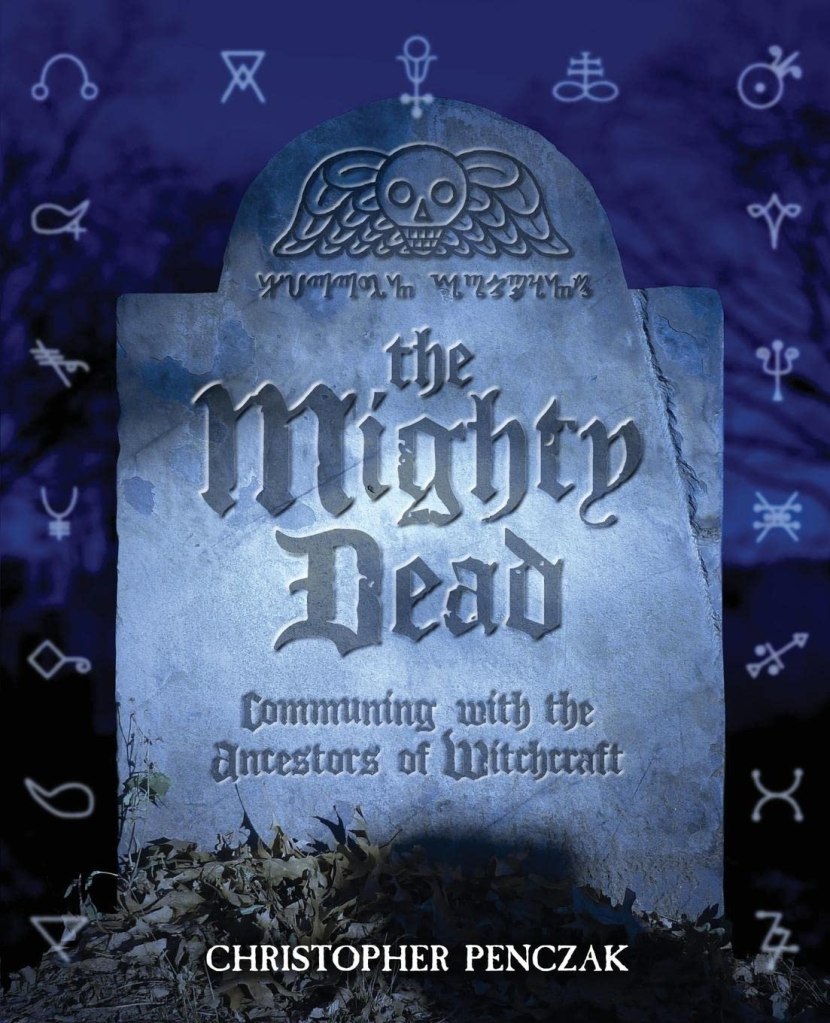
As a fun bonus, here’s a recipe for a death tea from Christopher Penczak’s The Mighty Dead. No, this tea won’t cause death. It’ll just help you have dreams where you can speak to them.
- 1 Part Mugwort
- 1 Part Jasmine Flowers
- 1 Part Hops
- 1/2 Part Mullein Leaf
- 1/4 Part Dandelion Root
- 1/4 Part Valerian Root
- 1/8 Part Poppy Seeds
- 1/16 Part Celery Seeds
Brew this mix before bed and enjoy some interesting dreams.
Conclusions
Working with the dead has been done all over the world since ancient times. The practice is just as important as the development of a relationship with a deity — in fact, in some cases it could be moreso. How do you honor your ancestors?
Well, since your down here, I might as well point out that there are some Amazon referral links in this post. If you click on them and make a purchase, Amazon will pay me a small commission. If your deceased ancestors click on the links, however, nothing will happen.



 Aerik Arkadian


Leave a reply to Vicky V Cancel reply