

One of the first videos I ever made was on steel tongue drums. Ever since that day, I’ve been dreaming of having an entire series that features instruments and discussion on how they might be used in a magickal context. Now, that series continues with guitar!
In this brief guide, we’re going to look at some different types of guitars, including some anatomy, history, and some instruction on how to play along to some of your favorite pagan songs. At the end, I’ll give you my opinion on whether or not guitars should be used in a ritual setting — my answer may surprise you!

Some other instruments in the Chordophone family…
Our modern idea of a guitar has been around for roughly like 200 years. Guitars fall into the Chordophone family (instruments where the initial sound is produced by a stretched, vibrating string) along with bows, harps, lutes, lyres, and zithers. You could also call them all stringed instruments.
Basic Anatomy

Some guitar anatomy…
Here’s a few key points you’ll want to pay attention to:
- Body: The part of the guitar that is responsible for producing most of the resonant sound. Without a body, you really just have strings stretched over a stick.
- Strings: The stretched metal strings are responsible for producing the initial sound. Without strings, you have no guitar.
- Tuning Keys: Usually reside in the headstock and change the pitch of the strings by raising or lowering tension
- Sound Hole: In an acoustic guitar (and some semi-hollow electrics), this directs the sound outward
Amongst various styles of guitars, you’ll find there’s different parts to be aware of, like tremolos, floating bridges, pickups, electronics, and more… but we’ve gone over enough for a general overview.
Nylon String Classical Guitars

Classical guitars usually have a wider neck and string spacing, which make them a great choice for fingerstyle heavy types of music like classical or flamenco. They usually have a warm and balanced tone, which makes them excellent solo instruments. The nylon strings are also much softer than steel, so there’s less of an impact on your fingertips. Prior to the popularization of nylon strings around the time of WWII, these types of guitars would have used strings made from the intestines of sheep or cows.
Steel String Acoustic Guitars
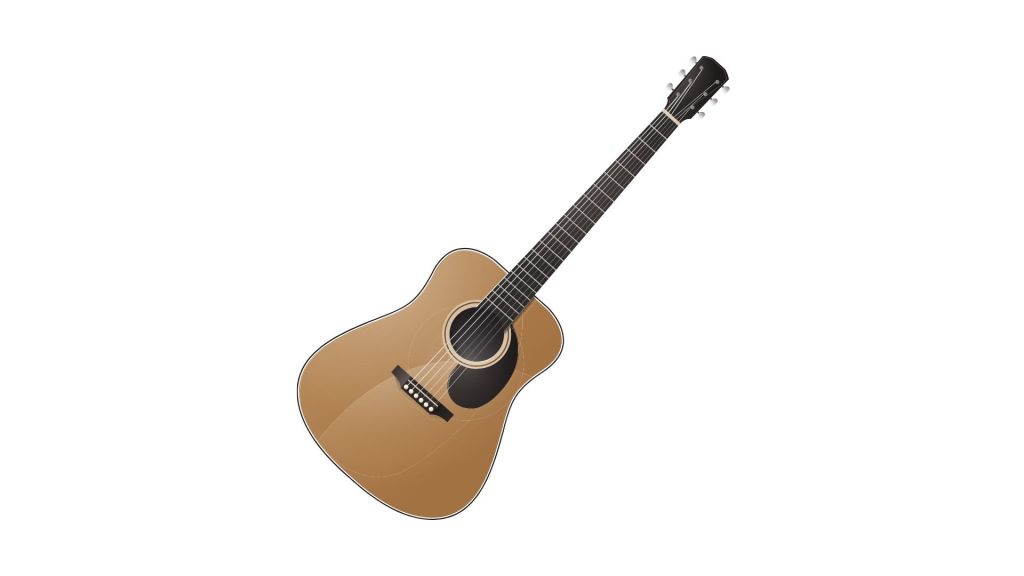
Steel string acoustic guitars became very popular with folk and blues musicians in the early 1900s. When compared to classical guitars, they have a twangier or more metallic sound. As the name implies, the strings are made from a steel core that is wrapped with another metal like copper or bronze.
Electric Guitars
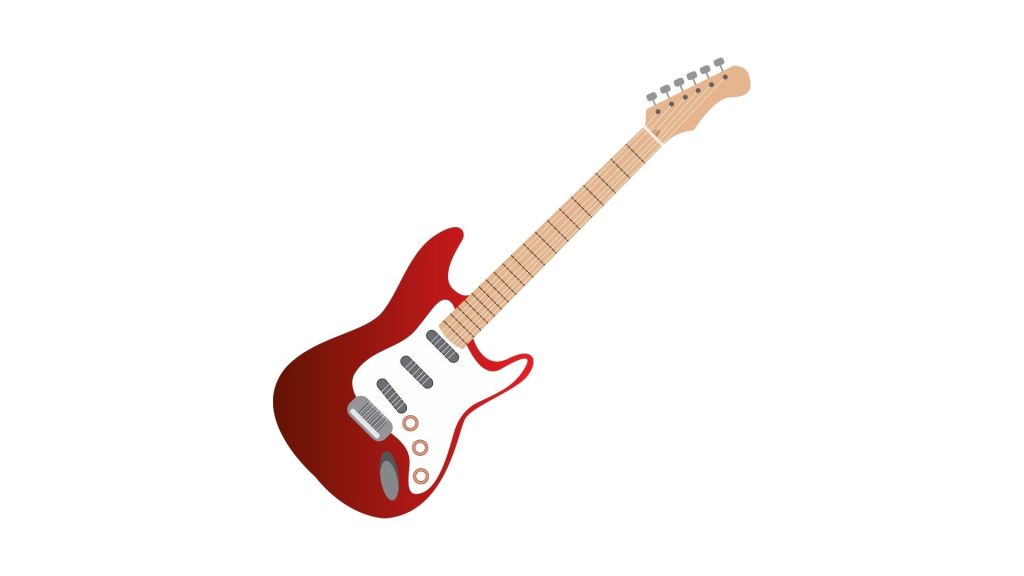
And finally… electric guitars become widespread in the mid 20th century with brand names like Fender and Gibson. There’s 1000 different body styles like Stratocaster, Telecaster, Les Paul, Explorer, SG, and Mustang.

Some popular electric guitar styles…
Electric guitars don’t produce a lot of sound on their own, so we plug them into an amplifier. The typical electric guitar has a solid body, but you’ll find hybrids with small sound holes or f-holes, known as semi-hollow bodies, which offer a little more acoustic resonance.
Tuning
As far as tuning goes, most guitars are tuned to E-Standard, which, starting from the thickest string is E A D G B e.
And the way to remember that is…
- Every Alligator Does Good Before Eating
- Eat All Day Get Big Easy
- Every Amateur Does Get Better Eventually
- Eddie Ate Dynamite Good Bye Eddie
Or in reverse order… because this one is hilarious (thanks, James)
- Easter Bunnies Get Drunk At Easter
You can generally tune by making sure the note at the fifth fret matches the next open string (except for the G string, which will be the note at the fourth fret) or by hitting harmonics at the fifth and seventh frets. I’m not really here to explain that right now… and I also didn’t cover it in the video — it could be it’s own standalone lesson in the future. For right now, I recommend you start out with a tuner. If you don’t have one, there’s lots of free apps you can download on your phone.
Technique
Assuming a standard playing position, your right hand is going to pluck or strum the strings and your left hand will fret the notes. Many people start out playing with a pick on the right hand just to keep things as simple as possible. And this way, we can concentrate on learning some chord shapes with the left hand.
Simple Chords for Chants
Once you have a few chords memorized, you can strum and play along with songs you like… which… you know… starts to make practicing fun instead of laborious or painful. There are three chords that you will use all the time in Pagan music… Am, Em, and G. I’ve sat around and transcribed the melodies and accompaniments to a bunch of Pagan chants… and those just seem to be the chords that come up the most or at least let you get through a significant portions of the song. Luckily, they’re easy to play!


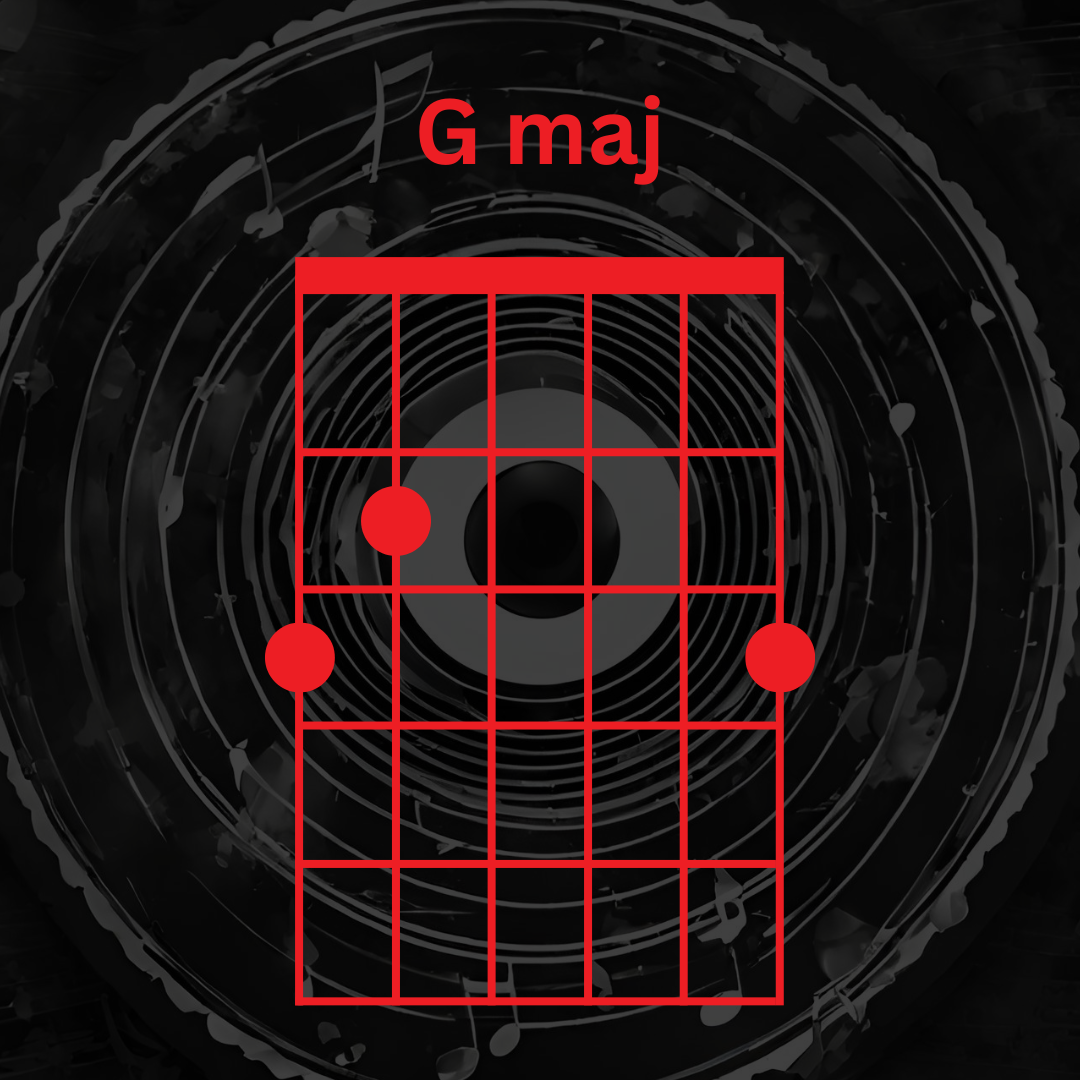
Armed with these chords, you’ll be able to get most of the way through Pagan chants like We All Come from the Goddess, Air I Am, and She’s Been Waiting. Go check out the video and play along with me… I also play a rocked out version of one.
For other genres of music, your typical “every song” chords, are D maj, Cmaj, and Gmaj. Go ahead and learn those other two chords — you’ll be unstoppable.
Melodies, Chords, and Chord-Melodies
Guitar is an instrument that allows you to play in a variety of different styles. I usually think of this broken down into three distinct groups:
- You can pick out individual notes in a melody or solo.
- You can pick or strum chords as an accompaniment.
- You can combine different elements of the first two and create a chord-melody. This is my personal favorite.
In the video, I show an example of each. It’s a lot easier to hear it and see it than to just read about it.
Rating and Review
There are people who devote their entire lives to studying guitar. I’ve been playing for like twenty years, give or take a drug-induced hiatus or two, and while I’m pretty comfortable with it, I’m still learning. In terms of beginner playing difficulty, I’m gonna rate it a 4 out of 5. It’s not something that you just sit down and play, it requires a bit of preparation and practice to sound decent, but once you get past learning some basic chord forms, you’ll see how you can play along with almost anything.
Okay, now… does a guitar make a good instrument to play during ritual? I’m actually going to say no. And honestly guys, it pains me to say that because I love guitars. Your mileage may vary, of course, but for me, stringed instruments are not the most efficient way to get into a trance state. Can I do it? Yes. Is it the most efficient way? No.
If you want a strange experience, bring a guitar to a drum circle. On the surface, it seems like it should work out just fine. But it doesn’t. At least not for me. It’s a different type of energy… it’s almost like there’s an entirely different element at play.
Conclusions…
Guitar will always be one of my favorite instruments. What really opens it up for me is the ability to easily play and sing at the same time — actually, in one version of a Greek myth, being able to sing is what fully secures the lyre’s victory over the aulos — but we’ll have to talk about that another time. As a bonus, I also talk about my HAUNTED guitar in the video. Go check it out.
Now we can finally cross “guitars” off my list of instruments to make videos about, but the list is still pretty long.
- Steel Tongue Drums
- Guitar
- Tuning Forks
- Cajon
- Frame drum
- Djembe
- RAV Vast Drum
- Noisemakers
- Shakers
- Singing Bowls
- Didgeridoo
- Darbuka
- Flutes
- Sistrum
I mostly just made that wrote that out for my own personal reference, but also I guess it can give you things to look forward to. Alternatively, you could comment and tell me which one I should do next.
And finally, I just realized that “stay tuned” could used as a pun in this context, implying either to keep paying attention (tuning in) or to keep the correct pitch (being in tune). So I’ll leave you with that.
Stay tuned!




 Aerik Arkadian
Leave a comment