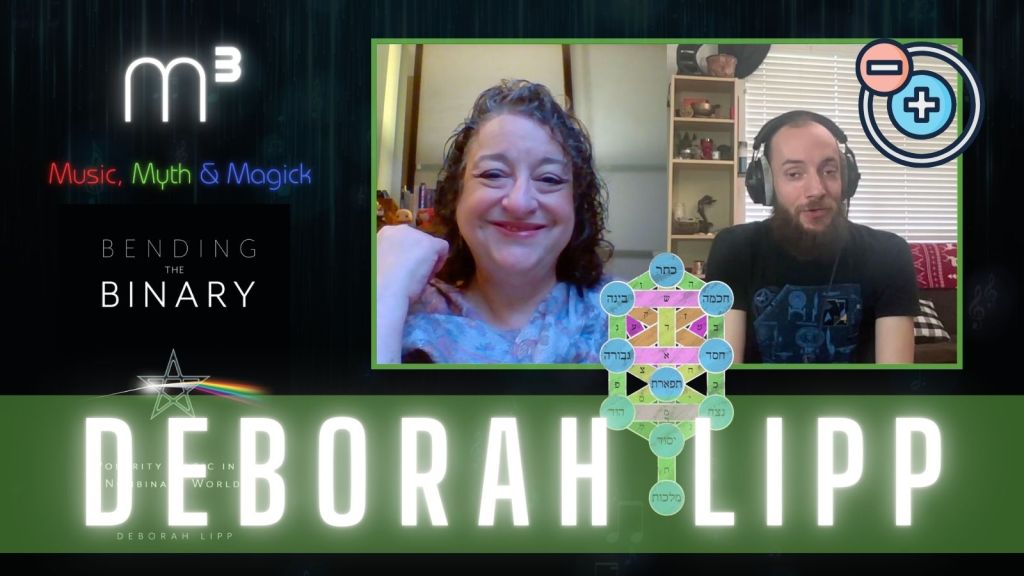
Home » Magick » M3 Episodes » Season 1 » Deborah Lipp, Polarity, and Alchemy – Ep. 8
Deborah Lipp is a witch and the author of several books including Bending the Binary and The Elements of Ritual. She’s been a High Priestess since the 1980s and has been teaching Wicca and the Occult for more than 30 years.
While Deb certainly has a wealth of experience on some incredibly interesting topics (like Alchemy and Qabalah), I felt it was important to focus primarily on what she had to say about polarity in the Craft. Lucky for me, it turns out Alchemy and Qabalah play a pretty big part in that conversation, so we got to talk about those things, too!
Bending the Binary

Bending the Binary by Deborah Lipp
Before I read Bending the Binary, I probably would have most-easily expressed magickal polarity as male and female. And if I needed to use gender-neutral terms, I would have probably explained it like electricity… with positive and negative.
I mean, I still think positive/negative and gender are two ways of expressing polarity, but I learned that they are not the only ways.
How about the polarities of Active and Passive?
How about the polarities of Self and Other?
Mind blown. Polarity, as defined by the book, is “the presence of contrasting energies, forces, or conditions that attract one another, thereby generating power.” And that’s not all — there’s way more, in fact, but you’ll have to read the book for it.
Polarity: “The presence of contrasting energies, forces, or conditions that attract one another, thereby generating power.”
Deb crowd-sourced tons of polarity ideas and then grouped them into a few main categories. She explains each one in depth and gives ritual ideas so you can learn how to apply them in a magickal context. There’s everything from a Sun and Moon ritual to a Dom/Sub kink ritual. It’s more than I ever imagined could exist on such a topic.
But it’s not necessarily about being all one thing or the other — there’s plenty of “in-betweens” … and Deb backs this up with an in-depth analysis of Hermetics, Alchemy, and Qabalah — three of my favorite topics!
What is Polarity?
I gave you the book’s definition of polarity already, but in the interview, Deb breaks it down a little further. She says that polarity is two opposing ends of a spectrum that create energy by being drawn towards each other or by interacting in some way.
The first example she brings up is North and South. When you consider how this is applied to a planet, for instance, you understand that energy (magnetic, gravitational, etc) is created and flows between the two poles. Does everyone live at either the North or South pole? Obviously not. We can live anywhere in between.
As another example, there is the polarity of Day and Night. This one fascinates me because we have moments of dusk, dawn, twilight, sunset, and sunrise. At what point, exactly, does day become night? Isn’t it a little subjective?
Deb says that being opposite or different from one another is not enough to consider them as polar energies — for instance, beer and wine are different but not polar. You can get a large list of polarity combinations in the book, which are categorized into 6 main types (for instance, “Sun and Moon” is listed as a subcategory of “Day and Night”). These six main categories have direct correspondences on the Qabalistic Tree of Life. We’ll come back to that later.
First, let’s get a bit more practical.
Want to hear about future posts? Subscribe to get notifications delivered straight to your inbox.
Active vs Passive
Active and Passive polatity was the easiest type for me to understand — at least in terms of practicality and how to apply it in every day life. I’ve constantly got a mix of active and passive energies going on when different types of my brain take over… and if I stay active for too long, I burn out. Hey, I know all about burnout… I even talked with Thorn Mooney about it in the last episode.
In the interview, Deb explains how she applies this to writing. Last year, she wrote four books — that’s a crazy number! When she feels like she’s hitting writer’s block, she tries to turn the active energy into passive energy by doing something tactile, like beading or building Lego.
I have done this for years, although I never would have identified it as a polarity shift. Very early on in my songwriting career, I discovered the fact that lyrics seemed to suddenly flow at odd points while driving. This seems to work because the active, songwriting part of my brain is shifting into passive mode… meanwhile, the driving portion is taking over. The lyricist in me gets some rest and finds inspiration again.
As far as I can imagine, people have been doing this since the beginning of time. It’s why r/showerthoughts is so popular on Reddit and why so many revolutionary ideas have been had in the bathroom.
Force, Form, and Ambiguity
At some point in the conversation, Deb starts talking about the Force and Form polarity and how things line up, Qabalistically speaking.
Okay, look. This article is not meant to be a primer on the Qabalistic Tree of Life. In fact, I’ve never written anything like that because other people have already done a great job at it — and if you’re looking to learn more, I’ve got suggestions. For right now, I’m going to assume you have at least a basic understanding of what the tree looks like.
The Pillar of Force is headed by Chokmah, which is usually described as the supernal father, divine masculine, etc. But in Hebrew, “Chokmah” is feminine. Well, that’s definitely something I didn’t know.
Jumping around the tree a bit, the sphere of Yesod, which is typically associated with the moon and feminine energy… is also a slang term for penis.
Deb says that queerness and gender-bending are built into the Qabalah and that it’s always been there — it’s not just a modern invention.
Giving Back to the Jewish Community
There are some differing opinions on who can use the Qabalah (or in this case, maybe I’ll spell it “Kabbalah”). Some people believe its use could be construed as a type of cultural appropriation.
More or less, I personally believe that the core of most religious beliefs is the same. All religious roads are different paths that attempt to get to the same place. All religious practices stem from different perspectives on accomplishing the same tasks. Is that clear enough? It’s all the same [holy] shit, more or less. That is my opinion. You are more than welcome to disagree with me and, as usual, I’ll tell you that you’re right! I also personally believe that the Qabalah and the mysteries within it belong to all of humanity, but I won’t deny that the Jewish community has done an amazing job preserving those mysteries for a thousand years or so — and without them, we probably would have lost the knowledge entirely.
But I get it. It’s ripped off a lot, especially with the Christianized Cabala. So to make everyone happy — if you are a Gentile Occultist or someone who goes really in-depth into the Qabalah, perhaps consider being an active supporter of the Jewish community.
Deb suggests the making a donation to one of the following:
- A local Jewish-run food bank
- A local synagogue
- Anti-Defamation League (here’s a link to donate)
- Or any other organization that fights antisemitism
I think that’s a wonderful suggestion. It never hurts to give back, especially when it is to a great cause.
Where Can We Go?
The last section of Bending the Binary is titled “What’s Next?” Deb hopes that queer and non-binary people know that polarity can and does include them and that they are not excluded from the occult world. Polarity and gender do overlap, but they are not synonymous with each other. She also hopes that people who may have previously excluded polarity from their magickal practice can now see that there is value in it.
But perhaps one of the most exciting results of the book is coven leaders trying to educate themselves on how to better handle inclusivity.
Alchemy
If you read Bending the Binary, and I highly suggest that you do, you’re going to have to make your way through some Alchemical research. Deb goes all the way back to Ancient Greek philosophy and then ties everything together for modern times. But without reading, it might not be obvious how interconnected alchemy and polarity really are.
Deb recently wrote another book called The Beginner’s Guide to the Occult. In this case, the publisher set the topics for the chapters. When she got to the section on alchemy, she realized she needed to do a lot of research.
Alchemical research seems to have been the springboard that finally launched her into writing her book on polarity. It’s all very interconnected: Polarity, Qabalah, Alchemy, Hermetics — all of it! I won’t spoil it though because Deb explains it way better than I would ever hope to… so you’ll have to listen to the interview or read the book!
Deb’s Other Books
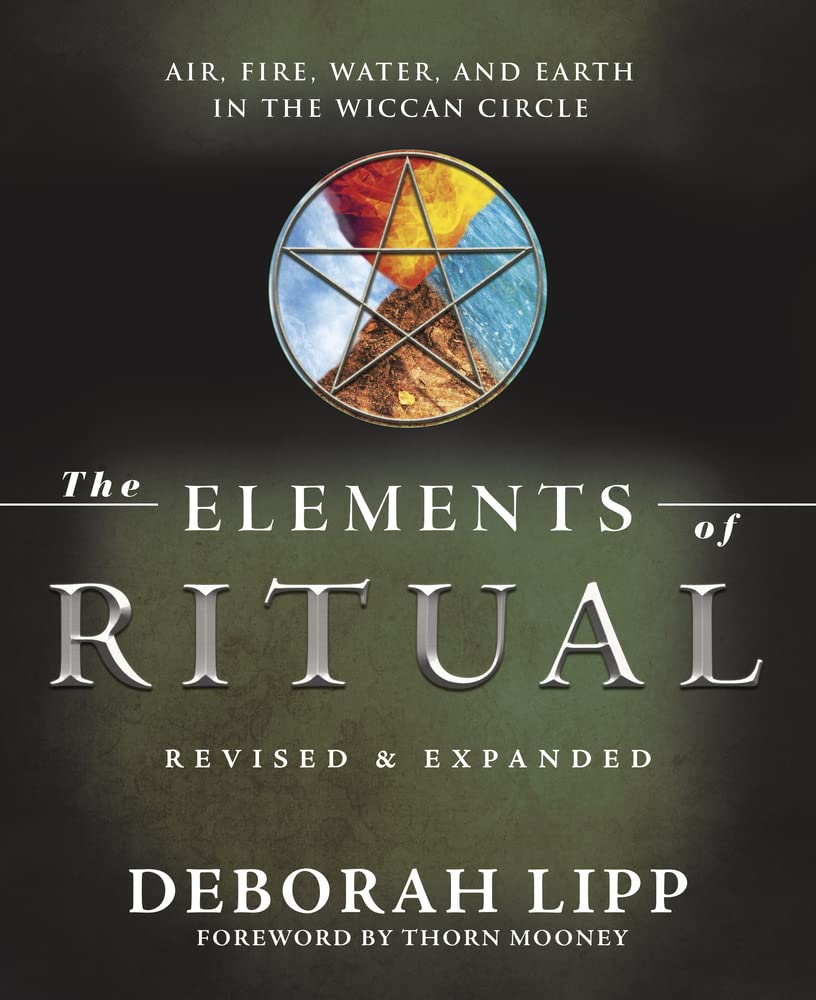
The Elements of Ritual was very recently updated and re-released. Deb says that when people come up to her and say “I loved your book!” (which… I’m sure happens fairly regularly) they are almost always referring to this one. Considering how many books she’s written, that’s a pretty big statement right there!
As a resource for how to cast circle and why the steps are important, I’ve heard it is excellent. She frames things through an elemental lens, which is a big draw for me. It’s definitely going on my reading list.
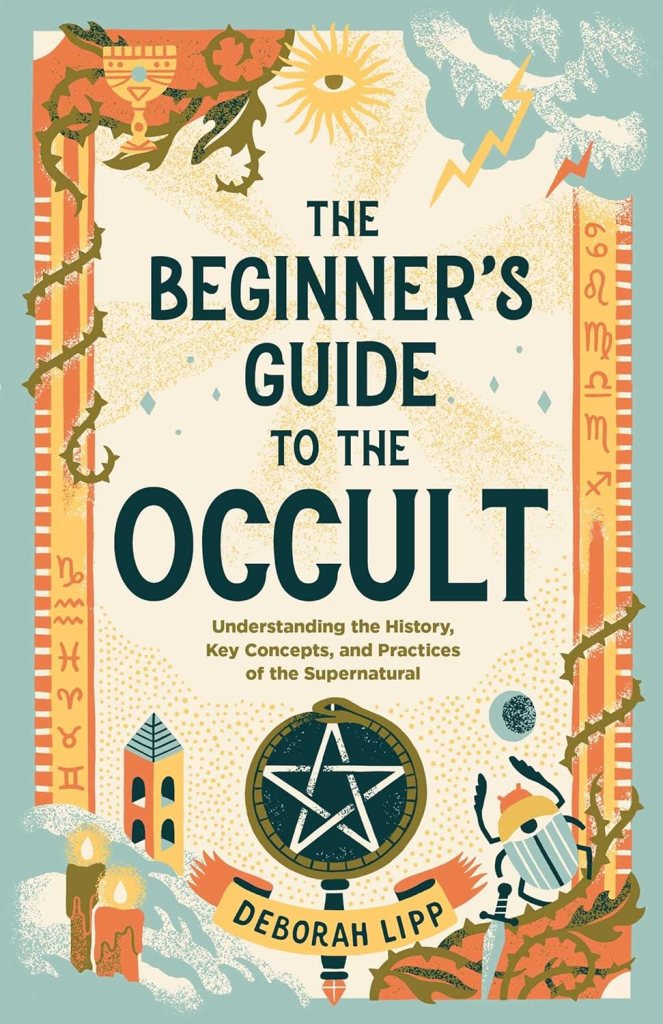
The Beginner’s Guide to the Occult played an important part in the inspiration for Bending the Binary. For that reason alone, I want to read it.
The chapter listing promises topics like folk magic and witchcraft — okay, great. But as the book goes on, hilariously *non* beginner topics are introduced like alchemy, ceremonial magic, and kabbalah.
I am certainly interested to hear how Deb simplifies these complex topics and makes them digestible for people who just want the highlights.
It’s going on my reading list, too. Have I ever complained about how long my reading list it? This is why.
You can also check out…
- The Way of Four
- The Complete Book of Spells
- Magical Power for Beginners
- Tarot Interactions
- The Study of Witchcraft: A Guidebook to Advanced Wicca
Yeah, she’s got a lot of books! And it turns out she’s a pretty big James Bond buff, which is awesome, so outside of magical stuff, she’s also written The Ultimate James Bond Fan Book: Fun, Facts, & Trivia About the James Bond Movies.
How to Find Deborah Lipp
If you’re looking to find more on Deborah Lipp, look no further…
- Facebook @ Deborah Lipp Author
- Instagram @ DebLippAuthor
- Twitter @ DebLippAuthor
- Website @ DeborahLipp.com
If you want to find her at festival, she has an upcoming appearance at the end of this month.
- ConVocation 2024 (Detroit, MI) – February 22 – 25
Heartbeat Rhythms
When I asked Deb about using music in her own practice, she brought up the concept of a heartbeat rhythm. This is arguably one of the easiest rhythms to play — everyone can recognize the sound of a beating heart, right? You don’t need musical training to do this… and heck, you don’t really even need any equipment. It’s possible to stomp or clap this rhythm. Either way, it gives everyone in the coven something to do… a way to contribute to the group dynamic or to prevent boredom.
Boredom? Yep.
The reality is this: if you’re doing a group ritual where more than a few people have to take individual turns doing something, the rest of the folks might just be standing around, waiting, and getting bored in the meantime. In a perfect world, sure, they’re meditating or focusing their energy during this time… but remember, we’re all people and we’re not perfect.
If, instead of standing around, you task people with creating a heartbeat rhythm, then you might just be helping them contribute more deeply to the group energy. As a bonus, they might also stay in a trancy, “magickal mindset” for longer periods of time without getting bored.
Conclusions
I learned a lot by reading Bending the Binary. I also learned a lot by just talking to Deborah Lipp about it in the interview, but I still feel like I’ve only touched the surface. Like many magickal topics, there’s way deeper for me to go with it in my own practice.
Do you know someone that has interesting things to say about the spiritual aspects of music? If so, feel free to contact me because they might just make a great future guest on M3!
Oh… and… have I ever mentioned how much of a difference it makes to me if you subscribe on YouTube, hit the like button, and leave a comment? At the very least, it just helps me know that someone is listening. Okay… okay… at least I save the annoying call to action for the end. Go subscribe! And while you’re at it, take a look at my Patreon!
This is not the end of the internet, but it is the end of this article. Do not let your heart be troubled, for there is more to come. I promise. In the meantime, there’s plenty of other stuff out there to read. In fact, I linked to several great options above. Speaking of those links, many of them are Amazon affiliate links, so if you use them to make a purchase, Amazon will pay me a small commission. And with this last sentence, not only do I conclude the fine print, but I also conclude the article.




Leave a Reply