

Our next stop in this series is the singing bowl — an instrument so steeped in mystery for thousands of years that perhaps we’ve all forgotten its true. Or perhaps it was actually just a recent invention.
Questionable History
A lot of times, singing bowls are specifically marketed as “Tibetan Singing Bowls” and you’ll find them decorated with sacred characters like the symbol for “Om.”
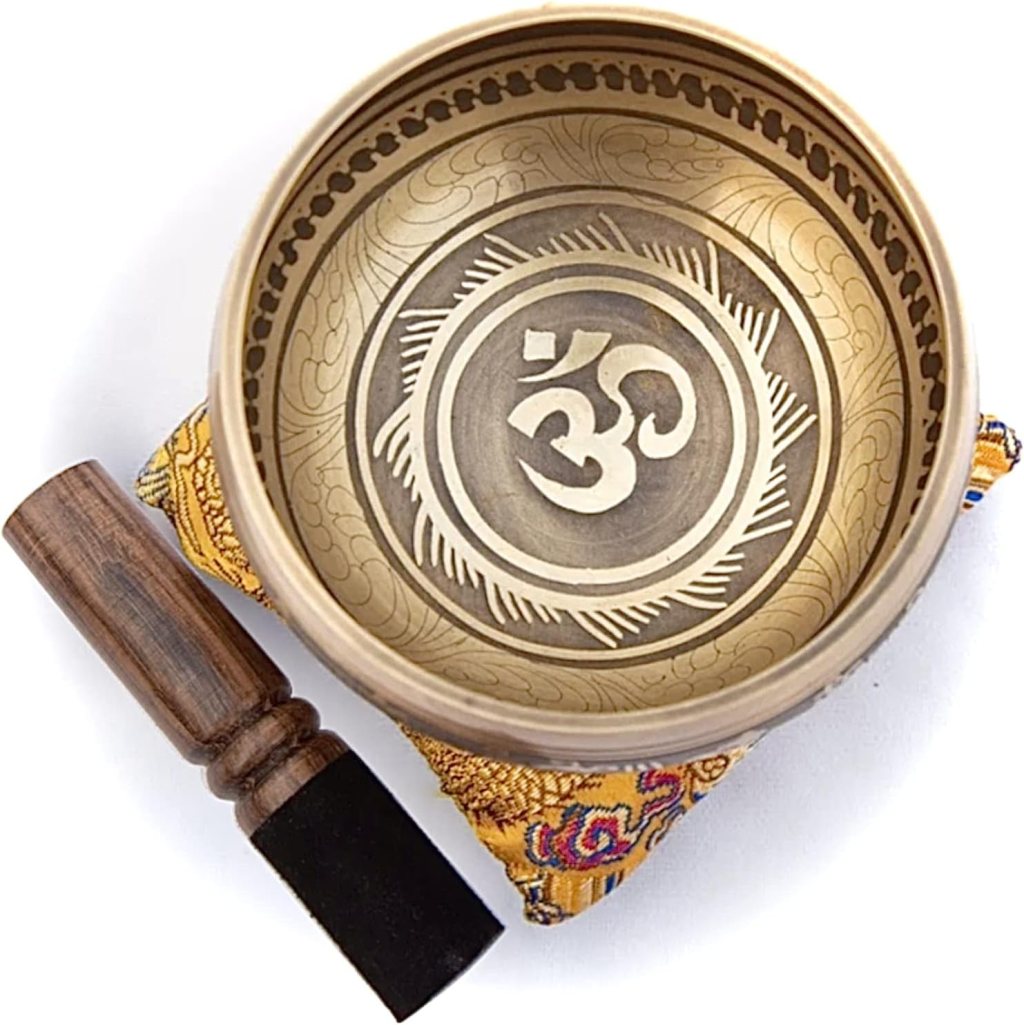
4” Tibetan Singing Bowl – Om Design on Amazon
It looks legit, so it’s easy to accept the facts of the product listing. And for a long while, I did… but then I started to wonder: do these things actually come from Tibet?
If you search for the history of singing bowls, it’s kind of difficult to find a written account that doesn’t come from a company that sells singing bowls — and that’s really weird in my opinion. Just so we’re on the same page, studying the ancient origins of instruments is something that I do quite frequently. It’s fairly simple to find museum exhibits from places like the Met or the Smithsonian that feature bone flutes, bull roarers, bronze horns, the carnyx, lutes, ouds, and just about every other musical thing you could possibly imagine.
Although some “sales” websites make claims that singing bowls are 5000 years old, I was unable to find any real evidence to support this. Despite the fact that metallic instruments are usually some of the best-preserved archaeological specimens (much more so than wood, for instance… and we have plenty of old wood in museums), I couldn’t seem to pull up any exhibits. And I couldn’t find any mention in my usual encyclopedias either.
As if they were ready for my disbelief, these websites went on to state that the exact uses and origins of singing bowls are so secret and steeped in mystery that monks and mystics were forbidden from writing them down. I guess, if you’re willing to believe in some sort of musical conspiracy theory, then that explains it.
Real History
Okay, I’m just going to tell you the real story. “Tibetan” singing bowls aren’t Tibetan at all. And they’re nowhere near ancient. They began being manufactured and imported into the West sometime around 1970 from India. Apparently in America we’re all suckers for products that have a pseudo-spiritual vibe — and also things that are written in languages that we don’t understand, which is why the inclusion of characters like “Om” helps to drive up sales.
Now that doesn’t mean that it’s snake oil or garbage. Personally I love my singing bowl and I firmly believe that it has a proper place in meditation or ritual — it’s just that the ritual uses are modern and don’t stem from like an ancient from of Buddhism or something.
There are similar instruments that are legitimately attested in history like the standing bell – basically a large inverted bell, cast from a metal like copper or bronze that was played by striking. They’re shaped like bowls and range in size from a few centimeters all the way up to a meter in diameter. They’ve been called by lots of different names including rin gong, Buddha bowl, resting bell, and bowl gong. The invention of the bell itself is generally traced back to China as early as the 16th century BCE.
Anyhow, on some of my adventures with Selene, we’ve visited Buddhist temples. If it’s allowed, I’ll take pictures. I was never specifically trying to find standing bells, but I did happen to capture a few by accident, which you’ll see in the picture on the right.
Similar to a singing bowl? Yes. But are they the same? Absolutely not. And the main difference comes down to how they’re played.
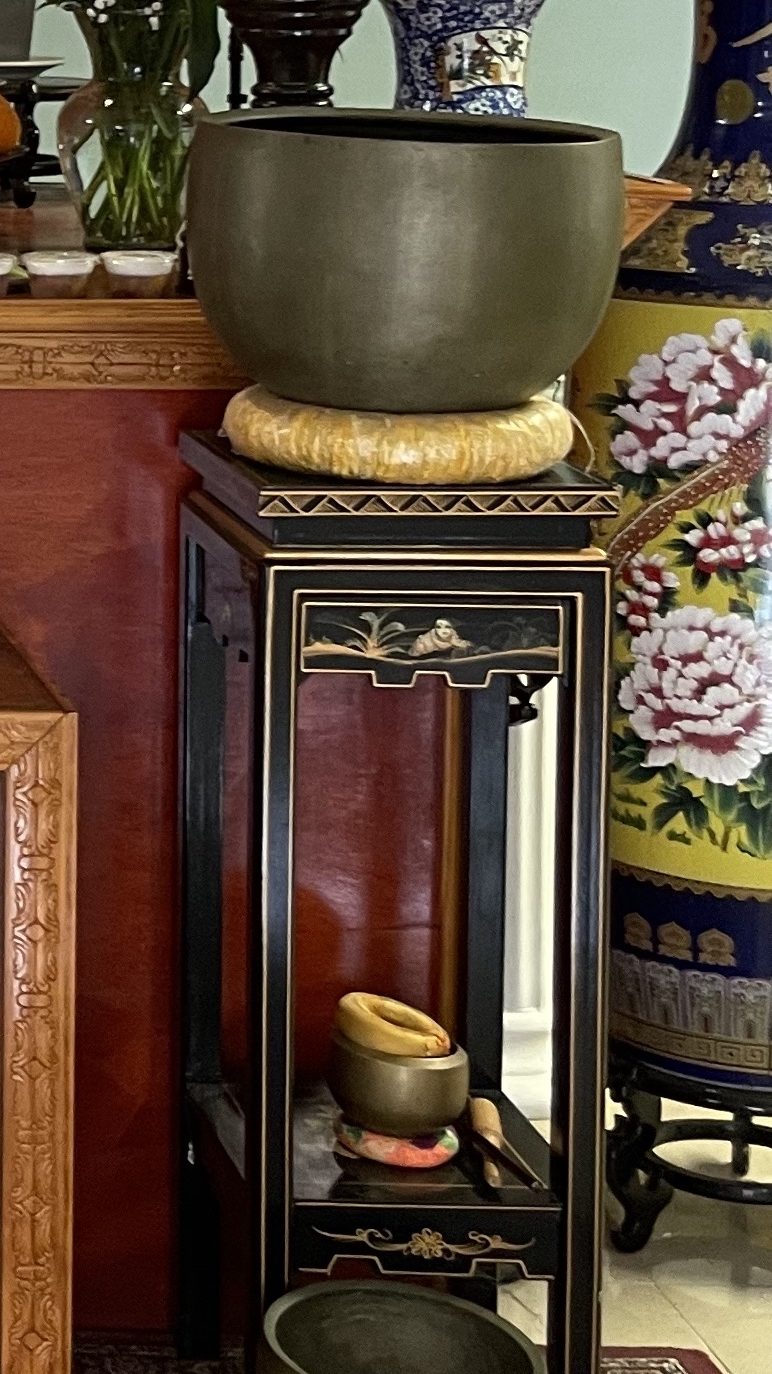
Standing Bells in a Buddhist Temple
Classification
Both singing bowls and standing bells are classified as idiophones, which are instruments where sound is produced by the body of the instrument vibrating. Depending on how you’re playing a singing bowl, however, it could be further classified as either a struck idiophone or a friction idiophone.
The first option, as a struck idiophone, would use the striker to hit the bell or bowl on the side or rim. This is in line with how a standing bell would have actually been played in a ritual setting or in a temple, perhaps to signal the start or end of a ceremony or meditation.
The second option, as a friction idiophone, would slide the striker around the outside rim, producing a sustained vibration and hum. This is what really sets the singing bowl apart — but trust me, that’s not how instruments like this were played 5000, 1000, or even 100 years ago. It’s a modern adaptation.
Basics
There’s usually three things associated with a singing bowl. The bowl itself. The striker or mallet. And the cushion.

My singing bowl. You can see the bowl, striker, and cushion in this picture.
Playing it as a friction idiophone might take a few tries, but it’s really easy. After about 5 minutes of practice, you shouldn’t have any trouble. In the video, I give you my top tips for getting a good tone.
You can usually tell how a bowl or bell is meant to be played by paying attention to the striker. If it’s covered in suede or leather, then it’s probably meant to be played as a singing bowl. If, on the other hand, the striker is just bare wood, then you’re probably just meant to hit it against the side.
You can play a singing bowl with a bare wood striker, but it’s much more difficult, adds lots of scratching noises, and generally doesn’t sound great.
Beats
My singing bowl is hammered metal, so someone took the time and shaped the bowl by hand. That means there’s tons of imperfections.
In fact, even if you have a singing bowl that was designed by a computer and seems perfect, there are probably still sonic imperfections. This is… kind of just a thing that happens with bell shapes.
You might think of a bell (or in our case, a bowl) as something that plays one single note — and while that’s true to our ears, it isn’t necessarily what’s happening from a frequency standpoint. Different parts of the bell tend to resonate with slightly different wavelengths. Imperfections only accentuate this.
As a result, you might notice a very interesting, acoustic phenomenon going on called a “beat.” When you have two slightly different frequencies that are played simultaneously, parts of the resulting sound wave are cancelled out and other parts are amplified. This produces a rhythmic warbling effect. The closer the frequencies are to one another, the longer the beat pulses will be.
Musicians are able to use beats to tune their instruments. In fact, if you’ve ever tuned a guitar with harmonics, you’ve used beats! Congratulations.
I’m going to explain this in-depth another day. For right now, if it isn’t making sense, let’s just say “because science.”
Materials and Sets
Singing bowls come in lots of different shapes and sizes today. Although you’ll frequently find them made out of metal, like mine, you can also get crystal singing bowls, which use quartz that is ground down into a powder, fused with a resin, and then shaped into a bowl. The crystal ones are beautiful and often very loud, but they can be very expensive, ranging from a few hundred to a few thousand dollars in cost.

Crystal Singing Bowl Set on Amazon
Regardless of the material, you’ll find singing bowls sold both individually and as sets. When you buy them in sets, they’re usually tuned to different notes that are supposed to represent the chakras, which means you’ll frequently find them in sets of seven. When you have a set that big, it’s a lot of fun. You set them up in a circle around you on the floor and then just meditate and play. There’s really no right or wrong way to play, just have fun and do what feels right.
Magickal and Ritual Uses
Many traditions use some form of bell in their ritual practice. In our coven, for instance, we tap and ring, which means tapping a wand on the altar three times and then ringing a bell three times. We do this at the start of every ritual. I’ve seen people use singing bowls for this and I think it sounds great, but personally I’m a little more likely to just use a small hand bell.
Obviously there’s tons of applications for sound healing or sound magick here. You can use the tone of a singing bowl as a trigger to help you start to get into a a trance or meditative state. If you’re trying to work with a specific chakra, for instance, you can get a singing bowl tuned to that particular note… but the great thing is, you get pretty much the same effect just by listening to the tones, so if you don’t want to invest in a full singing bowl set, there are plenty of recordings available on YouTube or streaming platforms.
And if you don’t believe in any of this sound healing stuff, it’s still great for relaxation.
One of my favorite uses for singing bowls is to energetically cleanse or charge things. I’ve charged candles this way… sometimes I’ll play it overtop of an incense blend that I’m making sort of as an energetic refresher before I finish everything. I’ve also seen people use it to charge water — like literally filling the singing bowl with water and then playing it, then using that charged water for another purpose.
You can also use sound as a diagnostic tool. There are some healing modalities that ring bells over the body to trace where an ailment is coming from. Similarly you can walk around your house with a bell during a home purification ritual, listen to the tones, and find out how things are going. Not to mention, historically, the ringing of bells has been associated with driving out evil spirits.
So that’s a bunch of different ideas, but really you’re only limited by your imagination and how you want to do something. By the way, if you think of other cool magickal uses for singing bowls, please throw it in the comments so we can all benefit.
Difficulty Rating
Alright, are you ready for the final rating? How hard are these things to play?
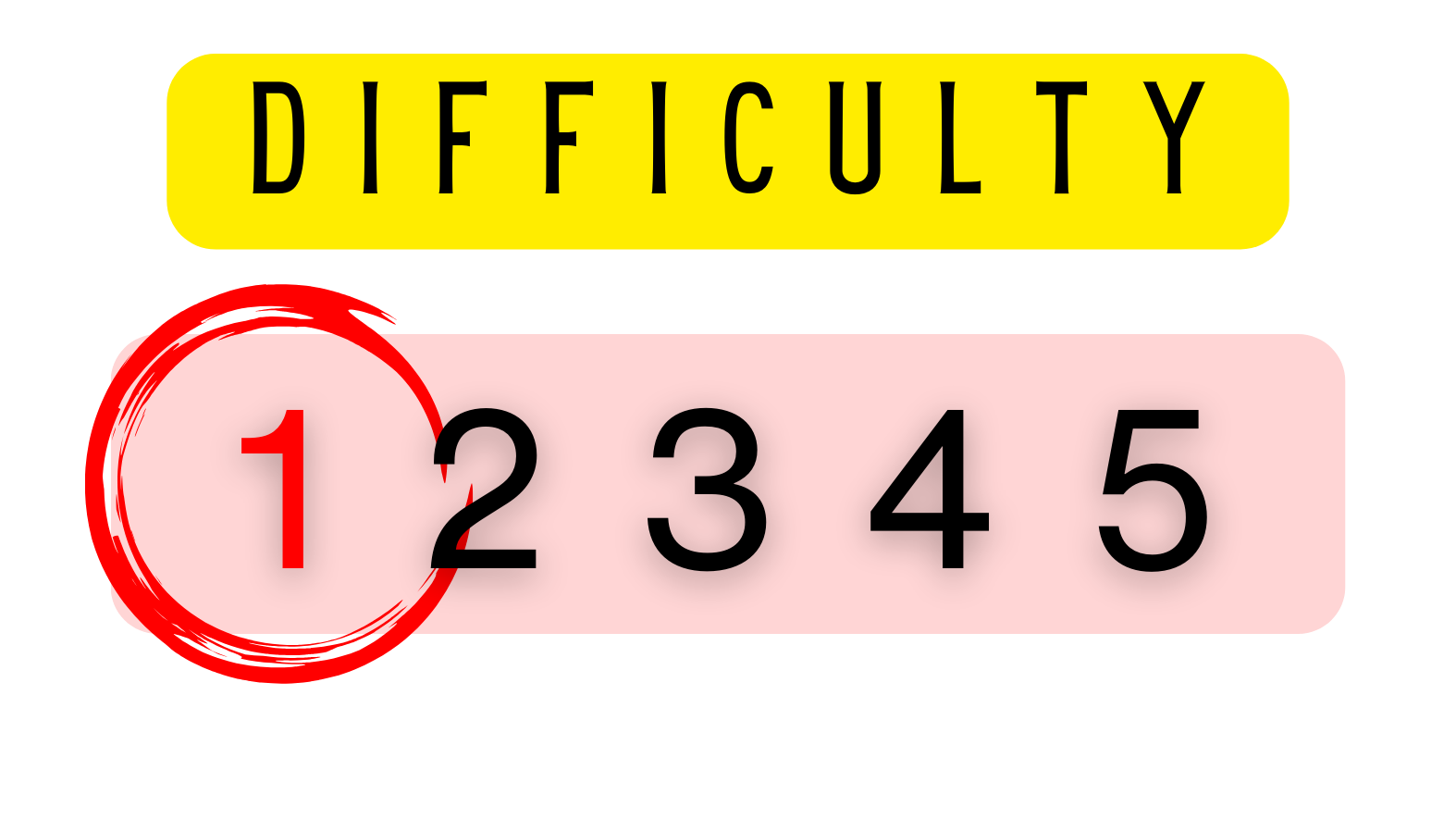
In terms of playing difficulty, this one gets a solid 1 out of 5. Really, there is no difficulty at all. This is a single note instrument. You can’t play it the wrong way.
Conclusions
Singing bowls are awesome. They didn’t come from Tibet and they aren’t 5000 years old, but they’re still a great way to add sound to your magick, relax, or just have fun. They require zero musical training to play, so they’re a great choice for people of all skill levels.
Since this post was a series, after all, maybe you’d like to check out some related content.
Hey, psssst. You. Down here. Yes, you! Since you’ve made it to the bottom of the post, you are now presented with this excellent example of particularly pint-sized print. Or perhaps you’d call it teeny text or something else alliterative. The point is, there are Amazon affiliates links on this page and I have to disclose the fact that if you use one of those links to make a purchase, then Amazon will pay me an itty-bitty commission. Sorry, that isn’t much of a secret. I hope you weren’t expecting something more interesting. I’d love to stay and have a longer chat about it, but I actually have a lunch date with my wife.





 Aerik Arkadian
Leave a reply to Aerik Arkadian Cancel reply