
Home » Magick » Basics » Meditation 101: Your Guide to the Essentials
Dim the lights. Sit in the lotus position. Light the candle. Stare at the flame… and… BOOM, you’re meditating, right?
Well, maybe. Maybe not.
I think my first introduction to the concept of meditation was (like many other things) through the world of Star Trek. There was a scene were someone, probably Spock, was sitting in quiet contemplation. I remember thinking, “why would anyone want to do that?” I didn’t see the appeal. But it didn’t matter very much because at the time, it was just something that Vulcans did. It certainly wasn’t something that a good Christian boy like me would have use for.
A few years later, however, I did become curious enough to try it out for myself. I remember sitting on the couch with my eyes closed for a few minutes. Eventually, my mother walked by and inquired as to what I was doing.
“I’m meditating,” I answered to her question, rather innocently.
“Why would you do a thing like that?” was her sharp reply.
As I opened my eyes, I could see her staring at me with a heavy amount of disapproval. I wasn’t sure what I had done wrong, but I was sure that I had “done wrong.” I wasn’t punished for the offense, but I did receive a lecture from my father.
I can’t tell you exactly why meditation was so frowned upon in my household. Perhaps it was due to perceived associations with “eastern philosophies” or “dirty hippies,” but for whatever reason, I was told in no uncertain terms that it was distinctly anti-Christian.
And that confused the hell out of me, man. I had actually read the Bible… and like, I’m pretty sure Jesus himself meditated. In fact, he was probably a master at the skill. How else do you fast for 40 days in the desert?
Flash forward several years and there’s been more books written on the subject of meditation than anyone would ever be able to reasonably read. It’s not just for Vulcans. It’s not just for Hippies. It’s for all humans. And if you’re a human that studies magick, it’s exceptionally important.
We often say that having a good meditation routine is foundational to magickal practice in general. Why? Read on.
Basic Benefits of Meditation
I guess before we get too far into how to do it, we should talk about why would you want to do it.
There are hundreds, if not thousands, of claims online for the physical benefits of meditation, including:
- Lowering blood pressure
- Lowering resting heart rate
- Improving sleep
- Reducing chronic pain
- Improving brain function
- Reducing the risk of Alzheimers
In the mental health field, it’s reported to contribute to decreased levels of anxiety, stress, and depression.
I’m not a doctor. I’m not presenting studies to back up any of these claims. Do your own research.
What we’re really concerned with here is how meditation benefits a magickal practice. For starters, meditation helps to put the ego (that voice that keeps constantly yelling “what if?”) in a box. If you can’t quiet your mind, it’s really hard to do energy work. Those silent moments also allow our higher selves to speak more clearly. And on top of that, it’s an opportunity to work on visualization skills.
Let me put it in no uncertain terms: the practice of meditation is foundational to the practice of magick.
When to Meditate
If you’re doing a specific set of rituals that calls for meditation, it might provide some guidance as to exactly when you should start and stop. Sunrise, midday, and sunset are some pretty classic examples of recommended times.

Aside from that, it’s really up to you. And I’d even go so far as to say that in most circumstances, it doesn’t really matter when you do it as long as you do it.
If you’re a morning person and you don’t mind waking up a little extra early each day, great! Do it in the morning — that’s a great way to start your day. If you’re a night owl and prefer to stay up late, great! Do it in evening — that’s a great way to end your day!
But our society isn’t really predicated upon regularly giving people opportunities for quiet moments. For many of us, we’re always working, always going somewhere, always having our attention taken by something. When that’s the case, it might be more of an effort to find the time.
So I’ll ask you. When do you have the time? Is it in the car after you’ve arrived at work a few minutes early? Is it on your lunch break? Is it on a train or some other form of public transportation? Find those moments and claim them. If you don’t, they’re lost.
Pro Tip: If at any point during the day you realize you were just doomscrolling through social media or short videos of cats for 10 minutes, that was an opportunity to meditate. Heck, even now while you’re reading this article… that’s an opportunity! You can always doomscroll later.
And if you feel like you truly don’t have those moments, then it’s up to you to find them. Carve out a specific part of your day that is dedicated solely to meditating. Tell people to leave you alone and turn your phone off. It isn’t selfish. It’s self care.
Regularity and Length
And now the dreaded question that all students ask: how often do I have to do it?
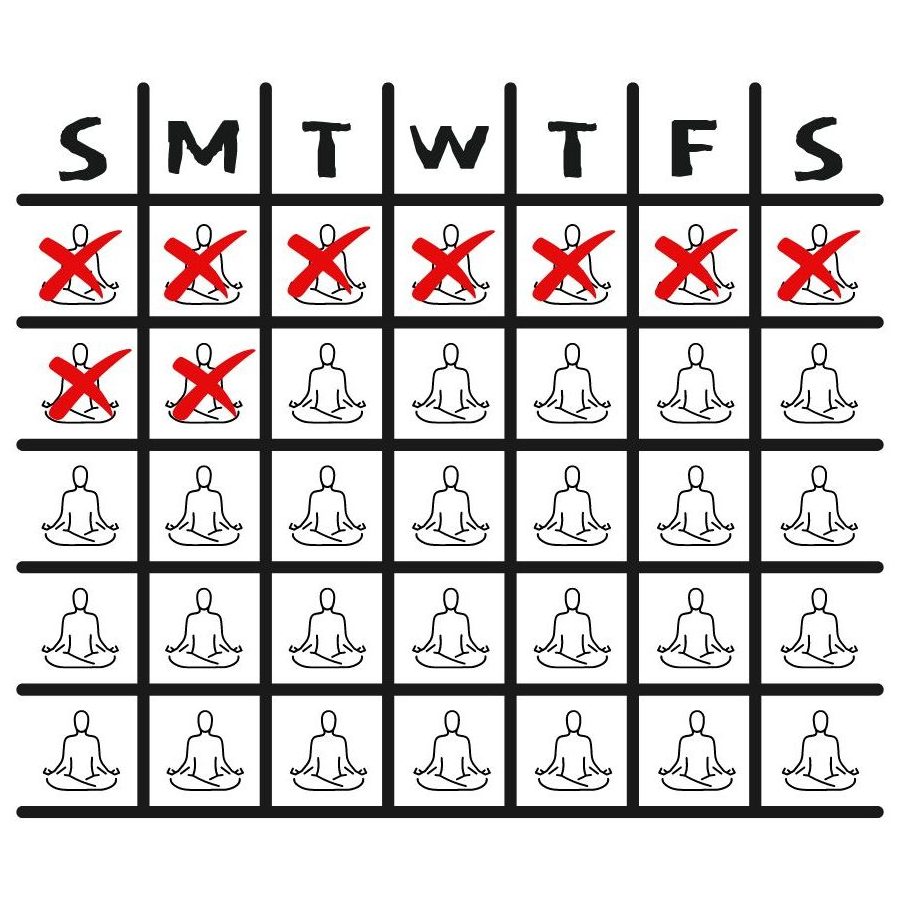
It’s more important to meditate regularly than it is to meditate for a long duration.
If you were training for a marathon, for example, you’d be much better served by running for 10 minutes every day than running for an hour once a week. The same applies here. Frequency is important!
Your brain needs regularity to really establish a good meditational practice. It’s better to try to get just 5 minutes in per day than to try to cram a long session in once a week.
On that note, it’s actually very difficult to truly meditate for lengthy periods of time when you’re just starting out. Can you really clear your mind for 5 minutes, let alone an hour? How long can you not think about your job? About your responsibilities? About finances? About what’s for dinner tonight? That YouTube video you wanted to post a week ago or the article on meditation that you’re trying to write? (wait, wait, that might just be me) As soon as the voice of the ego kicks back in, you’re not really meditating anymore… you’re just having a potentially pointless conversation with yourself. You’ve shifted your thinking away from the present moment and into the past or the future — more on that later.
Regularity can also be a form of a trigger, which we’ll discuss next.
Triggers
Triggers, for the purpose of our discussion today, are external stimuli, or cues, that can help expedite and deepen your meditation sessions. They’re usually based on the senses (sight, sound, smell, and touch) and behavioral patterns, but the great thing is that for the most post, you can pick and choose which ones to use. Let’s take a look at some examples:
- Visual triggers might include dimming the lights to a specific level, using colored lighting, or lighting a particular candle that you have designated as your meditation candle
- Olfactoral triggers might include a particular oil blend that you apply to yourself and an incense that you burn in the room
- Tangible triggers might include a meditation blanket that you wrap around yourself or the feeling of prayer beads running between your fingers
- Audible triggers might include a music selection that you regularly play in the background, striking a bell, or playing a drum
And then there are other behavioral patterns that can be grouped into this category as well, like if you tend to always use a certain posture, time of day, or room of your house.
It’s important to pick a few of these and try to use them as often as possible. Some of them will work better in certain situations. For instance, let’s say you find out that you really like meditating to the sound of a beating drum, but that might not be the best option if it’s late at night and people around you are sleeping.
As much as you can, try to keep these triggers reserved only for your meditation practice. This will help strengthen the neural associations.
Personally, I choose an oil blend as my main meditation trigger. The scent makes me feel calm. Even though it’s something I really enjoy, I wouldn’t apply it for everyday purposes because this would make it less “special” for meditation.

With enough time and practice, these triggers will allow you to almost instantaneously jump into a meditative state of mind.
Want to hear about future posts? Subscribe to get notifications delivered straight to your inbox.
Square Breathing
Square breathing is a meditational technique that helps keep you centered and focused on the rhythm of your breath.

As the delightfully helpful graphic above shows, the steps are as follows:
- Inhale to a count of 4
- Pause to a count of 4
- Exhale to a count of 4
- Pause to a count of 4
By the time you hit “four” on the inhalation, your lungs should be completely filled with air as far as they can go. Likewise on the exhalation, they should be completely empty.
Sometimes we’ll also refer to this technique as “4×4 breathing.” And if you find that a count of four is easily doable for you, great! Increase that. Try a count of five (5×5 breathing). Then a count of six (6×6 breathing). It might seem easy to start off, but once you get about five minutes in, you’ll notice that you’re processing oxygen very differently.
According to the Cleveland Clinic, the normal respiratory rate for an adult at rest is 12 to 18 breaths per minute. With a 4×4 breathing pattern, you’ll be way under that rate (only about 4 breaths per minute, depending on how you count), which may cause a feeling of light headedness.
As an added caveat, I frequently use my heartbeat to time each count. Heart rate generally slows during meditation, so you will also find that your standard “four count” of heartbeats has a slightly longer duration toward the end of a session.
There are countless variations on this pattern, such as 4-7-8 breathing, which is supposed to reduce stress and anxiety. Anyone further interested in this topic would do well to study pranayama.
Words of Power and Mantras
If you’re really having difficult focusing on clearing your mind, you might want to try a word of power. This can be anything you pick, like “CALM” or even the classic “OM.”

You can say the word out loud over and over or just picture it in your mind. If you’re visualizing, really try to see the word floating there — trace the letters, rotate them, or let them fade through a series of different colors.
The word is your focal point. This is a reductive technique where you try to concentrate on just one thing: the word. If other thoughts appear, acknowledge them, then shift your attention back to your word. Keep this up for as long as you can… or set a timer and continue until it goes off.
A mantra is pretty much the same idea, but longer. Instead of just one word, you’ll be focusing on a specific phrase. Mantras are commonly chanted 108 times using malas or prayer beads, which allow you to keep track of when to stop without actually counting. Every time you finish a repetition of the chant, you move your fingers to the next bead. When you come to the end of the string, you’re done!
Common mantras include:
- Om Mani Padme Hum
- Isis, Astarte, Diana, Hecate, Demeter, Kali, Inana
- I am one with the force and the force is with me
- All you need is love, dum duh da da da
- Literally any prayer or chant that you can say repetitively
Presence of Mind
Presence of mind is a concept that’s gained a significant amount of popularity in the new age or self help sections of book stores thanks to authors like Eckhart Tolle. It probably traces back mostly to the New Thought movement, which is a whole different story.
This kind of stuff sometimes reads like a lite version of magick… or rather, magick for people who don’t want to call it magick. Similar concepts, different framing… but it’s actually a very powerful practice.
The basic idea is that for most people, there’s very few moments when we’re focused on the present moment. We’re usually thinking about what we have just done or what we’re about to do, meaning that our brains are centered around either the past or the future and not what’s happening right now. It boils down to one word: Awareness (which, by the way, is also the title of a book that kind of deals with similar material).
You can go through your entire life and be completely oblivious to all of this because the voice in your head is really, really loud and distracting… but where it becomes painfully obvious is during meditation. When you’re trying to clear your mind, the voice gives you a pile of thoughts to deal with. Maybe it’s fears and anxiety. Maybe it’s that new TV series you started watching. Or maybe you’re just planning your day tomorrow. Either way, it’s a distraction from the present moment.
Good news, bad news. Bad news first, okay?
The bad news is you can’t actually turn that voice off, but the good news it that you don’t really have to. When you catch the voice distracting you, just acknowledge it and try to turn your attention back to the present moment. Even 5 short seconds of being present is a win… and with more time and practice, you can extend this to longer durations.
Meditation or Trance
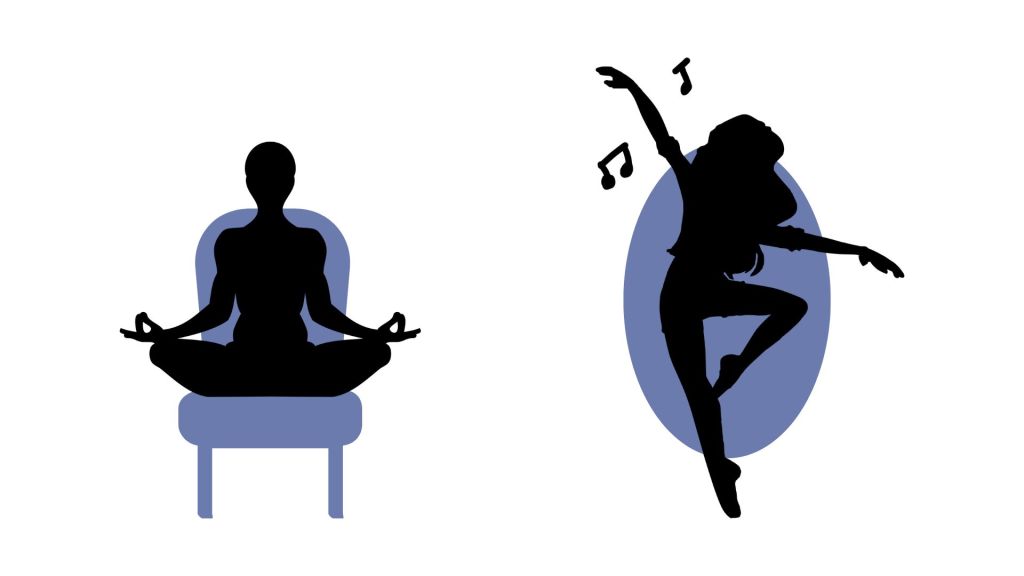
A lot of times people use the words “meditation” and “trance” interchangeably. While they usually get you to the same place (that is, a low alpha brainwave state), they are different paths.
Meditation is inhibitory gnosis. Trance is excitatory gnosis. A small distinction, but a distinction nonetheless.
With meditation, we’re focused on sitting calmly and quietly achieving an alpha state. With trance, we’re dancing, moving, or overloading our brains with flashing lights and music to achieve an alpha state.
Alright, Lets Begin!
I’ve rambled on for long enough. It’s time to start doing the work.
Level 1:
- Set a timer for 5 minutes
- Sit comfortably with your feet on the floor and your hands gently in your lap
- Close your eyes
- Use square breathing until the timer goes off
Congratulations. You have just successfully meditated.
Now it’s time to level up. Exactly what Level 2 should entail, I’ll leave up to you, but you should probably try incorporating at least one trigger into the routine and then gradually expand from there.
Further Reading
If you’d like to learn more on this topic, you can check out some of the following.


I must respectfully beg your pardon as these are not my usual occult-style recommendations. In fact, some of them are filled with very Christian language and that just might make you cringe. If you can get past that, they contain good information.
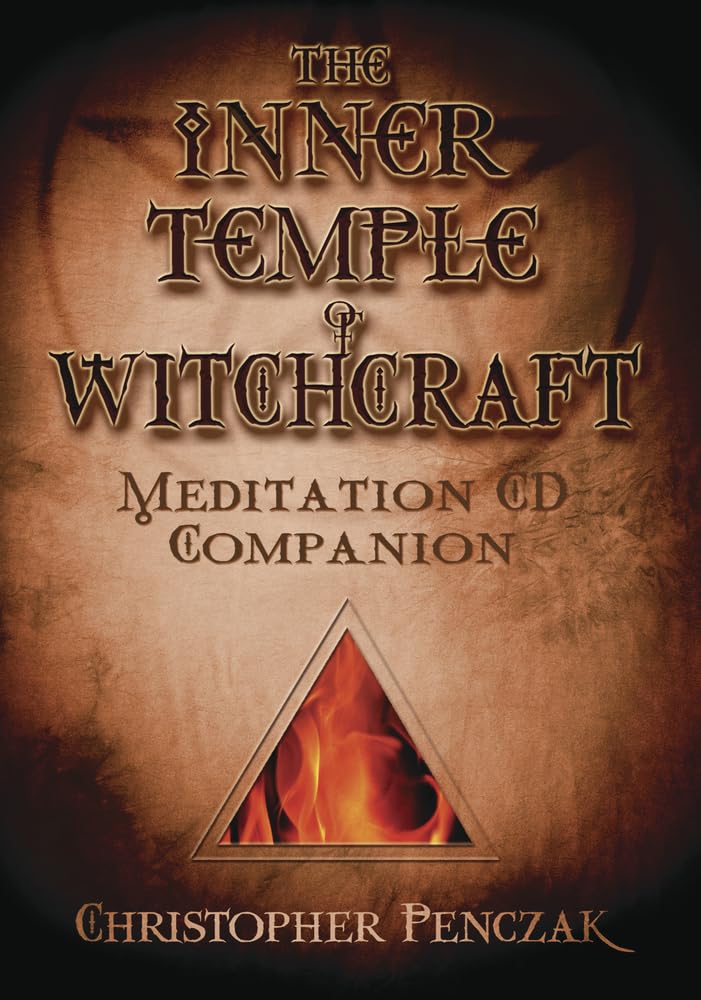
So here are more pagan-friendly books that go over similar information.
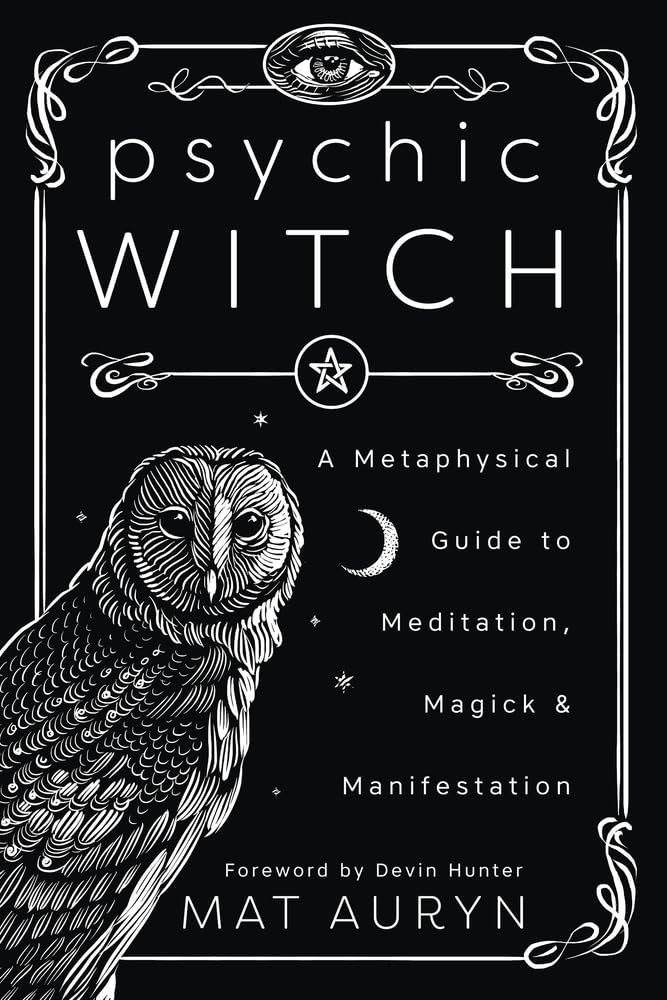

If you’re willing to do the work, grab a copy of Initiation Into Hermetics (which I write more about here) and do all of the exercises. You won’t be disappointed.
Conclusions
Is this the end? Of course not. It’s just the beginning, but it’s enough of a beginning to get started. So go and do just that! Get started.
Here we go. We’re at the bottom of the article. I was so busy meditating that I almost forgot to tell you this very, very important detail. There’s a bunch of affiliate links on this page. If you use one of them to make a purchase on Amazon, they’ll pay me a tiny commission. If you need something to meditate on today, you can focus on how infinitesimally small that commission actually is.







 Aerik Arkadian
Leave a comment