Home » Magick » M3 Episodes » Season 2 » Laura Perry, Minoans, and Snake Goddesses
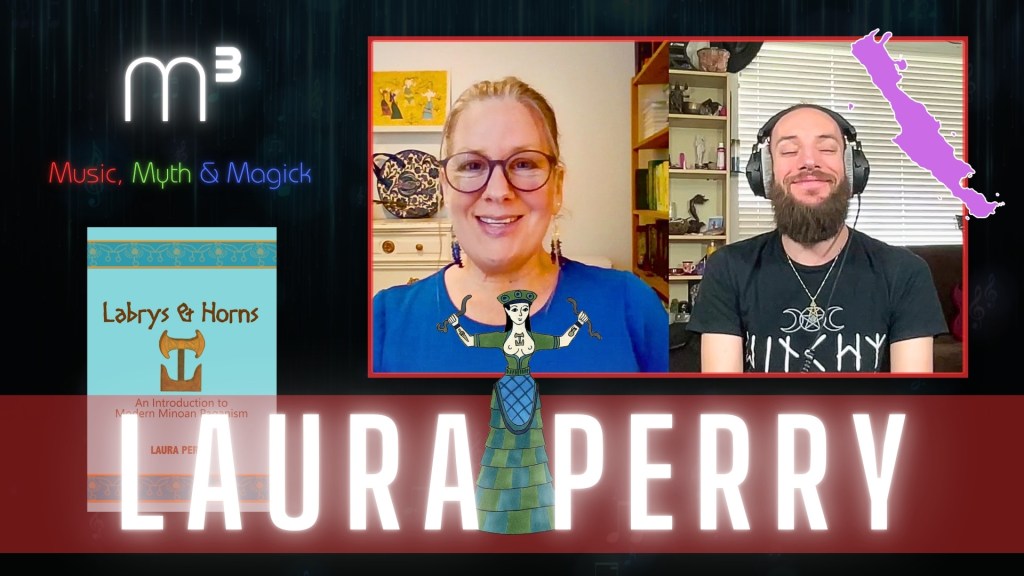
Laura Perry is an author and artist who specializes in the Ancient Minoans. She founded Ariadne’s Tribe, which is an inclusive Minoan spirituality tradition. Some of her work includes the book Labrys and Horns as well as The Minoan Tarot, a deck that was specifically designed in the style of Ancient Minoan artwork.
In this episode, Laura discusses everything I ever wanted to know about the Ancient Minions, like their deities, rituals, and history… as well as her Tarot deck, Ariadne’s tribe, and some of her books.
Hit play on that YouTube video if you’d like to get the full scoop. Otherwise, I’m going to give you the highlights here.
About Laura and her Books
Laura describes herself as a Jack (or Jill) of All Trades. She’s a writer, artist, and Pagan clergy who started out in Wicca, but eventually found her way to the Minoan pantheon and Minoan spirituality.
And she’s written a ton about those topics.

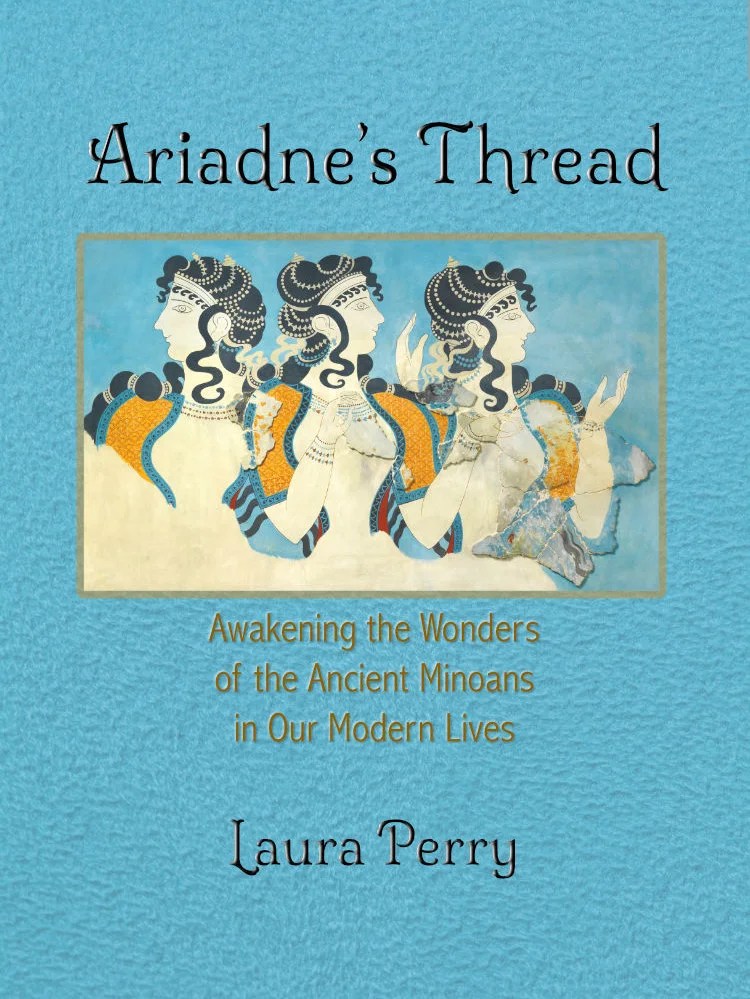

Those are just a small sampling. I’ll show you more books at the end.
Personally, I grabbed a copy of Labrys and Horns before this interview because I wanted to have a better understanding of the topic. And boy… did it inform me how little I actually knew about the Minoans.
Who were the Minoans?
According to Laura, the Minoans were the first literate European culture. That’s a pretty big deal, historically speaking. Also, that was probably the first and last time I will say “according to Laura” within the scope of this article. Just assume all other historical facts here are probably coming from her.
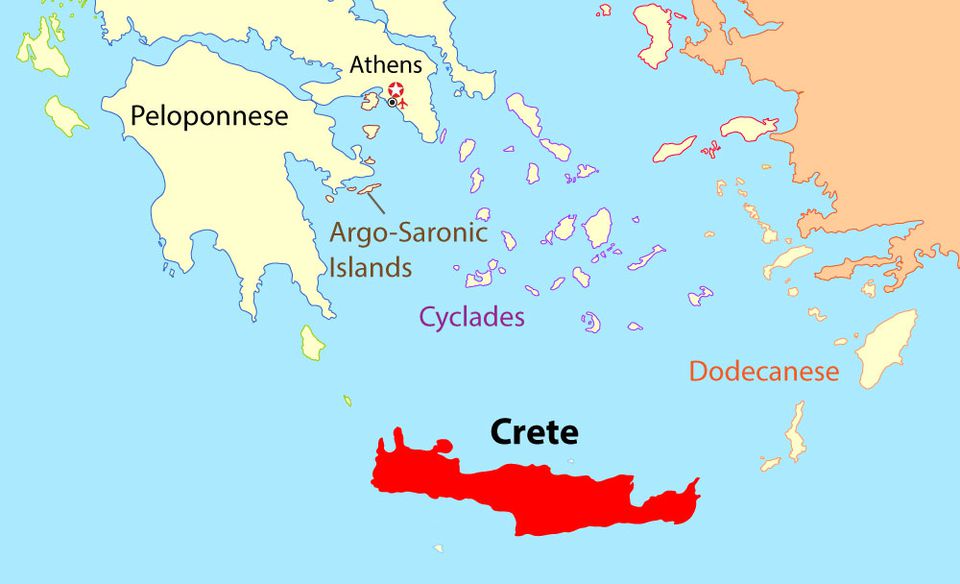
The Minoans lived on the island of Crete, which is in the eastern Mediterranean Sea and just south of Greece. For the past 100 years of so, the island has been a part of Greece, but prior to this, it was ruled by countless other nations, including the British, Persian, Turkish, and Ottoman Empires.
They had paved streets, big cities, sewers, aqueducts, and flushing toilets, which is pretty high tech for an ancient civilization. Remember, we’re talking about the Bronze Age (circa 3300 BCE) here. They also had incredible temples and beautiful art.
What happened to them?
The Minoan civilization pretty much disappeared. The leading theory? A volcano erupted and started a tsunami. It pretty much wrecked everything. After that, people invaded and destroyed the cities.
That’s a bummer, man.
Systems of Writing
Remember how I said that the Minoans were the first literate European culture? Well, we know this because they definitely had writing — in fact, their official writing system was called Linear A, but unfortunately we’re not able to read what they wrote.
We’ve only discovered a very limited amount of samples with Linear A writing and many of those samples are only fragments. There’s just not enough raw information for people to make translation matches — but that certainly hasn’t stopped them from trying!
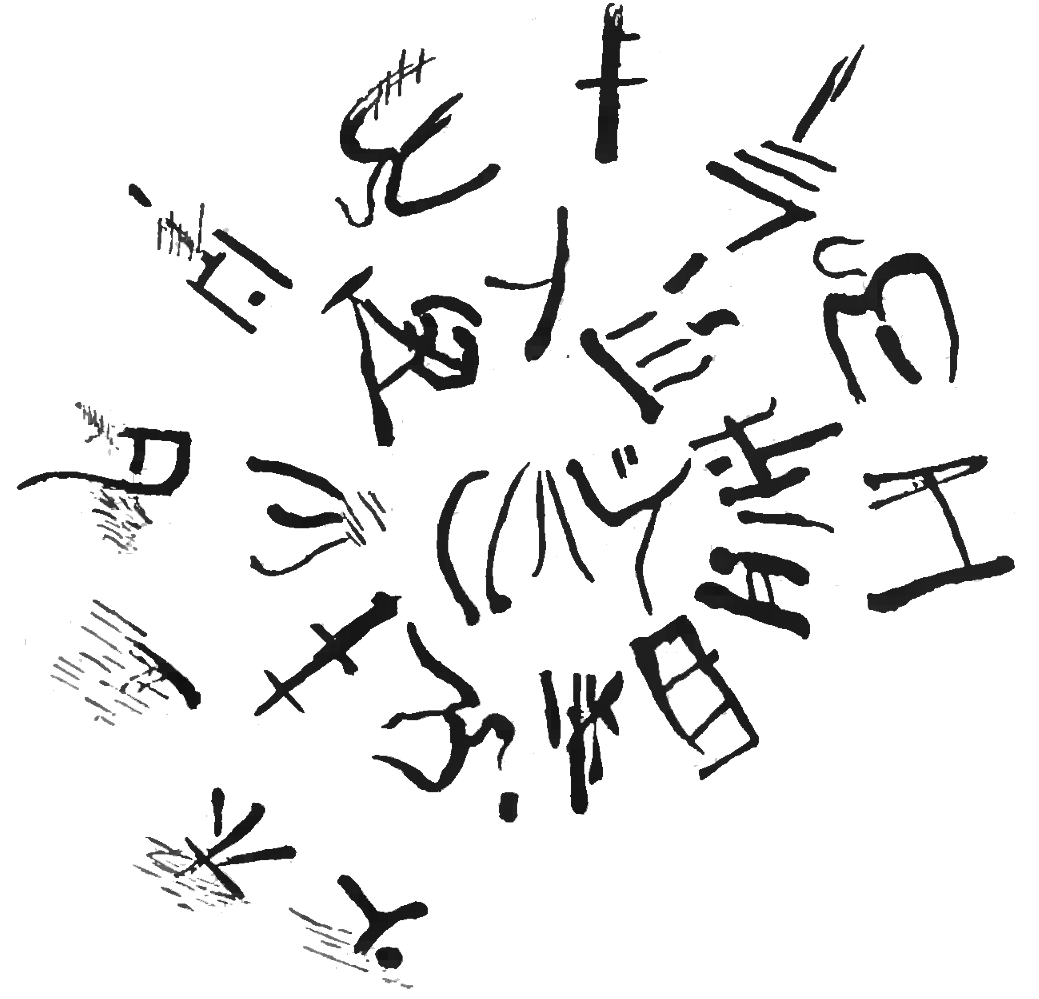
Copy of a Linear A inscription on a cup. Public Domain. Wikipedia
Luckily for us, there’s another writing system… and it was named, rather creatively I might add, Linear B.
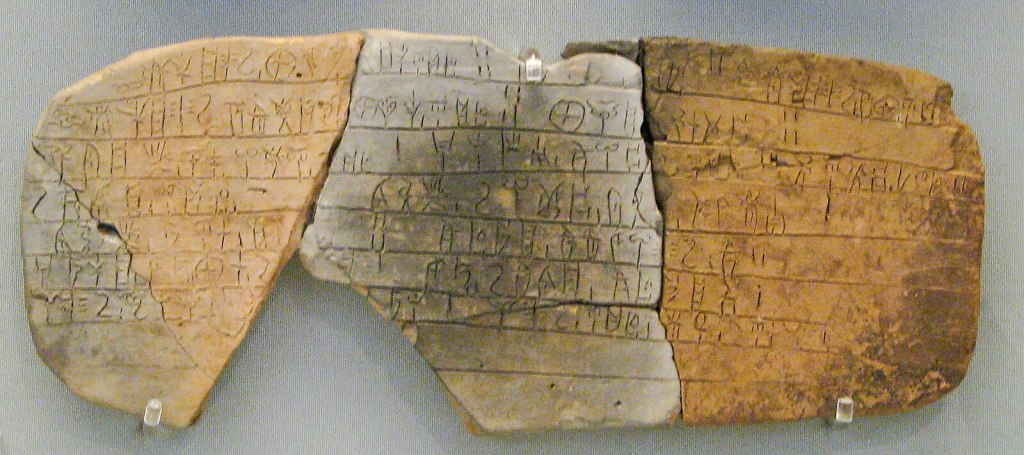
Clay tablet inscribed with Linear B script, from the Mycenaean palace of Pylos. Photo by Sharon Mollerus, CC BY 2.0. Courtesy of Wikimedia
Toward the end of Ancient Minoan Civilization, some time after the Mycenaeans took over at Knossos, Linear A was adapted to fit Mycenaean Greek and become Linear B. And there’s tons of writing with this script.
So we at least know what other people (the Mycenaeans) wrote about the Ancient Minoans. That’s definitely not a perfect way of viewing history, but at least it’s something.
I’ve skipped over a ton of history here, so if that’s your thing, then you should absolutely watch the interview and listen to Laura discuss all of this in her own words.
Want to hear about future posts? Subscribe to get notifications delivered straight to your inbox.
Minoan Deities
If you want to get a good understanding of how much cultural impact the Minoans had, you can start by taking a look at their deities.
In Labrys and Horns, Laura breaks down part of the Minoan Pantheon into three triplicities, which are composed of a mother, daughter, and son that rule the land, sky, and sea. They look like this:
- Land: Rhea, Ariadne, and Tauros Asterion
- Sky: Therasia, Arachne, and Korydallos
- Sea: Posidaeja, Antheia, and Dionysus
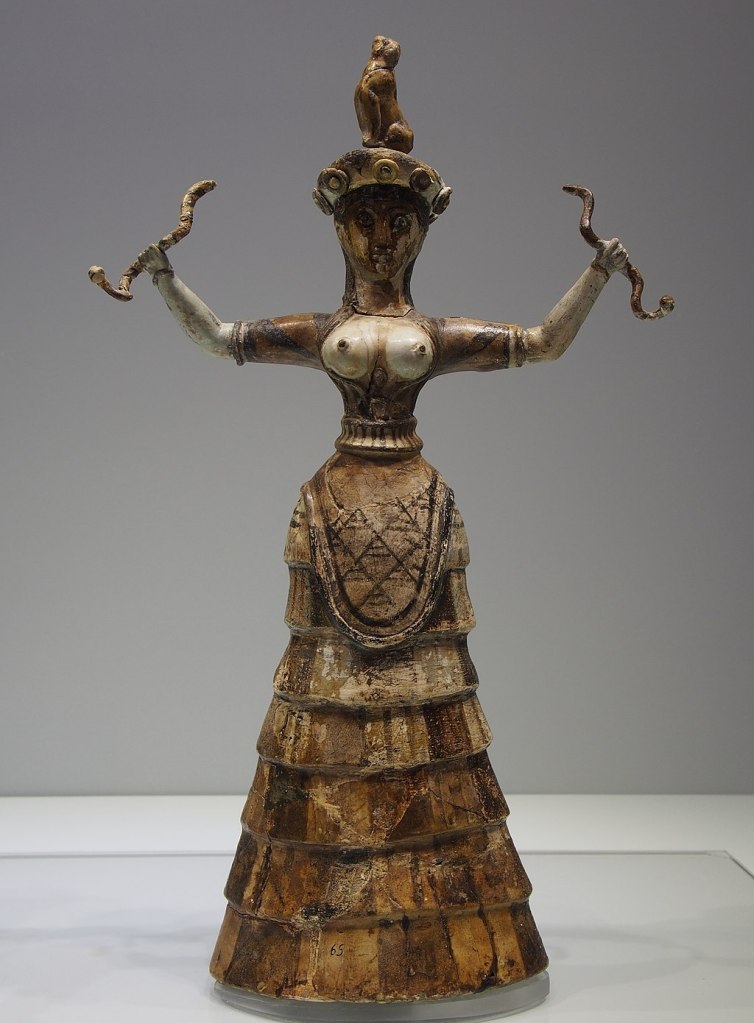
Snake Goddess Statue. Photo by C messier, CC BY-SA 4.0. Courtesy of Wikimedia
Hey, you might recognize some of those names, like Dionysus or Rhea. And others may have been taken by the Greeks and altered, like changing Posidaeja into Poseidon.
There are also similarities between certain myths. The story of Rhea and Ariadne, for example, mostly follows the better-known Greek myth involving Demeter and Persephone.
One of the most mysterious things, however, is definitely this snake goddess figure. Is she a deity? Is she a priestess? Nobody knows for sure, but she’s really awesome either way.
If you’d like to find out more, you should definitely grab a copy of Laura’s book.
Also, you can hear Laura discuss all of these things in more detail if you listen to the video.
Mysteries and Symbols
You’ll see Minoan symbols around like…
- The Labrys – a decorative or ceremonial double axe shape made from thin metal and used as a symbolic ritual object, interpreted as female genitalia or a butterfly
- The Labyrinth – meandering maze symbols, but probably different from the “standard” one that you usually see floating around the Pagan world
The Minoans also had mysteries. They might have even been a precurser to the Eleusinian Mysteries in Ancient Greece. Similar to many other belief systems, the Minoan mysteries were agricultural and deal with cycles in nature that are also reflected within us.
Stomping Dances
The Minoans had instruments like sistrums, lyres, and double flutes. They also sang. It’s a pretty good bet that they had drums, too, but no one has found any artwork yet to back that up.
One of the most fascinating things that Laura told me about was stomping dances. This is where people might have stomped on reverberating surfaces like the lids of cisterns or wooden stages. Different rhythms could have been used for specific ritual purposes or dedicated to particular deities.
Who needs drums when you can stomp on stuff?
Ariadne’s Tribe
Laura started having past life memories of Crete when she was 13 years old and she was always fascinated by the Ancient Minoans.
She was not alone… but she wouldn’t find that out until later. Sometime in the 1990’s, she scraped together what little amount of information she could on the Minoan deities and wrote out some rituals. All of this eventually turned into a book.
Years later, she started a Facebook group on the topic, hoping to maybe find a handful of people who might have a shared interest. She definitely found more than a handful — more like 1500.

Today Ariadne’s Tribe has developed into a full organization with a board of directors, a well-defined pantheon, and a full set of rituals.
The Minoan Tarot
Laura designed an entire Tarot deck based on Minoan Artwork. It’s so very awesome that I have to share a bunch of images with you.
The suits are divided up into Daggers, Rhytons, Labryses, and Horns. As you might suspect from the colors in the image below, Daggers correspond to Element of Fire, Rhytons to Water, Labryses to Air, and Horns to Earth.
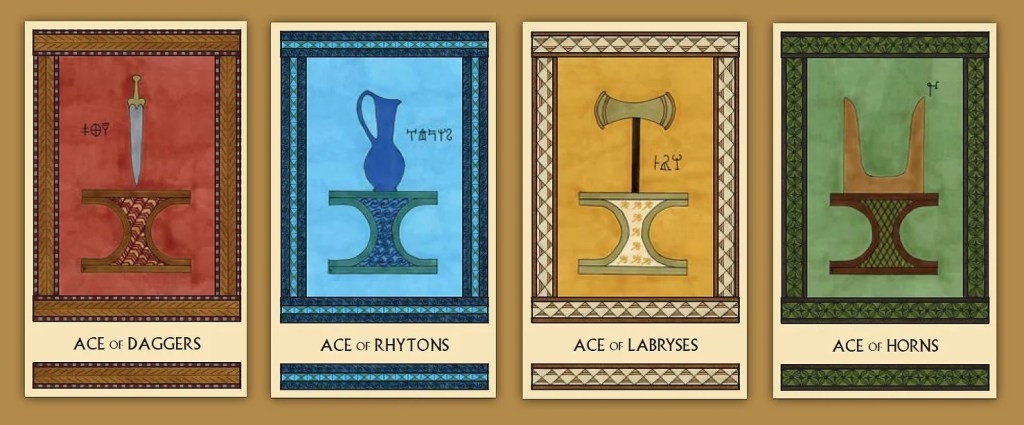
And here’s a closer look at the imagery used for each one of the suits.
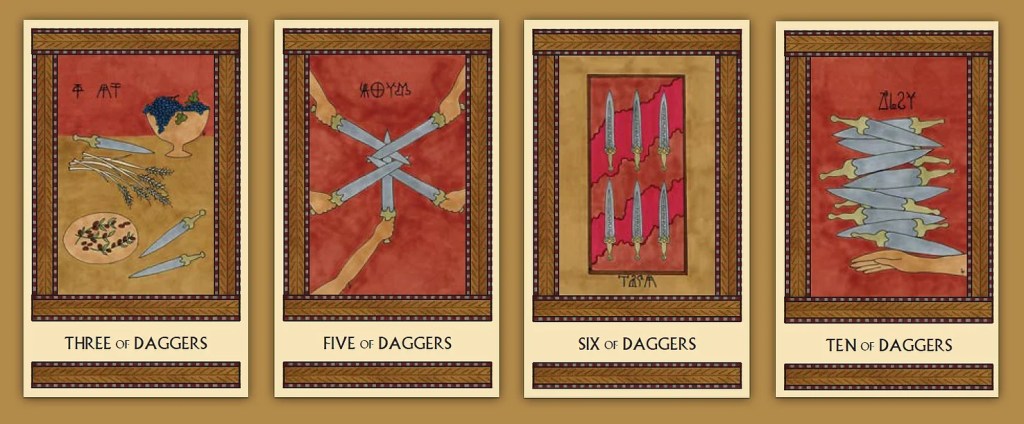
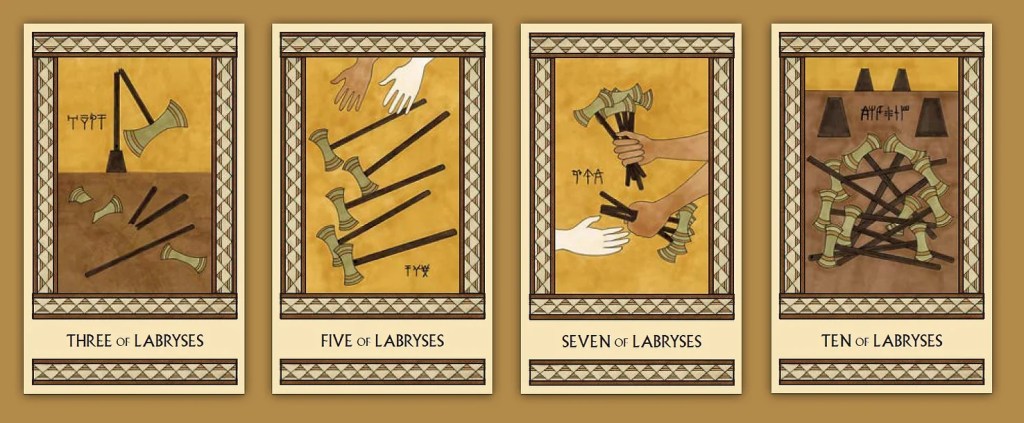

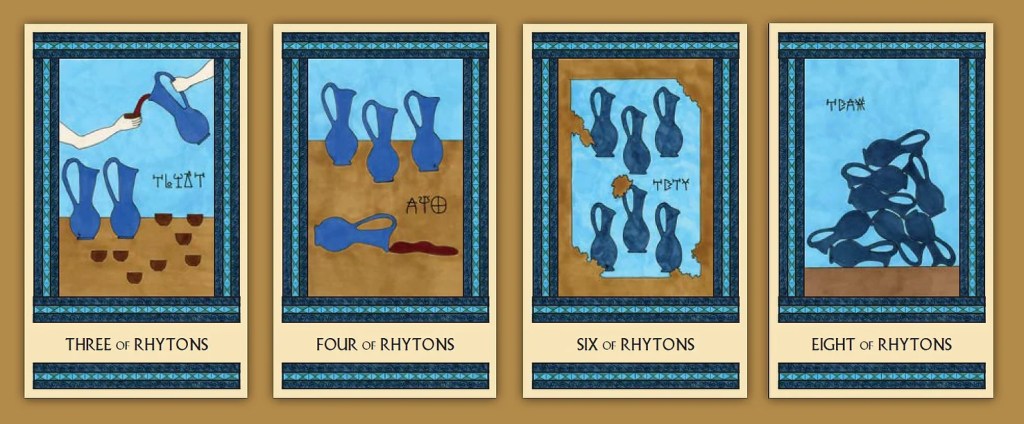
Check out this sampling of the Major Arcana. You might recognize some, but others have been completely reimagined.

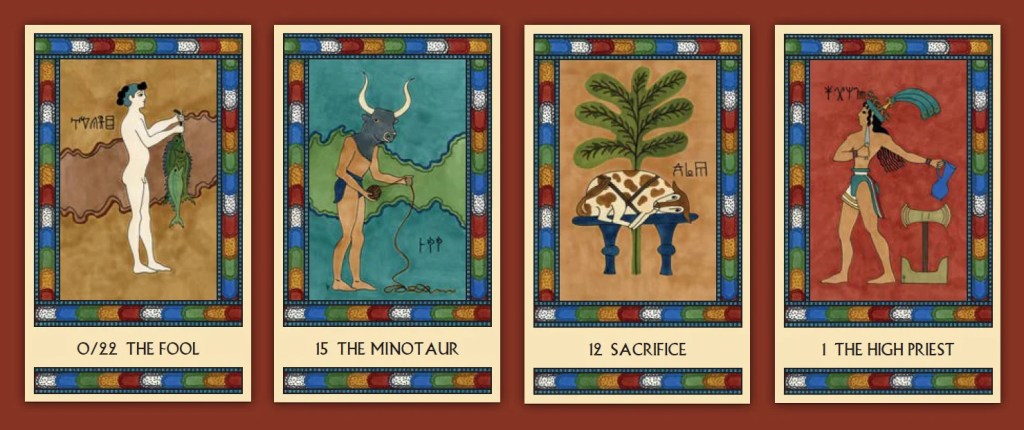
But I think what stuck out to me the most was the court cards.

Instead of the usual Page, Knight, Queen, and King system, Laura’s deck uses three sets of pairs: Youth and Maid, Lord and Lady, and Priest and Priestess.
I pulled all of those pictures from Laura’s website, by the way. You can go there for more info… speaking of which…
Where to find Laura:
- Minoan Tarot Official Website: https://www.minoantarot.com/
- Ariadne’s Tribe: https://ariadnestribe.com/
- Laura’s Website: https://www.lauraperryauthor.com/
Social
- YouTube: https://www.youtube.com/channel/UCsjc-y9Ei46OsnJFucePzxA
- Facebook: https://www.facebook.com/LauraPerryAuthor
- Instagram: https://www.instagram.com/lauraperry.artist/
Her books and work on Amazon:
- Labrys and Horns: https://amzn.to/3AjfoTz
- Pantheon: The Minoans (coming soon): https://amzn.to/3UFiDvv
- The Minoan Coloring Book: https://amzn.to/3CrHMTO
- Minoan Tarot: https://amzn.to/3CcKvR7
- Ariadne’s Thread: https://amzn.to/4ejCnvF
- Shaman Pathways – Deathwalking: https://amzn.to/3UE38nq
Festivals:
- Mystic South: https://mystic-south.com/
More Books
While your here, why not spend a moment browsing some of Laura’s other books? They all sound pretty cool.



Music in Ritual
When Laura answers the signature question, she answers not only for herself, but for all of Ariadne’s Tribe. Music is ingrained into their ritual practice. There are specific chants that they sing during certain parts of ritual, such as processing in, after giving an offering, and processing out.
Laura has also written several chants! You can listen to all of them on her YouTube page. Check out this playlist: Ariadne’s Tribe.
Conclusions
I hope you leave this page with a little more knowledge about the Ancient Minoans, Laura Perry, and Ariadne’s Tribe. These highlights are never a substitute for listening to the actual interviews. Laura taught me so much! You should definitely go and watch the video.
You don’t have to go on a quest for ancient civilizations to find knowledge. There’s always fascinating treasures hidden right at the end of my posts… like this disclaimer, for example. Did you know that there are referral links in this post? Now you do. If you use one of those to purchase a book or something, Amazon pays me a tiny commission. Wow! What a gem!




.JPG)
Leave a Reply