The High Priestess points her athame at the floor. She circumambulates the room, uttering words of intent with every step. With her final motion, you are now between words. The circle has been cast.
It’s hard to label one single step of ritual as the most important — they’re all pretty vital for their own reasons. But if you don’t cast (or draw) the circle, then… well, you don’t really have a circle, do you?
History in Brief. Very brief.

Our earliest associations of magickal circles traces back thousands of years ago to Ancient Egypt, where the word “encircle” may have sometimes been synonymous with “enchant” or “spellbind.” In the above picture, there are multiple examples of Ancient Egyptian encirclement… can you spot them all? If not, feel free to read this entirely separate article I wrote specifically on that topic — there’s a lot of history there.
Since then, us humans have continued to use the circle for magick in varying degrees of complexity, from simple spells that just require walking around a house all the way to elaborately decorative Solomonic drawings that decorate a ceremonial magician’s floor.
But what we’re going to focus on in this article is a Wiccan circle.
What is Circle?
Circle can mean different things to different people. Each witch might have their own unique definition, but in general, we’re talking about a separation between the magickal and the mundane.
I realize that in my last paragraph, it might seem like I had a typo. You might have thought I meant to type “the circle can mean different things” or “a clrcle can mean different things” or even “circles can be mean different things,” but my syntax was intentional.
Sometimes we treat the word “circle” a little bit differently than normal. It can be a destination, synonymous with the words “temple” or “church,” as in to say “I’m going to circle.” It can also be a verb, referring to the act of preforming ritual, as in “we are circling tonight.”
So what is circle? It’s something you do. It’s a place you go. It’s a container for magick. It’s a framework for ritual. I apologize for any confusing vernacular. As I said, it has many definitions.
We often compare our ritual process to the act of “building the temple.” Unlike a physical church or temple, our sacred space can be erected at will anywhere we choose. If you go with this metaphor, then the act of casting circle would be very similar to raising the temple walls — in our case, however, we’re dealing with a purely energetic boundary.
The circle creates a dividing line. The things on the outside are normal. The things on the inside are sacred. For a moment, you have a place that falls outside of the confines of regular space and time — and that makes it liminal space.
Liminal Spaces

Liminal spaces are transitions between one thing and another — they can occur naturally or be man-made, but sometimes are completely intangible. One of my favorite examples of a liminal space is the shore of a beach, which transitions from a world of ocean to a world of sand. Other types of physical liminal spaces include airport terminals, where people are in the process of getting from place to place, and even construction sites, where buildings are in the process of being built. If you are in the process of of letting go, for instance, then you may be in an emotional liminal space. But it doesn’t stop there! Even death is also commonly thought of as a liminal space since it is the transition between life and the thing that happens after life.
So you see, this is a pretty broad category.
With a magick circle, you have liminal space between the ordinary and inordinate, between the usual and the unusual, and between the mundane world and the magickal world.
Functions
The circle has three main functions…
- Containment – keep in stuff that’s on the inside
- Protection – keep out stuff that’s on the outside
- Separation – act as the energetic boundary between worlds
This is where we do our magick. It’s a safe place to raise energy and perform the work we have set out to do. Although we might be dealing with forces that are way bigger than us, we never have to worry because our sacred space acts like a giant protective shield.
Want to hear about future posts? Subscribe to get notifications delivered straight to your inbox.
How To Cast

Casting circle involves physical actions, visualizations, and usually some words, but it’s all pretty simple.
To start, hold your athame in your dominant hand, then extend your arm with it pointing toward the floor. Your athame should probably be around waist height. It doesn’t need to touch the floor — this is a tool we only use energetically. Repeat: do not actually physically carve a circle into your floor. And if you don’t have an athame, you can just point your fingers.
Step into the furthest eastern area of your ritual space. Make a mental note of where you’re standing — this is your starting point. Keeping the athame pointed downwards, begin circumambulating (walking around in a circle) the room. Imagine that a beam of light is shooting out of the tip of your athame and drawing a line on the floor. With each step, you’ll probably want to say words out loud, but we’ll get back to that in a minute. Make sure that the imaginary shape you’re tracing is big enough to cover the entire ritual area.
Oh, and you’ll want to make sure that you walk in a clockwise direction. That means you’ll be moving from East to South to West to North and finally back to the East again. When you’ve made it back to the East, you’ve finished your casting. Don’t stop at the North… or you’ll have just drawn a big ‘C’.
If all goes well, you’ll have successfully walked around your room in a big circle while carrying a magick knife. Congratulations!
As for words, you might want to try something like…
Round and round she goes
Where she stops, nobody knows
Hang on, hang on. That’s not right… scratch that.
I personally like words that back up the intention of the space I’m trying to create. Something like this should suffice.
By my will and my word, I conjure and cast this circle. Let it be a boundary between the ether and the mundane, and a sanctuary for our worship. It shall contain the energy raised and shield against negativity. As above, so below. So mote it be.
And if you haven’t caught on by now, we love to say “so mote it be.” So make sure you throw that in there at least once.
At first glance, that might seem like a lot of words. Try to keep in mind this is a slower-paced and meaningful walk. You want to time your steps so that you have just enough words to cover you from start to finish. Sometimes folks rush the words and then end up walking in silence for half of the circle… and that isn’t optimal. If you run out of words early, just say the whole thing over again — it’ll still flow. And if you just need a few more words to cover a short time, throw in something like “in the names of the Lord and the Lady!” for extra witchy effect.
Don’t worry. With a few practice runs, you’ll have it down pat.
By the way, some covens do like to mark the floor with chalk or paint just so that everyone has a physical reminder of where the boundaries of circle are, but you still need to do the magickal casting each time you do ritual.
Casting Three Times
Three is a magickal number. And that’s why we cast circle three times.
Once you’ve walked around with the athame, you’ve completed one of those castings. Two more remain! But they aren’t with the athame.
The second and third castings are with the consecrated elements. Also, they can be done in silence, but some people like to add more words or extra rhymes here. Set down the athame, pick up the salt and water mix, then walk the circle again. Next, grab the fire and air mix (usually burning incense) and walk the final time.
Just to review, the official order is: athame, salt/water, fire/air.
It’s very traditional in covens for the High Priestess to carry the salt/water and the High Priest to carry the fire/air. If you’re doing work in a group, other people can perform these steps — it doesn’t have to all fall on one person. Plus, shared work helps increase the group dynamic.
In Three Dimensions

Ah, here’s that pesky number three again.
We don’t operate in two dimensions, nor do we live in Flatland.
Just like anything we actually do in the real world, our ritual space has to function in three dimensions. The energetic boundary that we create during circle casting has walls, like a bubble, that extend through the floor and up into the ceiling. Some people describe this as a sphere, egg, or oval.
When to Cast Circle
In our coven, the actual circle casting takes place after consecrating the elements, but before doing things like calling the quarters or inviting deity.
It’s important to understand that some covens do things differently and might use an entirely different ritual framework that presents things in another order. Of equal importance is understanding that this is not wrong, just different.
How to Finish, AKA Closing
There are a lot of differing thoughts on what to do with your circle once you’ve wrapped up your ritual. Some people do nothing, especially if they’re using a dedicated ritual room, thinking that the circle will either dissipate on its own or help keep the “sacred space” vibe until their next ritual. Others follow the casting backwards, tracing the circle with the athame in a counter-clockwise direction.
In our coven, we feel that leaving a circle open keeps too much of a buzz in the air. We like to take it down. To do this, we basically repeat the same steps as the casting, but with different words and intentions.
You might say something like that:
By my will and my word, I now dissolve this circle, which served as a sanctuary for our worship, protected us, and separated the mundane from the ether. Let the energy return to the earth where it can be made new again. So mote it be!”
This time, feel yourself slowly coming back to the real world. The temple walls are coming down. Everything is returning to normal.
And then lots of people say this:
The circle is open, yet unbroken. Merry meet, merry part, and merry meet again!”
And then everybody cheers, often rather sarcastically, because that little phrase is seriously overplayed. But sometimes we say it anyway in good fun.
And if you have a musical group, you can even sing that last part… the song goes like this:
The circle is open
Yet unbroken
May the peace of the goddess
Be ever in your heart
Merry meet
And merry part
And merry meet again
And that’s it! Ritual is over. Congrats.
Note: Participating in circle can cause what we call “Circle Buzz.”
Microcosm vs. Macrocosm
Remember how my suggested casting words say “as above so below”? Those weren’t arbitrary word choices. This is a Hermetic Principal. Extended, you may say “that which is above is like that which is below.”
Thanks to my wonderful Christian upbringing, I spent at least a couple years thinking that phrase meant “heaven is like hell, and vice versa.”
It doesn’t.
What it’s really talking about is how the structure or pattern of the entire universe (the macrocosm) is reflected in each individual, smaller element (the microcosm). If you’re thinking of planets spinning around stars and then electrons flying around a nucleus — you’re in the right ballpark.
This “reflection” between the whole and all of its parts is critical to magick because that’s a big part of why we’re able to manipulate energy. Sacred space often starts out as the microcosm, but through certain magickal operations, we’re able to shift things around and temporarily become the macrocosm.
Simplified, Improvised, and on the Astral
No tools? No time? Still need to create sacred space on the fly?
No problem.
Look, the truth is that you can cast circle whenever and wherever you want… and with whatever you want. If you don’t have any tools, then just point your finger, rotate 360 degrees, say some words… and boom, you’ve created a little bubble of sacred space for yourself.
And if you are in some sort of situation where you can’t speak out loud or perform physical actions, you can actually cast circle entirely on the astral. Yep, you can do it all in your head. Just clearly visualize each step taking place and feel it all happening. That’s not a substitute for actually performing a full ritual, by the way… but it’ll work in a pinch.
Other Casting Words
If you’re looking for inspiration for other words that you might use during your circle casting, look no further…

“In the names of the Lord and the Lady, I cast this circle. May it serve as a boundary and a protection all that might wish me harm, and as a place of warmth, light, and truth. So mote it be!”
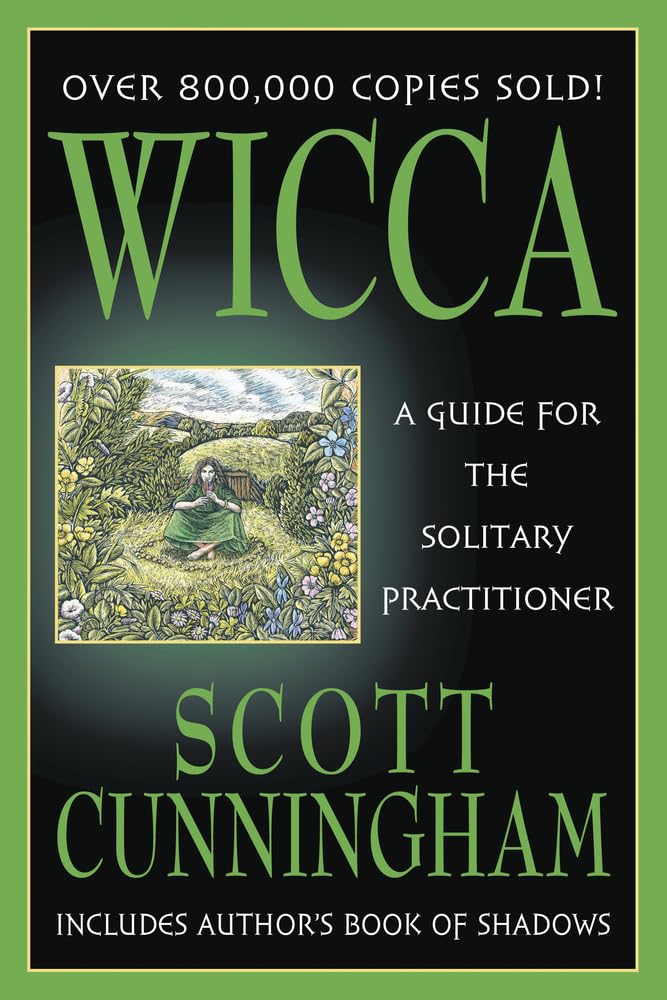
“Here is the boundary of the [circle],
Naught but love shall enter in
Naught but love shall emerge from within
Charge this by your powers, Old Ones!“
–Wicca: A Guide for the Solitary Practitioner by Scott Cunningham

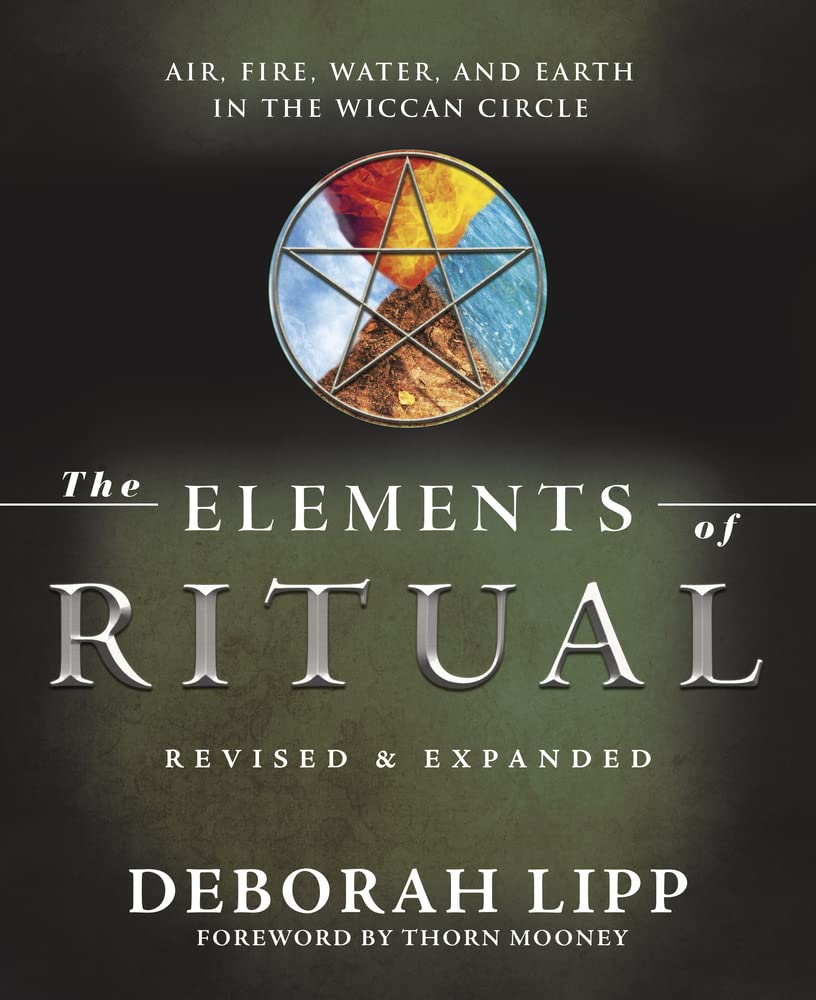
“I conjure thee, O Circle of Power, that thou beest a meeting-place of love and joy and truth; a shield against all wickedness and evil; a boundary between the world of men and the realms of the Mighty Ones; a rampart and protection that shall preserve and contain the power that we shall raise within thee. Wherefore do I bless thee and consecrate thee, in the names of Cernunnos and Aradia.”
“Tout and tout. Around and about.
Power stay in. World stay out. “
Other Ways to Create Sacred Space
Casting circle with the athame is just one method of creating sacred space. There are plenty of others. You could, for instance, create sacred space entirely using sound.

And what’s more interesting? There are other shapes that can work, too. It’s not always about circles. Maybe you’d like to try a triangle? Or a square?
Just thought that’d be work mentioning, although it’s far beyond the today’s topic.
Ivo Dominguez, Jr. has a great book on this topic, called Casting Sacred Space, if you’d like to go check it out.
Conclusions
Well, you’re definitely on your way to mastering circle casting. If you have some favorite words to use for this part of ritual, be sure to share them!
I sincerely applaud you for getting all the way to the bottom of this. Put down the athame for a minute and step out of your sacred space so I can tell you a little secret. There are Amazon affiliate links on this page. If you use one of those links to make a purchase, like buying a book or something, Amazon will pay me a small commission.





 Aerik Arkadian
Leave a comment