

Plants are such an important field of study in witchcraft that some books on the topic even start out with lofty phrases like “since time immemorial…” or “from the dawn of time as we know it…”
Yeah, we get it. People have been using herbs, like, forever.
Plants have unique properties and energies. You can use them for spellwork, in rituals, or as medicine. Also, studying them helps you better connect with nature.
But sometimes it’s hard to know where to start. Don’t worry, I’ve got you. In this brief article, you can expect to learn some basics.
Required Cautions
When you’re working with herbs, it’s important to know how to safely use them. Some things are safe to ingest, while others might only be safe to use topically. When we talk about that “safe” realm, even some very common herbs like cinnamon could cause bad skin reactions or irritation. Still, other things might just be toxic entirely.
Within the magickal world, we evidently love to flirt with danger. There’s a whole field of study devoted to the usage of baneful herbs. The word baneful, in this case, describes herbs that are poisonous, like belladonna, mandrake, or datura. These types of plants can cause hallucinations or even death in the right proportions.
The key point here is that you should always do your research and always test in small amounts. Sometimes we underestimate the power of plants.
Do not underestimate the power of plants. Plenty of them have been around for a lot longer than we have.
Parts of the Plant
Welcome back to elementary school biology class, where we learn that each part of the plant plays a specific function.

See? The helpful graphic above tells you everything you need to know.
- Root – Absorbs nutrients from the ground
- Stem/Vine – Provides structure and support for the plant, also carries nutrients between roots and other parts of the plant
- Leaf – Performs photosynthesis, converting solar energy to food
- Flower – Is an important part of reproduction, attracts pollinators
- Fruit – Protects the seeds
- Seed – Carries the entire genetic blueprint of the plant to start over again
What your biology textbook doesn’t tell you is that each of these parts have different magickal correspondences. Sometimes people associate different planetary or astrological values here, but we’re going to keep it a bit simpler today with a brief look at correspondences that is purely based on the above information. Let’s say I wanted to perform an attraction ritual. What part of a plant would I be most likely to use?
If you said “flowers” then you’d be correct. Flowers are responsible for plant sex. They attract the literal birds and bees.
What if I wanted to preform a grounding ritual?
Probably the roots, right? Roots are the part of the plant that is closest to the ground… they provide that deep support and connection to the earth.
And yes, it can be that simple.
This isn’t an exact science, of course. In fact, it can be rather subjective. Much of it will come down to personal interpretation because there’s such a wide range of ways to think about plants!
Sometimes, even on a purely mundane level, parts of a plant have such different characteristics that we even call them by totally different names. For instance, coriander and cilantro are the exact same plant, Coriandrum sativum, but we use the word “coriander” to refer to a spice made from the seeds and “cilantro” to refer to the leafy greens. Why on earth do we do this? I don’t know. But we do.
In that same vein, you’ll sometimes see that different parts of a plant have different folks or medicinal uses. And that brings me to the next section.
Want to hear about future posts? Subscribe to get notifications delivered straight to your inbox.
Magickal, Medicinal, and Folk
Let’s distinguish between the terms “medicinal use” and “folk use.” The former is usually based more on science, like turmeric being an anti-inflammatory; while the latter is usually something like tying a sprig of an herb around your neck to attract a lover.
From a purely magickal standpoint, both are completely valid approaches. Is there sometimes overlap between the two? Yes, but not always.
I’m happy to play with herbs on either side of this proverbial fence; however, I will say that if I’m preparing something to treat a physical ailment, such as nausea, I tend to stay more on the medicinal side. If I’m purely doing spellwork, I usually stay on the folk side.
This is one of the reasons plants are SO cool. They have the ability to operate in multiple planes, with certain effects seen on the physical body and other effects that will manifest mentally or emotionally in the astral or magickal world.
Okay, so where do some of these folk ideas and correspondences come from anyway?
The Doctrine of Signatures
The Doctrine of Signatures is a somewhat ancient observation that certain plants or herbs can be used to treat the parts of the body that they most closely resemble.
Some easily-seen examples of this are herbs that fall within the genus Euphrasia.

Flowering Euphrasia, aka Eyebright
The flowers of this particular plant have markings that resemble a bloodshot eye, thus they are used for the treatment of vision problems and various eye-related conditions, such as inflammation or redness. This association was so widespread and common that it is even reflected to this day in the plant’s folk name: Eyebright.
This might seem like an archaic or outmoded science, but the surprising thing is… it frequently works! The shape of a plant’s leaves, whether it grows in shade or sunlight, the color of its flowers… all of these things can give us hints as to how it should be used medicinally.
A full explanation would, of course, require a separate blog post, but at this point, it should be sufficient to simply understand what it is and that it has had a significant impact on how human’s have used plants over the years.
Common Medicinal Uses for Plants
Here are some ways that plants have been used as medicines:
Please note, as a disclaimer, I’m not telling you to use any of these. I’m just saying people do use them for what is listed below. You should always consult with a doctor before deciding on an herbal treatment regimen.
- Aloe – Burns, cuts, sores, speeds healing
- Apple Cider Vinegar & Honey – Arthritis and blood cleansing
- Blue Cohosh – Menstrual cramps, inducing a slightly delayed period
- Chamomile Flowers – Sleeping aid, stomach calmative
- Cayenne Pepper & Ginger – Bronchitis and chest colds
- Coltsfoot & Mullein – Alleviate chest congestion
- Comfrey – Allantoin, promotes cell growth, anti-inflammatory
- Echinacea – Immune system stimulant, fights infections
- Elderberry Flowers & Peppermint – Stops colds
- Ephedra – Hay fever and sinus congestion
- Garlic – Blood pressure, cholesterol, liver stimulant, insect repellant, antibiotic
- Ginger – Indigestion, nausea, migraines
- Goldenseal – Immune system stimulant, fights infections
- Licorice Root – Chronic fatigue syndrome
- Peppermint – Upset stomach, headaches, toothaches
- Pennyroyal – Abortions, bug repellant, expectorant (also: can kill you)
- Psyllium – Relieves bowel issues
- Red Clover – Immune system stimulant
- Tea Tree – Anti-fungal
- Valerian Root – Sedative
- White Willow Bark – Salicin, headaches and pain relief
This is by no means a comprehensive list. It’s really here just to get your attention, but some of the things above are so common in everyday life. Like… did you know that the precursive chemical to Aspirin, salicylic acid, is found in the bark of the white willow tree? Yes, one of the most common pain relieving drugs in the entire world was first discovered in plants!
Go Do the Work!
I could give you a short list of elemental or planetary correspondences for herbs… but what would be the point? There are a hundred different books on that subject… which are all based on what other people think.
The real power lies in developing your own correspondences.
Don’t worry, though, I’ll give you plenty of book references at the end. Reading what other people think is a great place to start, anyway.
If you really want to get to know plants and herbs, you need to work with plants and herbs. If possible, you should grow them and tend to them as part of your regular routine. As you start to develop a relationship with a particular species, you might notice they have distinct personalities. And they might reveal their potential to you. You know what I mean? They can tell you what they’re good at. Maybe they’re good at prosperity rituals. Maybe they’re good at being a tea. Or maybe they’re just good at being a general-purpose fire herb. When this happens, you can call it a “personal correspondence” … and it trumps anything else you’ll read from a reference book.
How to Harvest Herbs
There are several superstitions surrounding harvesting herbs. One of my favorites, which we always mention in our coven classes on this topic, is that you have to sneak up on the plant, holding the shears behind your back, so that you don’t frighten it. Others say you have to wear all white and never let your cut herbs touch the ground. And others still might even say you must only harvest herbs while naked!
I love hearing about folk beliefs like this, but you definitely don’t need to do any of the above.
A good rule of thumb, however, is to make sure you only harvest a maximum of 1/3 of the plant. If you take more than that, you risk damage… and it might not grow back.
Also, just from the point of view of “even exchange,” it’s a good idea to leave something behind, even if it is just the feeling of gratitude. Some people also leave coins or stones, but why not give something that the plant can actually use, like a drink of water or some plant food?
And then you’ve got people like me who speak to the plant directly. I state my intentions and ask for permission. “Hey guys, I’m about to make a healing tea… who wants to volunteer?” I’m sure my neighbors have heard hundreds of one-sided conversations like this. If you talk to your plants for long enough, they’ll eventually start to talk back.
Further Reading
Here are some great books to help you get further on your herbal journey.


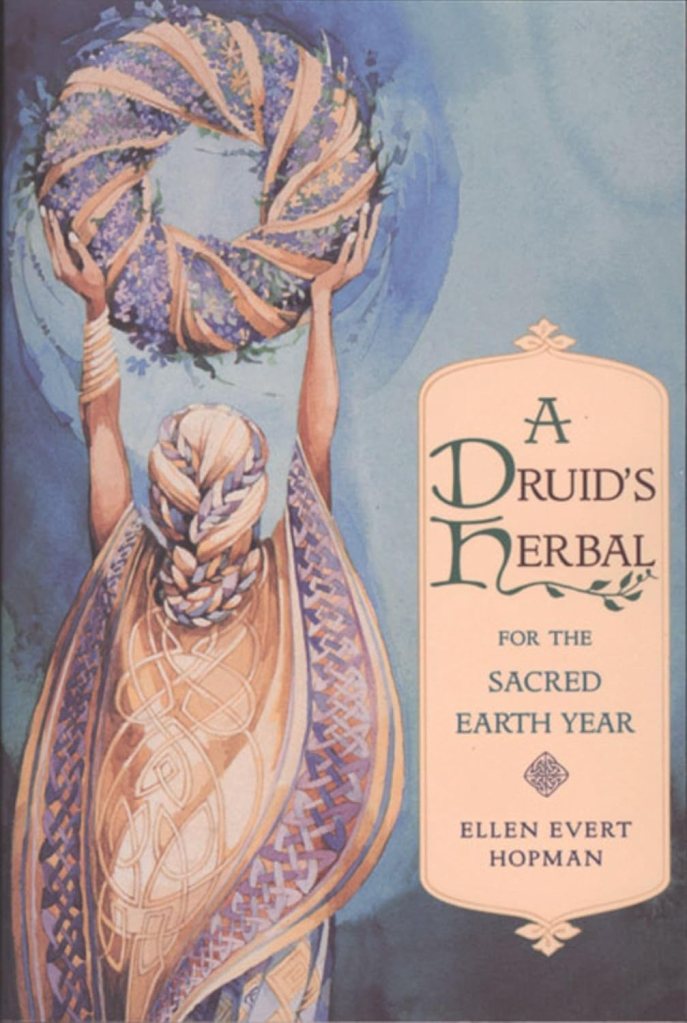


By the way, when you’re talking about herbal reference books, there is absolutely no substitute for having physical copies. Having digital version is really convenient for searching, but flipping through the real thing is often better.
Conclusions
Studying plants can deepen your magickal practice. Connecting with nature can (arguably) even make you a better person. There are a lot of angles here, but they’re almost all positive.
Even if you don’t consider yourself a plant person or an herbalist, having a little bit of knowledge in this area helps make a more well-rounded practitioner (or witch, or whatever you call yourself).
But everything we’ve talked about today is just a brief start. As with so many other things… find a part that sticks out to you and go deeper with it. Good luck!





 Aerik Arkadian
Leave a reply to Judy Hawkins Cancel reply