

Byron Ballard is a teacher, folklorist, and the author of several books. She’s well known for her work on Appalachian Folk Magick and has recently published a new work, A Feral Church.
In this interview we talk about her background and upbringing, views on community, misconceptions with Appalachain Folk Magick, how to take the word “mundane” out of our vocabularies, ideas for keeping our lives magickal, and her latest book, A Feral Church.
And although I definitely recommend watching the full video, this article will give you the highlights!
Background
When I asked Byron how she got started on her path, she said “I’ve always been here.” She explained how young children can typically understand the concept of animism more readily than adults — there is a spirit in the green beans on your dinner table just as much as there is in the birds or in the rocks. She identifies as an animist today. (And a quick shoutout to my friend Nathan Hall and his book, Path of the Moonlit Hedge, which helped me really understand animism)
Byron grew up in North Carolina in the 1960s. She says it was a time when kids could just go outside and play for hours without parents worrying — and all of that time outdoors blessed her with a “deep accord” for nature and the world around. But beyond that, her grandmother and other women in her family line were witches (and even referred to themselves as such!) with skills like herbalism, prophetic dreaming, and second sight. And even as a kid, she was told that she would also develop these skills later in life.
What I found particularly interesting was how (in addition to those accounts of witchcraft) she also talked about growing up in the Christian church. And in her story, those two things didn’t conflict with one another! In my personal experience with Christianity, abilities like second sight would have been labeled as “devil’s work,” but Byron later explained that many areas in Appalachia would view them as spiritual gifts where the Holy Spirit is working through you. Like so many other things in spirituality, there are many lenses through which we can look.
Appalachian Folk Magick
I feel like almost every time you hear someone talk about Appalachian Folk Magick, they inevitably end up talking about either what it isn’t or what misconceptions surround the practice. Well, this conversation was no different. When I asked Byron what misconceptions there are, she laughed.
I think one of the reasons that so many misconceptions exist is that people fail to realize just how big of a region we’re talking about. According to Google, Appalachia is made up of 423 counties across 13 states and spans 206,000 square miles, from Southern New York to Northern Mississippi. That’s bigger than the size of some countries, folks. Italy, for example, is just 116,631 square miles. Think about that for a minute. But many folks in the Appalachian countryside lived in small towns or were fairly isolated from one another, which means that an uncountable number of separate family traditions were able to evolve. This extensive individuation, in my opinion, bears a lot of the responsibility for the misconceptions that are present in the modern age. Let’s say one person writes a book about Appalachian Folk Magick, but their views don’t match up to what someone else, who lives 100 miles away, says it is. We might, in fact, end up with dozens of books that all say different things about it. And that’s okay with me. Again, we’re just talking about all of these different lenses to view spirituality.
One thing Byron did want to point out, however, is that for her family’s practice, it has never been called “Granny Magick.” She says this is a bit of a misnomer. You should listen to the full interview if you want to hear why. But interestingly enough, for many people within the tradition, it’s a practice without a name. It’s just what they do. That is to say… if you’re using the term “Appalachian Folk Magick” … well, it might just be because you’re an outsider to the practice.
Later in the interview, Byron shares more details about her family’s view on things as well all of the different groups that might have made historical impacts on Appalachia. Again, at the risk of mincing words, I’ll just direct you to listen to the interview if you’d like to hear all this information.
A Feral Church
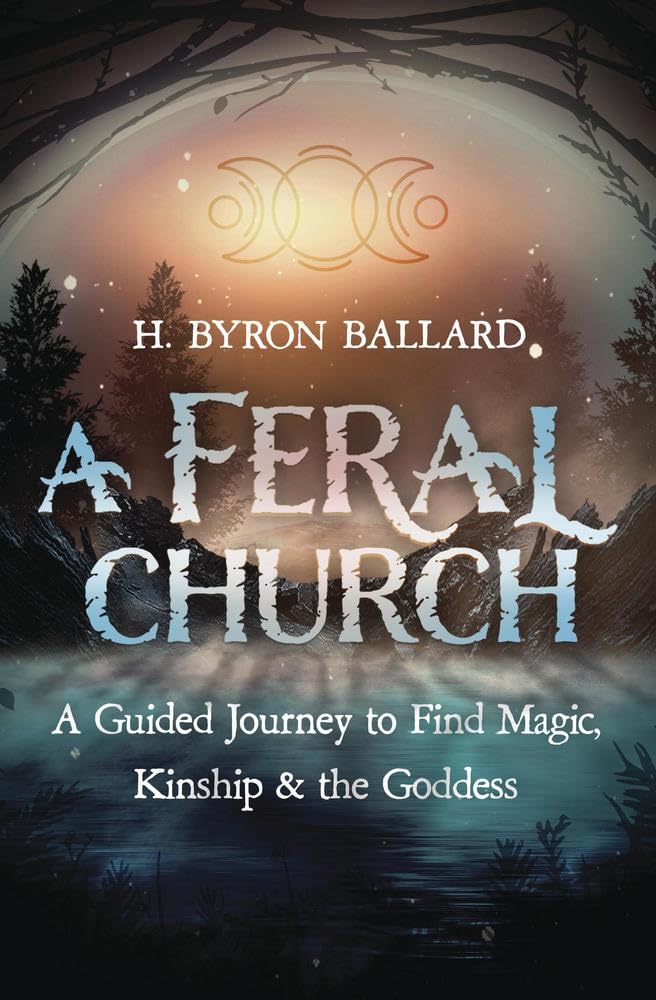
Byron’s eighth and most recent book is called A Feral Church. She says it is “a new book of Goddess theology.” It’s a meditative pilgrimage that takes the reader to different places, introduces them to different beings, and finds common grounding in the Goddess. To put it simply, it’s one big pathworking.
She says the book is just the tip of the arrow. It’s spearheading a movement. And that movement is about redefining the concept of a “church” entirely.
When many people think of a church, they think of a building — a mosque, temple, synagogue, or otherwise, but the physical structure.
I think we can all agree (or most of us can, anyway) that there are plenty of problems inherent to the large world religions that place such emphasis on the physical structure. The truth is, we don’t need a building to worship. We don’t need physical walls to connect with deity.
In Wicca, we recognize this by understanding that our circle is our sacred temple. We can build the temple in any location and at any time by conducting ritual.
But Byron takes this a step further. The feral church is your community garden. It’s the group of people offering food to the homeless. It’s anywhere that people are doing the work that they are called to do — performing sacred acts.
Sacred Acts
So this whole concept of “sacred acts” was a pretty big focal point in our conversation. I asked Byron how, exactly, you define when something is a sacred act. Her answer was pretty simple: “when you treat it as a sacred act.” It’s just a shift in mentality with how you choose view something.
She gave several examples over the course of the interview. For instance, a bank teller counting out money for a little old lady who is cashing her social security check could easily be seen as a pretty mundane act of work. But in Byron’s version, the bank teller is blessing the woman with abundance, grace, good health, and happiness with every bill they lay down — and even if no one ever knows about it, that’s still a form of practicing religion and spirituality.
Don’t miss out. Here’s what’s coming up…

I think that’s a novel idea, but I complained to Byron a little bit about the execution. You see, it’s just really hard for me.
It’s hard, guys. It’s hard to see washing dishes or driving kids to school as sacred acts. But you know what? She had a solution for me. In fact, she basically gave me a dish-washing-affirmation-spell-thing to use. So if you’re curious about that, go watch the full interview. I’ll sum it all up for you, though: she says to eliminate the word “mundane” from our lives entirely.
Treat everything as sacred.
Phew, I wish it were as easy to do as it was to type!
More of Byron’s Books
If you’re looking for more of Byron Ballard’s work, you might want to check out these titles.
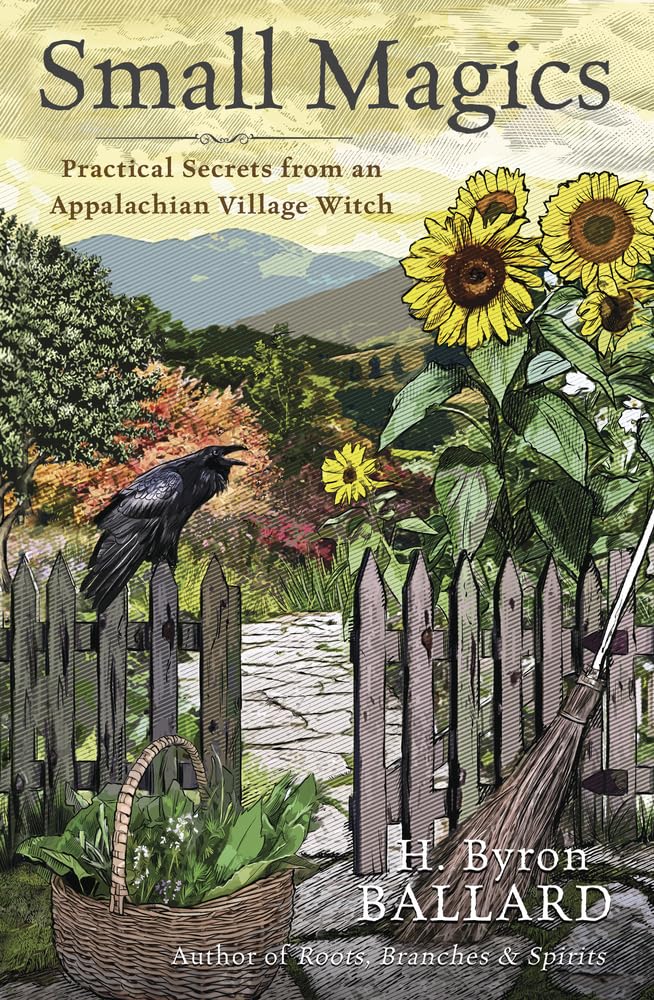
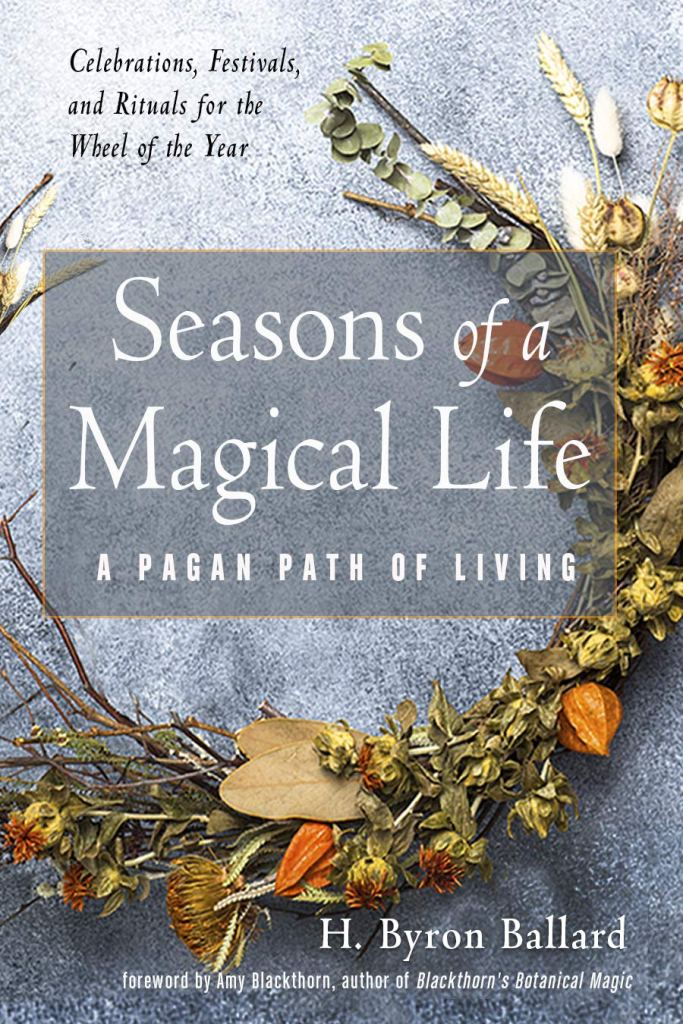
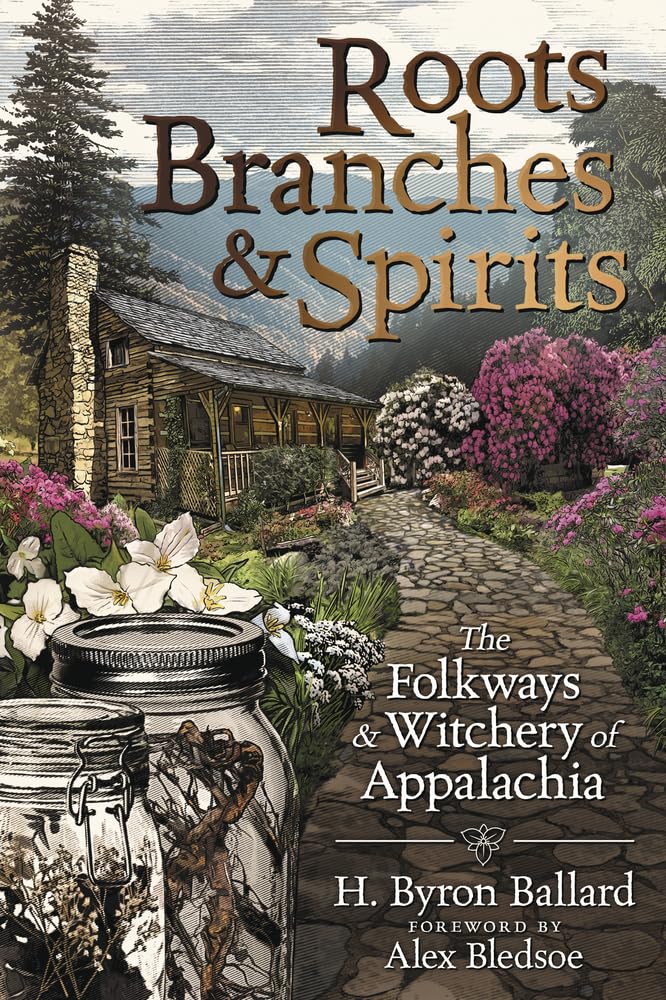
But like I said earlier, she’s got eight books total, so there’s definitely some other options to browse through, too!
Finding Byron Ballard
If you’d like to get in contact with Byron, you can find her online.
And if that’s not enough for you, then maybe try to catch one of her appearances at a festival!
Workshops
Byron is headlining at Summer Magick Fest 2025 later this year. She’s giving two workshops. They are as follows:
Ancient Skills for Modern Times. As culture shifts around us, we can find agency and comfort in returning to some of the skills that made our Ancestors successful. From the hearth-tending of food growing, preparing and preservation to herbal medicine to political action and systems analysis, this class can give you ideas for a resourceful future. Join the roundtable discussion of what you can do locally to rebuild ancient skills while Byron weaves a web of deep significance to such work.
A Great and Subtle Weaving: How We Change the World Ritual. Those aware of the profound changes the Earth and its inhabitants are undergoing are stretching the concept of “who belongs” and “what is Tribe.” Returning to ancient concepts of mutual aid societies and sustainable agricultural practices are two ways to create the circles on the ground that will ease our human transition to stronger resilience in the face of cultural collapse. As we redefine leadership and weave new containers, where do we go for inspiration, for solace, for delight?
I don’t want to miss either! Be sure to grab your tickets.
Chanting and Dancing
When I asked Byron how she uses music in her personal practice, she first described using chanting and dancing during ritual. But here’s the catch — she wasn’t allowed to listen to anything other than classical music until after she got into high school. Most of Byron’s ritual music is.. well, its classical music or opera!
If you listen to the interview, she actually describes her daily playlist. I won’t spoil it for you. You’ll have to hear it from her!
I can totally sympathize with this because I wasn’t allowed to listen to secular music as a kid. Based on that, I think Byron voluntold me to do a little gospel singing with her when we meet each other at Summer Magick Fest later this year. Well… I’m looking forward to that!
Summer Magick Fest
Grab your tickets and register for Summer Magick 2025! You can catch Byron there in person. And I’ll be there giving workshops as well! I don’t get paid for selling tickets or anything, I just honestly want you to be there with us.
Summer Magick Festival is an earth-based spirituality convention with workshops, celebration, and community in a comfortable hotel setting. Headliners, rituals, and musical entertainment have been chosen to encourage tolerance between the many different earth-based faiths and foster planetary stewardship. We are a family-friendly event with programming for our young ones as well as close proximity to all the wonders of the Orlando theme parks. Join us for a new kind of Florida festival!
Conclusions
I had such a great time chatting with Byron Ballard. The conversation was filled with laughs and lots of information — that’s the best way to learn! I’m really looking forward to meeting her at Summer Magick Fest in a couple of weeks. I think you’ll especially enjoy watching her full episode on YouTube, and if I haven’t convinced you yet to go and watched it, I suppose I’ve failed. But if nothing else, I’d really dig it if you pop over to my YouTube channel and click the subscribe button.
Hello my friends. I have some fine print to deliver to you. And by “fine” I mean small. I don’t mean “fine” as in excellent or high quality. Not that I’m trying to diminish my own writing or anything, but honestly, it’s just a dlsclaimer type of thing here. It isn’t poetry. Okay, so anyway, there are links on this page. Many of those are Amazon affiliate links. If you use one of those links to make a purchase, Amazon will pay me a small commission. And remember, the act of buying books is a sacred act. Or at least… it can be if you treat it as such. That’s all. Now go about your day.




Leave a comment