
Using the Elder Futhark runes for magick is way easier than you might think. We’re going to talk about two powerful methods today: runewords (or runescripts) and bindrunes.
Both work on a fairly similar wavelength where multiple runes are chosen to suit a magickal intention, and both can work for just about any given situation.
Here’s the quick points of how they’re different:
- A runeword uses runes in a series of multiple symbols
- A bindrune combines runes into a single symbol
As with any magickal operation, the first step is to decide on an intention.
Setting an Intention
Usually when you get in your car to go for a drive, there are a few things that need to be taken care of first. You’ve got your keys. You’ve made sure your car has gas. And you have an idea of where you’re going. Right? And even if you don’t have a clear destination, “going for a drive” or “exploring the roads” are still specific intentions in and of themselves.
If you didn’t do those things, however… then you’re not going to get very far. If you don’t have the keys, for instance, then the car isn’t going to start.
The same idea applies in magickal contexts, but instead of bringing keys and gas, we need to account for The Four Cornerstones: To Know, To Will, To Dare, and To Keep Silent. Yes indeed, somewhere inside that “power of the mages” are things like planning, study, and intention.
You can use runes for any intention… just make sure you’re clear on what that is before you begin.
As we walk through these methods of runic magick together, we’re going to use a sample intention so that we’re all on the same page about everything. Sorry to be a basic witch, but we’ll be doing a bit of money magick today.
The intention is: prosperity.
Just Watch Me
I’m not always a fan of shortcuts, but in this case… you can just watch the below video and see me making a runeword and bindrune for this intention.
But if you like to read, keep reading.
Runewords (Or: Runescripts)
Now that we’ve decided on our intention, it’s time to start choosing runes for our runeword.
I’ve always called this technique a “runeword,” by the way, but I am aware that some books refer to it as a “runescript.” Regardless of what you’ve been taught to call it, the most important thing is that you understand the methodology.
A runeword is when different runes are placed in a series. Although multiple runes are used, they will all fit the same intention — or at least represent an individual aspect of achieving the goal.
Of particular importance here is the order in which you place the runes — specifically, the first and last rune in the series. It’s up to you how want to define the start and finish of your runeword, but many folks reading this article will probably go with “left to right,” since that’s the natural progression of English words.
There’s a number of different runes (and combinations of those runes) that we could use to represent the idea of prosperity, but I’ve selected three specifically as an example today.
They are:
- Fehu
- Othala
- Wunjo
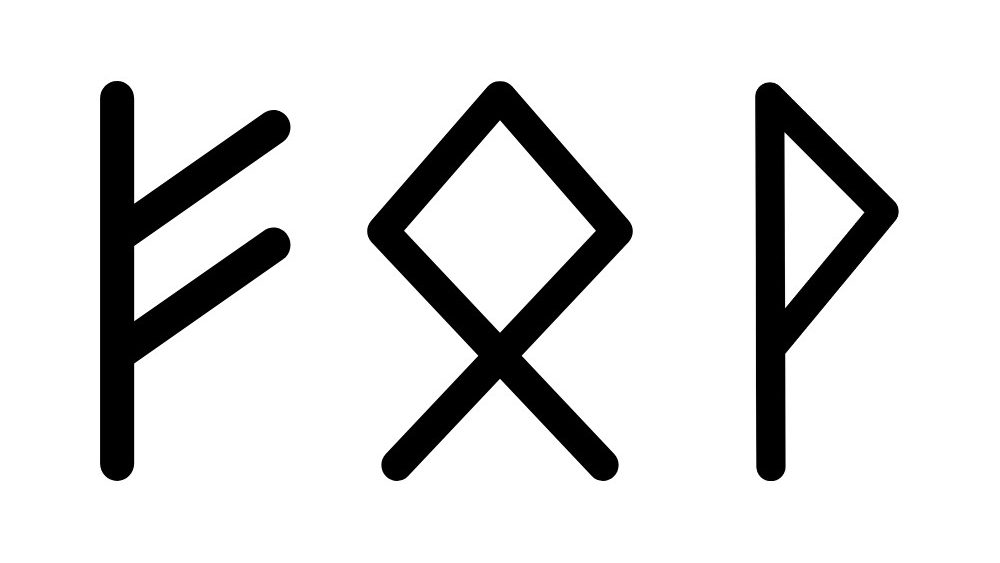
This exact order is important to my intention and my thought process.
The flow of energy in this sequence begins with Fehu, which itself represents concepts like money and wealth, but is also frequently used to increase whatever else it’s attached to. Next, the energy moves through Othala, which represents property or inheritance — these are the things that I own or will own. In other words: my possessions. Finally, the energy ends with Wunjo, which represents happiness or joy. After all of this is said and done, I want to feel good about it! What would be the point in increasing wealth if it made me miserable? Plenty of my runewords end with Wunjo, as it’s a good way of resolving things and binding everything together on a happy note.
How Many Runes to Use
There’s no real limit to how many runes you can use in these patterns. I personally like to stick to odd numbers, so 3 works very well, 5 works well, and 7 will start to get a bit crowded — anything beyond that gets a little unruly for my tastes. On rarer occasions, I might pick an even number like 4 because of its correspondences to things like the four elements, the four sides of a square, the four cardinal directions… and energetic currents of stability, order, and hard work.
But ultimately, it really depends on your intention. Trust your gut! As an alternative, ask yourself this question: “what is the least number of runes I need to fully express this idea?”
A little study of numerology and magickal correspondences can go a long way here, but if you ever question it, just go with three! You can never go wrong with three!
Intoning the Runes
Arranging the runes or drawing them in a certain pattern really isn’t enough to get the magick going. Those tasks lie on the mundane side of things.
You need to wake them up. Think of it like activating a sigil or consecrating a magickal tool — there’s physical work and astral work.
One of my favorite ways to do this is to intone. Use your magickal voice and vibrate the name of each rune. Do this loudly and imagine the sound filling the entire universe. You should start by saying each rune individually. Once that’s done, repeat the process, but leave less and less “space” between each rune name. After a few repetitions, the ultimate goal is to create one long vibrational tone where each rune flows into the next.
It’s way easier to hear that process taking place, but allow me to attempt to demonstrate with text:
- First repetition: “Fehu. Othala. Wunjo.”
- Second repetition: “Fehu, Othala, Wunjo”
- Third repetition: “feh-hoo-oh-tha-lah-woon-yo”
It make take you more than three times to get there. Just let the process be slow, gradual, and natural. The more you chant, the more energy you put out into the universe. You can also do this for an extended period of time to enter a trance state.
But if you’re short on time or haven’t yet found your magickal voice, you can still breath life into the runes. After drawing them, bring them close to your lips and whisper each rune name three times. Visualize them glowing brighter and brighter as you do so.
Bindrunes
Now that we’ve got all of that other stuff out of the way, let’s take our existing rune selection and turn it into a bindrune.
A bindrune is when you combine multiple runes into a single symbol. You can superimpose them on top of one another, rotate, reorient, or otherwise redraw them however you see fit.
If you’re familiar with the process of creating sigils, then you already know how to do this — it’s essentially the same idea. Multiple symbols (or letters) get condensed into one visual representation… but in this case, we’re using things specifically from the Elder Futhark alphabet.
It’s usually helpful to first write out the runes you’re going to be using. Once that’s done, look at them for a minute or two and imagine how they might fit together. Draw some sort of combined shape, then redraw it… and redraw it again. If you’re ever unhappy, just start over.

You should like the way that your finished bindrune looks. If it doesn’t look right or feels unfinished, then it still needs work. Keep redrawing it until you’re satisfied. Usually this process only takes about ten minutes… so if you get stuck or it feels like an excessive amount of time has passed, it’s okay to take a break and come back to it later.
On the left, you can see what I came up with for our example intention.
There’s probably an infinite number of ways to do this, but this is the one that felt right to me. Can you see how every rune fits into the main shape?

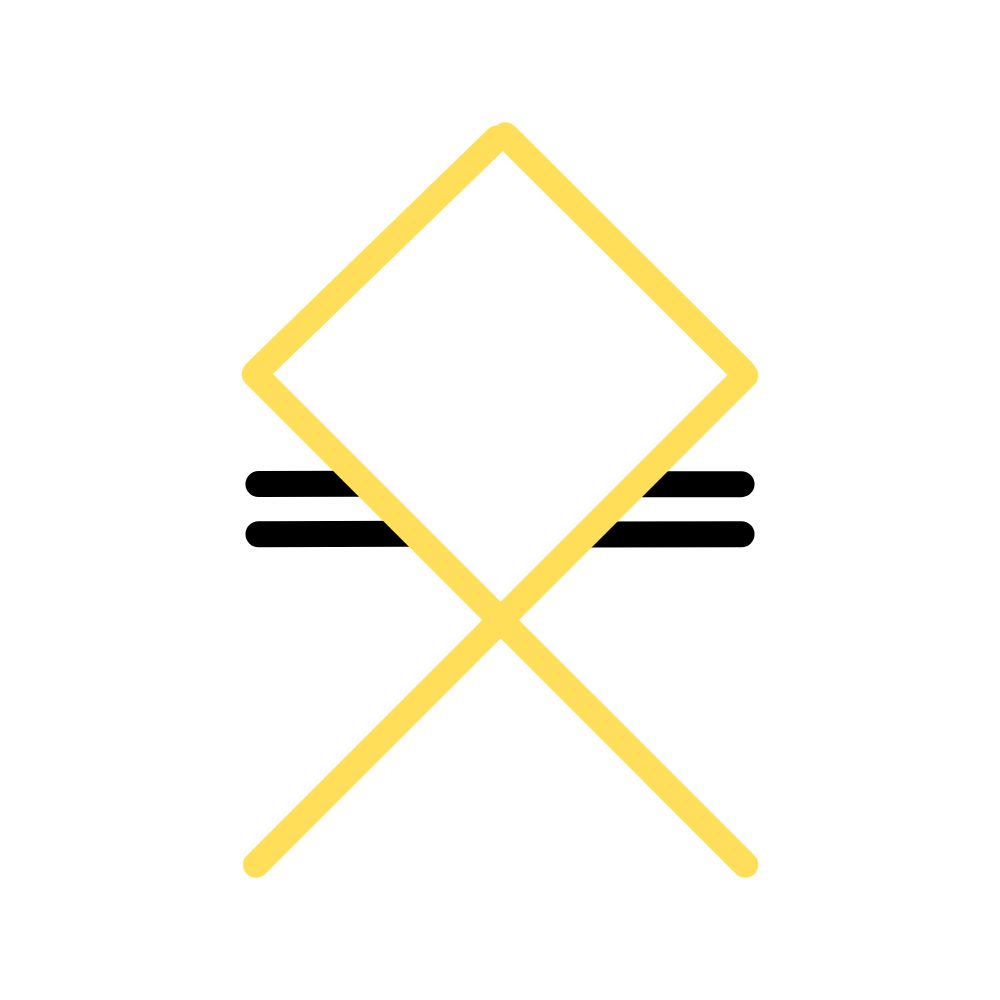

And beyond that, can you see how many other rune forms are visible? I can see Gebo, Teiwaz, Isa, Ansuz, Raidho, Kenaz… I mean honestly, there’s so many there.
Different or the Same
In our example, I’m pretty clearly using three different runes, but you don’t always have to do it that way. You can use multiple instances of the same rune if that’s your preference. If, for example, I was going to recreate our bindrune as Fehu Fehu Fehu, which could also represent prosperity, it might look something like this.
Maybe this triple Fehu power appeals to you. Maybe it doesn’t. As you can see, it’s a very, very different design from the one I originally came up with.
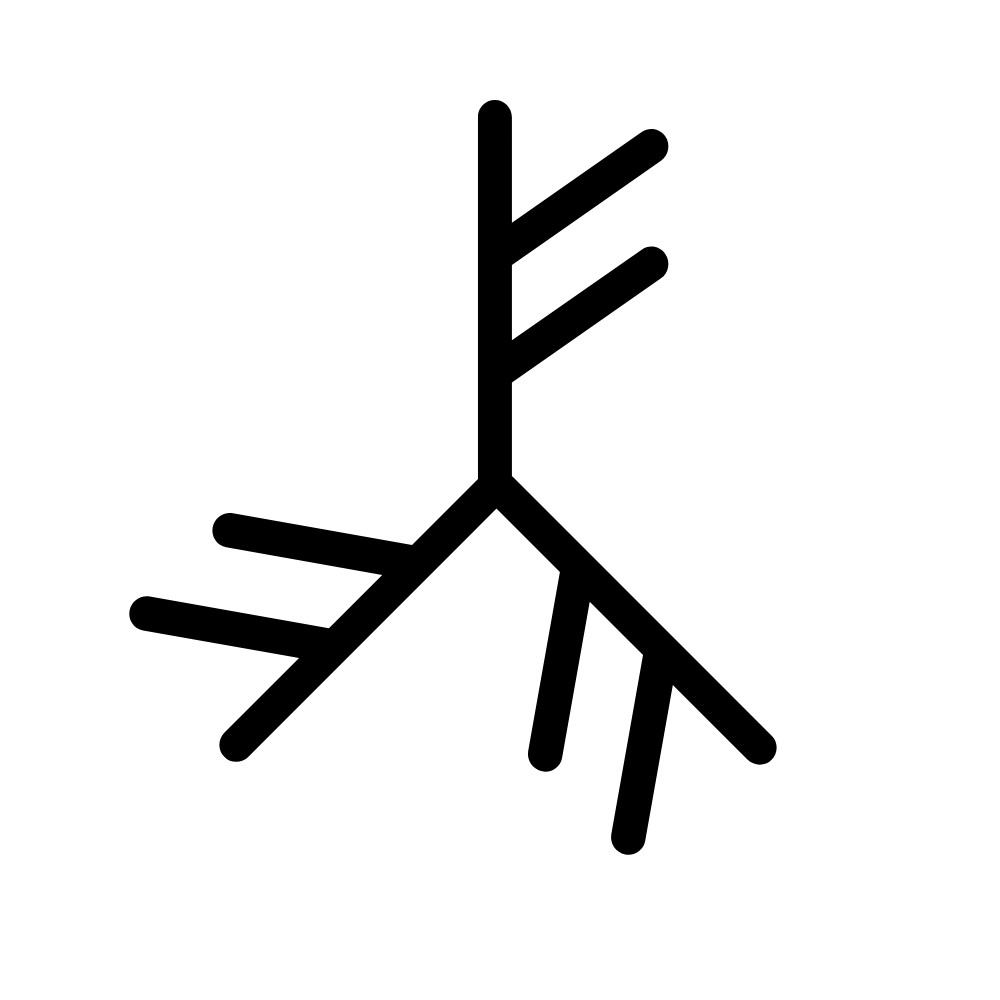
We could have also gone with Fehu Fehu Wunjo. Or even Fehu Othala Fehu. Or… well, you get the point, right? There’s tons of different possibilities and combinations. That’s part of what makes this process so personal.
Food for Thought
I kept this “prosperity” intention pretty centered around money. But true prosperity isn’t just financial. It is usually thought of as including three aspects: health, wealth, and joy. For this I personally use the runes Uruz (health), Fehu (wealth), and Wunjo (happiness). Although only one of the runes is different here from our original three, it drastically changes the overall intention and thought process for me.
Extra Watching
If you’d like to hear a conversation with Christiana Gaudet on this topic, definitely go check out our Wyrd Wednesday series. In one particular episode, we each came up with our own bindrune design for the same intention… and I have to say, it’s really interesting how we took such different directions for the same concept.
If you enjoyed that episode, there’s more to watch!
Conclusions
There’s tons of ways to do magick using the runes… this is just a start. The more you learn, the more pathways will become apparent to to you!
Sit down with the runes, study them, and allow their energies to be revealed. Let them shape themselves into a runeword or bindrune. Onward to discovery!




Leave a Reply